Introduction: Start With Real, Whole Foods
Healthy eating isn’t complicated or overwhelming. Small, steady choices can create real change. When you see how food supports your body, healthy eating feels more natural and enjoyable.
This guide gives you practical steps you can start using today, no matter where you’re beginning.
Your body knows real whole foods—fruits, vegetables, whole grains, beans, nuts, seeds, and simple proteins. These provide the nutrients, fiber, and energy you need. (Dietary Guidelines for Americans 2025 - 2030, 2025)
A simple rule of thumb: If it grew from the ground, it’s probably a better choice.
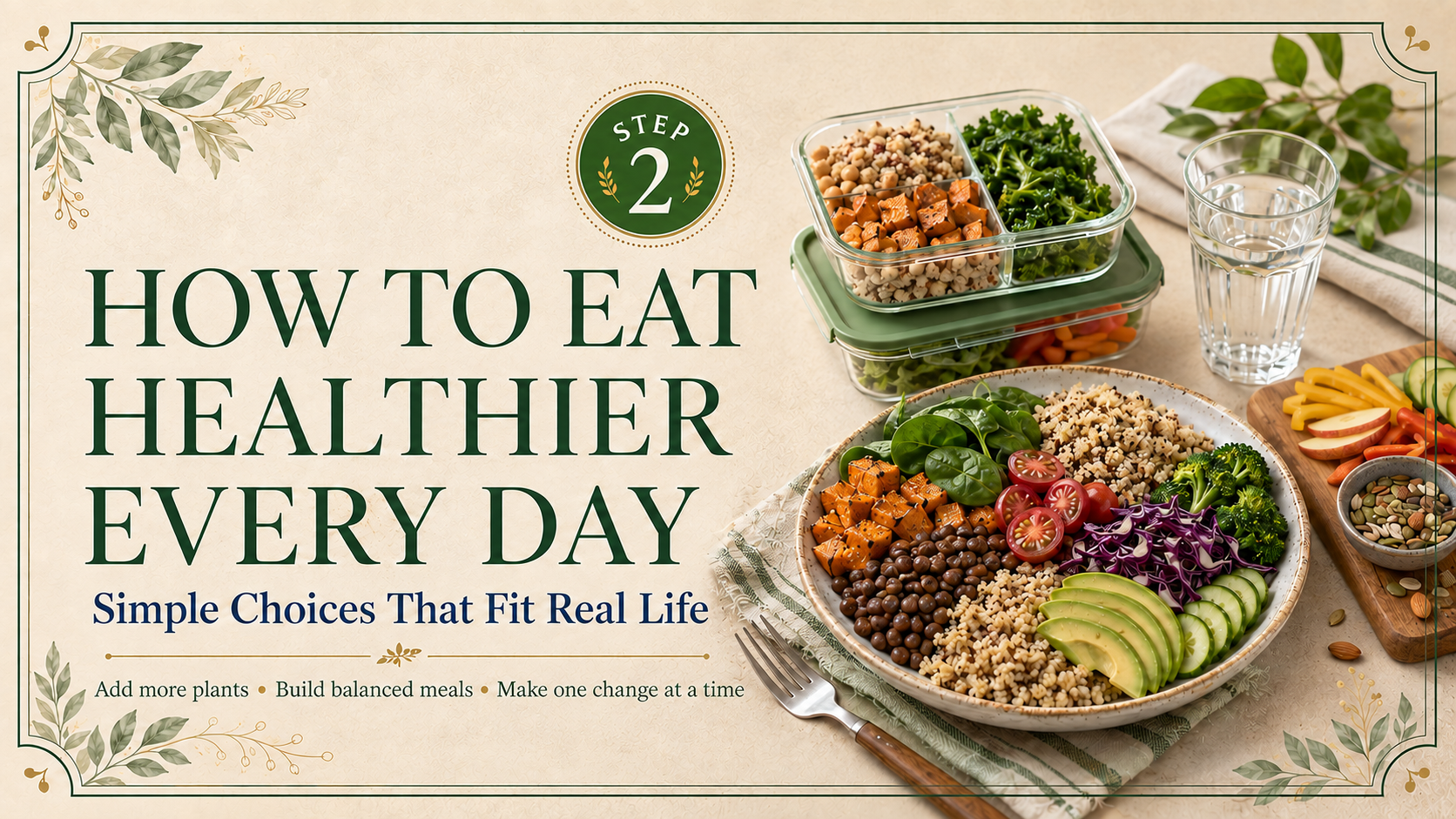
Build Balanced Meals
A balanced plate keeps your energy steady and your hunger satisfied. (Healthy Eating Tips, 2026) Aim for:
- ½ plate of vegetables or fruit
- ¼ plate whole grains or starchy vegetables
- ¼ plate lean protein or plant‑based protein
- Healthy fats (avocado, nuts, seeds, olive oil)
This structure works at home, in restaurants, and even on the go.
Stay Hydrated Throughout the Day
Water helps digestion, energy, focus, and metabolism. (Jéquier & Constant, 2010, pp. 115-123) Most people feel better when they drink more water. (Perrier et al., 2021, pp. 1167-1180)
A simple approach: Drink a glass of water before each meal. It’s easy, grounding, and surprisingly effective.
Choose Healthier Snacks
Snacking isn’t the enemy — mindless snacking is. Choose foods that nourish you:
- Fresh fruit
- Nuts or seeds
- Hummus and veggies
- Greek yogurt
- Whole‑grain crackers with nut butter
These choices can help support steadier energy, greater satisfaction, and more intentional eating throughout the day.
Plan Ahead (Just a Little)
You don’t need a meal-prep routine. A few small habits help. Keep healthy foods where you can see and reach them.
- Pack a simple lunch
- Prep veggies once for the whole week
- Keep a few “go‑to” meals you can make quickly.
Eat Mindfully
Slow down. Notice your food. Enjoy the flavors. Mindful eating helps you stop when satisfied. (Tronieri et al., 2020, pp. 2818-2827)
- Reduce cravings
- Improve digestion
- Feel more connected to your choices.
Even one mindful meal a day can shift your relationship with food. (Knol et al., 2020, p. 1318)
Why This Matters
Healthy eating is about reclaiming energy, clarity, and confidence. (Benefits of Healthy Eating for Adults, 2026) Every choice is a vote for the future you want.
When you eat with intention, you’re not just eating differently; you’re choosing to feel better, think clearly, and show up fully for those you love.
Small steps add up faster than you think.
A Gentle Call to Action
Choose one idea from this article that feels realistic for you. Practice it for the next week and notice how it affects your energy, confidence, and well-being.
You don’t need to change everything—just begin with one small step.
Conclusion
Healthy eating isn’t about massive change. Small, steady habits boost energy, clarity, and well-being. Focusing on balanced meals, more whole foods, hydration, and noticing how you feel makes healthy eating intuitive. Over time, these choices ground and strengthen your health.
Progress comes from consistency. Start with what feels doable. Build from there, trusting each choice moves you toward a more vibrant self.
Author’s Note
I want you to see healthy eating as simple and possible. For years, I thought it meant strict rules, but real change came from small, repeatable habits. Those quiet choices made the difference.
You don’t need perfection to feel better. Just a few habits that fit your life help you feel nourished and grounded. Start where you are, take one step at a time, and trust that each choice moves you toward a healthier, more energized self.
— Robert
Continue The Conversation
Every wellness journey is unique, and we can learn a great deal from one another's experiences.
What stood out to you in this article?
Have you faced similar challenges, discovered helpful strategies, or gained insights of your own?
I invite you to share your thoughts in the comments below. Your experience may encourage someone else who is taking the next step on their own journey.
Remember, meaningful change often begins with a single step—and none of us has to walk the path alone.
References
U.S. Department of Agriculture & U.S. Department of Health and Human Services. (2026). Dietary Guidelines for Americans, 2025–2030 (10th ed.). https://www.dietaryguidelines.gov/
Perrier, E. T., Armstrong, L. E., Bottin, J. H., Clark, W. F., Dolci, A., Guelinckx, I., Iroz, A., Kavouras, S. A., Lang, F., Lieberman, H. R., Melander, O., Morin, C., Seksek, I., Stookey, J. D., Tack, I., Vanhaecke, T., Vecchio, M., & Péronnet, F. (2021). Hydration for health hypothesis: a narrative review of supporting evidence. European Journal of Nutrition 60(3), pp. 1167-1180. https://doi.org/10.1007/s00394-020-02296-z
Staff, M. C. (2024). Diabetes diet: Create your healthy-eating plan. Mayo Clinic. https://www.mayoclinic.org/health/diabetes-diet/DA00077
Tronieri, J. S., Wadden, T. A., Pearl, R. L., Berkowitz, R. I., Alamuddin, N., & Chao, A. M. (2020). Mindful Eating, General Mindful Awareness, and Acceptance as Predictors of Weight Loss. Mindfulness 11(12), pp. 2818-2827. https://doi.org/10.1007/s12671-020-01493-5
Knol, L., Crowe-White, K. & Appel, S. (2020). Mindful Eating Is Related to Lower Intake of Energy and Added Sugars Among Overweight, Premenopausal Women. Current Developments in Nutrition 4, p. 1318. https://doi.org/10.1093/cdn/nzaa059_035
(2026). Benefits of Healthy Eating for Adults. Centers for Disease Control and Prevention. https://www.cdc.gov/nutrition/php/resources/healthy-eating-benefits-for-adults.html
(2026). Healthy Eating Tips. Centers for Disease Control and Prevention. https://www.cdc.gov/nutrition/features/healthy-eating-tips.html
Jéquier, E. & Constant, F. (2010). Water as an Essential Nutrient: The Physiological Basis of Hydration. European Journal of Clinical Nutrition 64(2), pp. 115-123. https://doi.org/10.1038/ejcn.2009.111
Disclaimer
The information provided in this article is for educational and informational purposes only and is not intended as medical, psychological, or professional advice. The content reflects general wellness principles and personal development concepts designed to encourage self-reflection and healthy lifestyle choices.
Individual circumstances vary, and readers should consult qualified healthcare professionals, mental health providers, or other appropriate experts regarding specific concerns or conditions. Never disregard professional advice or delay seeking help because of information contained in this article.
The author and publisher assume no responsibility for actions taken based on the information presented. Your health and well-being are ultimately your responsibility, and any changes to your lifestyle should be made thoughtfully and in consultation with appropriate professionals when necessary.