Introduction
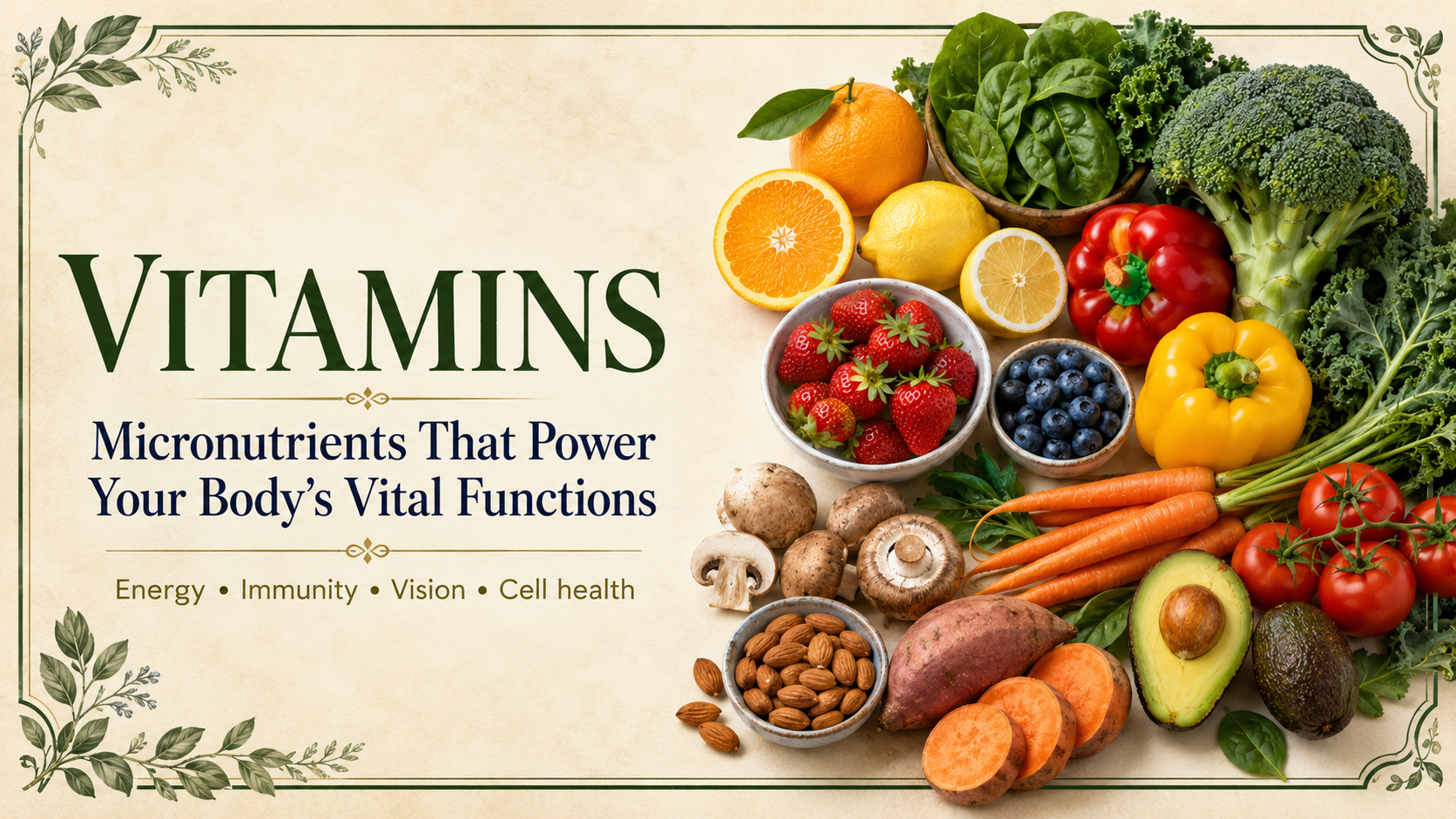
Vitamins: Micronutrients That Power Your Body's Vital Functions
Vitamins are one of six essential nutrients your body needs to thrive. Are you getting enough—especially on a plant-based diet? Even non-vegans might fall short.
Why Vitamins Matter
Vitamins regulate countless chemical reactions in the body. They support:
- Growth and development
- Immune function
- Blood clotting
- Energy production
- Cellular repair
Since the body can’t produce most vitamins on its own, we must get them from food—fruits, vegetables, grains, legumes, and, if needed, supplements.
The 13 Essential Vitamins
Your body needs these 13 vitamins to function properly
| Fat-Soluble | Stored in body fat |
|---|---|
| Vitamin A | Vision, immunity, skin health |
| Vitamin D | Bone strength, calcium absorption |
| Vitamin E | Antioxidant, cell protection |
| Vitamin K | Blood clotting, bone metabolism |
| Water-Soluble | Not stored—must be replenished |
|---|---|
| Vitamin B1 (Thiamine) | Energy, nerve function |
| Vitamin B2 (Riboflavin) | Metabolism, skin health |
| Vitamin B3 (Niacin) | Digestion, cholesterol balance |
| Vitamin B5 (Pantothenic Acid) | Hormone production |
| Vitamin B6 (Pyridoxine) | Brain development, immunity |
| Vitamin B7 (Biotin) | Hair, skin, nails |
| Vitamin B9 (Folate) | DNA synthesis, pregnancy support |
| Vitamin B12 (Cobalamin) | Red blood cells, nerve health |
| Vitamin C | Immunity, iron absorption |
Vitamin B12 is the only water-soluble vitamin that is stored in the liver. - via 13-essential vitamins your body needs stay healthy
Vitamins on a vegan Diet
A plant-based lifestyle offers many nutrients, but a few vitamins need extra attention to ensure you're meeting your body's needs.
Vitamin B12
- Why it matters: Supports nerve health, red blood cells, and DNA synthesis.
- Challenge: Found only in animal products
- Solution: Fortified foods (nutritional yeast, soy milk, cereals) or supplements
- Dosage: 250 mcg daily or 2,500 mcg weekly (Groves, 2026)
- Risk of deficiency: Anemia, nerve damage, cognitive decline, and even paralysis
One study found 86% of vegans were B12-deficient. (Niklewicz et al., 2024, pp. 463-479) This deficiency is preventable with proper supplementation.
Why is B12 important?
According to the National Institutes of Health, B12 keeps the body’s nerve and blood cells healthy, and it helps manufacture DNA.
Vitamin B12 is found only in animal foods. Vegans must get B12 from non-animal sources, such as fortified foods or supplements. Some B12 enters the food chain when soil animals are ingested. (Vitamin B12 - Consumer, 2023)
Some nutritional yeast contains B12, but it shouldn't be your only source.
Risks of Having Vitamin B12 Deficiency
What Are the Best Vegan Sources of Vitamin B12?
https://www.forksoverknives.com/wellness/every-vegan-vegetarian-needs-vitamin-b12/
Vitamin B12 deficiency can be easily prevented. B12 is found in fortified foods like cereals, soy milk, and nutritional yeast. However, the most reliable way to ensure adequate intake is through an oral supplement: either 250 micrograms daily or 2,500 micrograms weekly. I take a daily supplement for consistency. If you're unsure about your B12 levels, consult your doctor.
Vitamin D
- Why it matters: Helps absorb calcium, strengthens bones, boosts immunity.
- Challenge: Limited sun exposure, no dairy
- Solution:
- Sunlight: 10–15 minutes daily (more for darker skin tones)
- Fortified foods or D3 supplements (vegan-friendly options available)
Why is vitamin D important?
The Cleveland Clinic has valuable information on Vitamin D Deficiency and explains how vitamin D helps absorb calcium, blocks the release of a hormone that makes bones thin and brittle, improves muscle function, and boosts the immune system. The Cleveland Clinic provides an excellent chart that helps answer the age-old question: "How much vitamin D do you need?"
Vitamin D deficiency can be a problem for vegans and non-meat and non-dairy eaters. However, reversing a vitamin D deficiency is relatively simple if you eat a well-balanced vegan meal and take a few supplements.
Getting outside in the sun is an effective way for vegans to increase vitamin D levels.
Light-skinned individuals need about 10–15 minutes of sunlight on forearms and face; those with darker skin may require two to six times more. (Health, 2024) Supplements are another option
Omega-3 fatty acids
Why they matter: Support brain, heart, and joint health
Vegan sources:
- Microalgae (spirulina, chlorella, wakame)
- Sea vegetables
- Algae-based supplements
The most efficient sources of omega-3s for vegans include sea vegetables, microalgae, and supplements. (Saini et al., 2021)
Should you take a vitamin supplement?
If you lack dietary variety or feel unsure about your nutrition, supplements may help—just choose them carefully.
What to Look For:
- Clean ingredients (no fillers or binders)
- Bioavailable forms your body can absorb
- Trusted brands with transparent sourcing
Support for Your Journey
Want help getting started?
Join the Physicians Committee’s 21-Day Vegan Kickstart , a free program offering meal plans, recipes, and expert guidance to help you thrive on a plant-based diet.
Conclusion
Your body depends on vitamins to perform the countless functions that keep you energized, focused, and thriving. While supplements can help fill specific gaps, food remains the most powerful and reliable source of these nutrients. A colorful, varied plate—rich in fruits, vegetables, whole grains, nuts, seeds, and legumes—naturally delivers the vitamins your body relies on every day. Small, consistent choices add up. When you nourish yourself well, you support every system working quietly on your behalf. Let this knowledge guide you toward habits that strengthen your health for years to come.
Author's Note
Vitamins may be small, but their impact on your health is enormous. Over the years, I’ve seen how understanding these essential micronutrients helps people make more confident choices about food, supplements, and long‑term wellness. My goal with this article is to make the science simple, approachable, and empowering. When you know what your body truly needs—and where to find it—you can nourish yourself with intention and clarity. Every step toward balanced nutrition is a step toward a stronger, more resilient you. ---
------ Robert
Continue The Conversation
Every wellness journey is unique, and we can learn a great deal from one another's experiences.
What stood out to you in this article?
Have you faced similar challenges, discovered helpful strategies, or gained insights of your own?
I invite you to share your thoughts in the comments below. Your experience may encourage someone else who is taking the next step on their own journey.
Remember, meaningful change often begins with a single step—and none of us has to walk the path alone.
Reference List
- National Institutes of Health, Office of Dietary Supplements. Vitamins and Minerals Fact Sheets. Updated 2024.
- Harvard T.H. Chan School of Public Health. The Nutrition Source: Vitamins.
- Academy of Nutrition and Dietetics. Vitamins: What They Are and Why You Need Them.
- Mayo Clinic. Dietary Supplements: What to Know Before You Buy. Updated 2024.
- U.S. Department of Agriculture. FoodData Central.
- National Academies of Sciences, Engineering, and Medicine. Dietary Reference Intakes for Micronutrients.
- World Health Organization. Micronutrient Deficiencies.
(2025). Vitamin B12: MedlinePlus Medical Encyclopedia. MedlinePlus. https://medlineplus.gov/ency/article/002403.htm
Groves, M. (2026). Vitamin B12 Dosage: How Much Should You Take per Day?. Healthline. https://www.healthline.com/nutrition/vitamin-b12-dosage
Niklewicz, A., Hannibal, L., Warren, M. & Ahmadi, K. R. (2024). A systematic review and meta-analysis of functional vitamin B12 status among adult vegans. Nutritional Bulletin 49(4), pp. 463-479. https://doi.org/10.1111/nbu.12712
(2023). Vitamin B12 - Consumer. National Institutes of Health Office of Dietary Supplements. https://ods.od.nih.gov/factsheets/vitaminb12-consumer
Hannibal, L., Lederer, A., Storz, M. A., Huber, R., & Jacobsen, D. W. (2024). Vitamin B12 Status and Supplementation in Plant-Based Diets. Nutrition and Health 45(1). https://doi.org/10.1177/03795721241227233
Health, O. o. (2024). Vitamin D - Health Professional Fact Sheet. Office of Dietary Supplements. https://ods.od.nih.gov/factsheets/VitaminD-HealthProfessional/
Saini, R. K., Prasad, P., Sreedhar, R. V., Naidu, K. A., Shang, X. & Keum, Y. (2021). Omega-3 Polyunsaturated Fatty Acids (PUFAs): Emerging Plant and Microbial Sources, Oxidative Stability, Bioavailability, and Health Benefits-A Review. Antioxidants 10(10). https://doi.org/10.3390/antiox10101627
Disclaimer
The information provided in this article is for educational and informational purposes only and is not intended as medical, psychological, or professional advice. The content reflects general wellness principles and personal development concepts designed to encourage self-reflection and healthy lifestyle choices.
Individual circumstances vary, and readers should consult qualified healthcare professionals, mental health providers, or other appropriate experts regarding specific concerns or conditions. Never disregard professional advice or delay seeking help because of information contained in this article.
The author and publisher assume no responsibility for actions taken based on the information presented. Your health and well-being are ultimately your responsibility, and any changes to your lifestyle should be made thoughtfully and in consultation with appropriate professionals when necessary.