Introduction
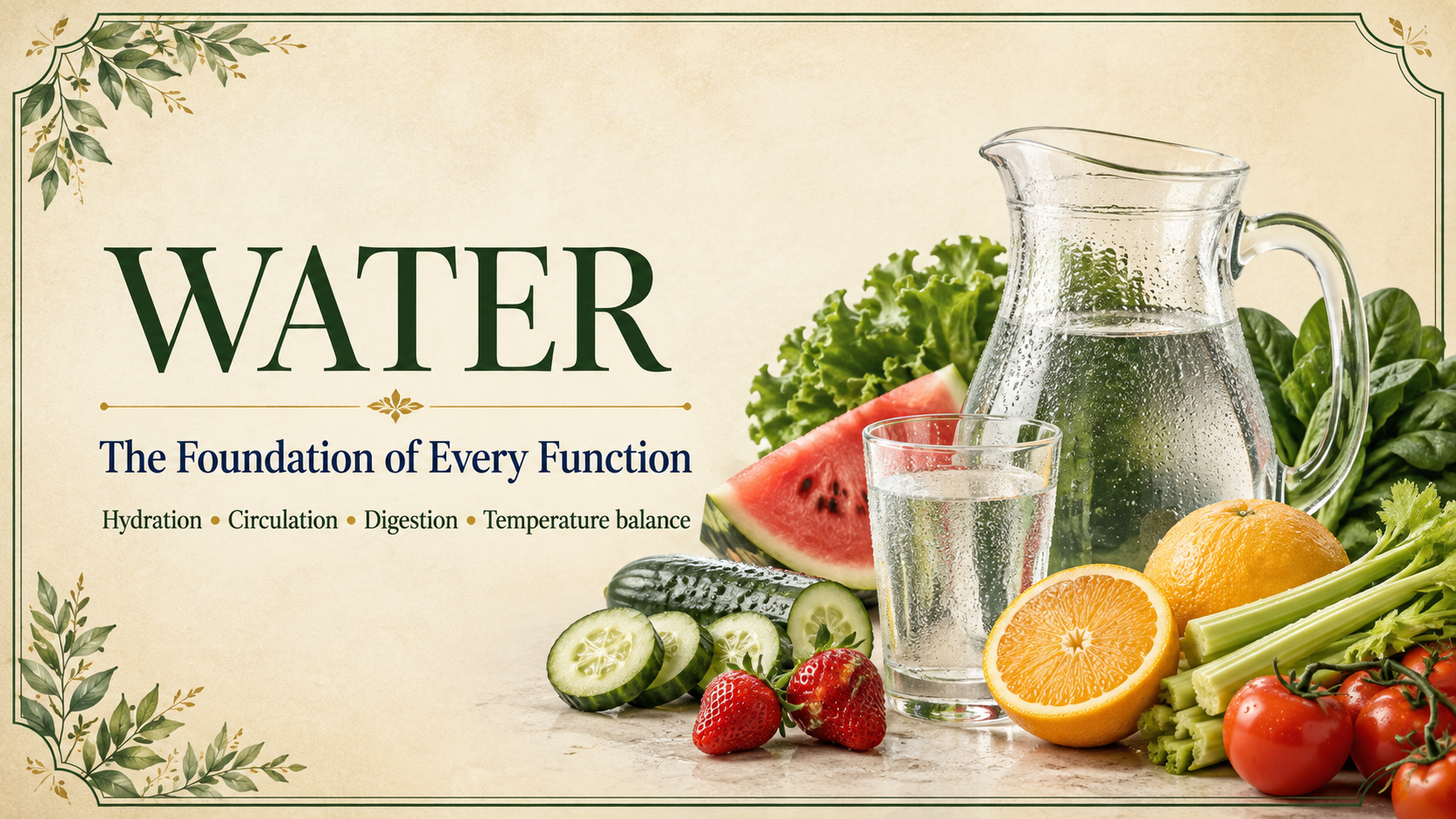
Water is more than hydration. It’s the medium through which life moves — the way nutrients travel, cells communicate, toxins leave the body, and balance is maintained. It’s the most overlooked nutrient, yet the one your body depends on every single moment.
Once you grasp how foundational water truly is, the act of staying hydrated feels less like an obligation and more like one of the simplest, most powerful actions you can take for your health. Let’s explore the reasons why water matters so much.
Why Water Matters
About 60% of your body is water, and nearly every biological process relies on it. (Brinkman et al., 2023) Adequate hydration helps:
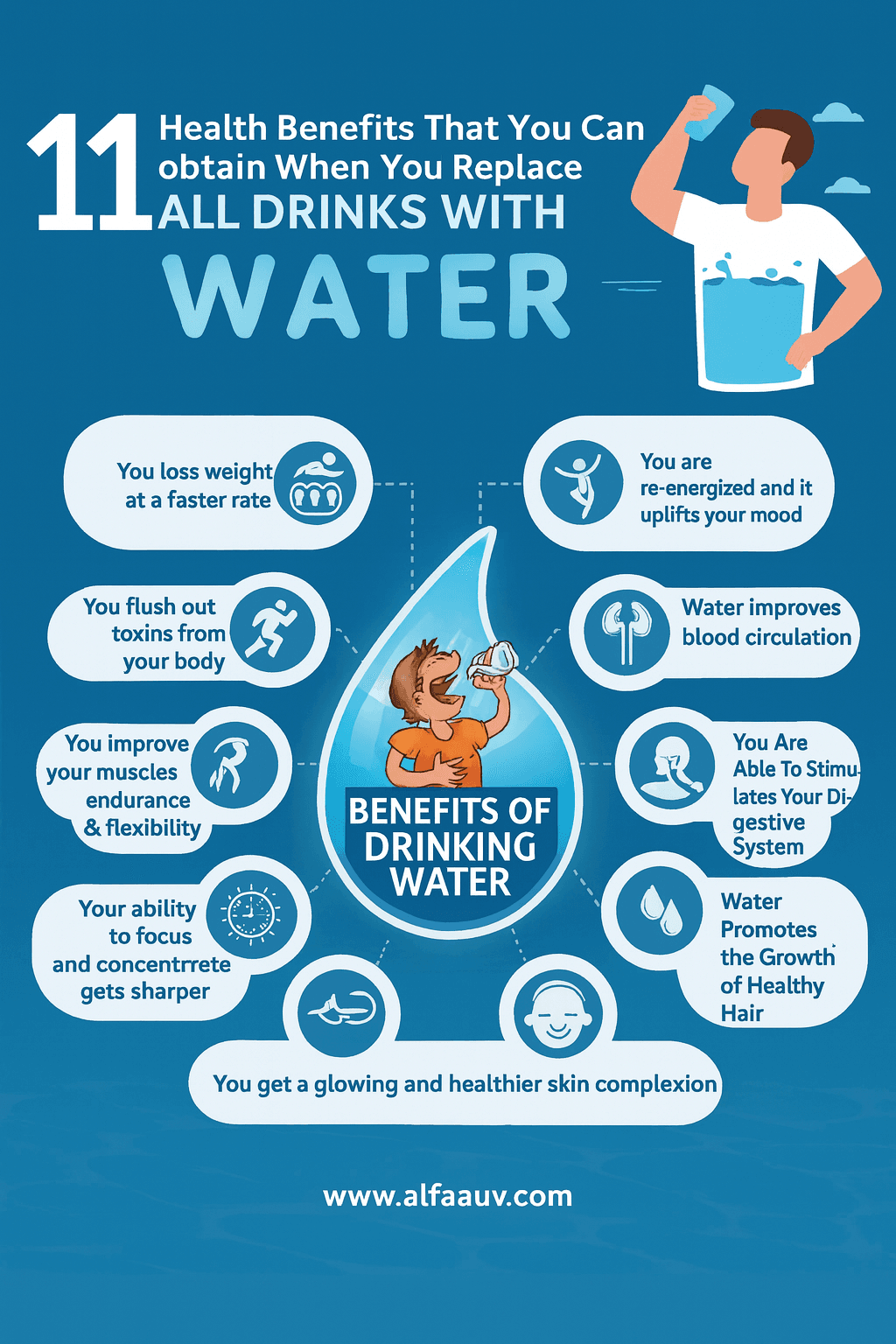
- Regulate body temperature
- Transport nutrients and oxygen
- Remove waste and toxins.
- Cushion joints and organs
- Support digestion and metabolism.
- Maintain skin elasticity
- Improve focus, mood, and mental clarity.
Even mild dehydration can affect energy, concentration, and overall well-being. Next, let’s look at how much water you actually need to stay optimally hydrated.
How Much Water Do You Need?
Your needs vary based on age, activity level, climate, and diet. A helpful guideline:
- Women: ~2.7 liters/day (about 11 cups)
- Men: ~3.7 liters/day (about 15 cups) (Rosinger & Herrick, 2016)
This includes water from beverages and food such as fruits, vegetables, soups, and smoothies.
Signs You May Need More Water
Your body gives early signals when hydration is slipping:
- Dry mouth or lips
- Fatigue or brain fog
- Headaches
- Constipation
- Dark yellow urine
- Dizziness or lightheadedness
When you feel thirsty, it means you are already mildly dehydrated. (Adams et al., 2020)
Hydration Tips for Everyday Wellness
Small, consistent habits make hydration effortless:
- Start your morning with a glass of water.
- Keep a reusable bottle within reach.
- Add citrus, herbs, or cucumber for natural flavor.
- Eat foods like melon, lettuce, and oranges, which are high in water.
- Sip throughout the day instead of waiting for thirst.
- Increase your intake during heat, exercise, or illness. Beyond just water, how do plant-based eating habits affect your hydration?
Hydration and Plant‑Based Eating
Plant-based diets naturally support hydration because of their high fruit, vegetable, and legume content. (Harris et al., 2020, pp. 375-386) However, purposeful hydration remains essential.
Some of the most hydrating plant foods include:
- Cucumbers
- Watermelon
- Celery
- Oranges
- Tomatoes
- Zucchini
These foods complement — but don’t replace — your daily water intake. But what about the quality and source of the water you drink?
Benefits of Drinking Water
Is Bottled Water Healthier? What You Should Know
Many people assume bottled water is cleaner or safer than tap water, but that isn’t always the case.
Research, including a four‑year study by the Natural Resources Defense Council, found that about one‑third of bottled water tested contained contaminants exceeding allowable limits .
A few important considerations:
Bottled water is not guaranteed to be safer than tap water
Added minerals often provide no proven health benefit
Some bottled water is slightly acidic
Plastic production and disposal have significant environmental impacts
Understanding these factors empowers you to make informed choices for your health and the planet.
Is Bottled Water Healthier? What You Should Know
Many people assume bottled water is cleaner or safer than tap water, but bottled water can contain contaminants that exceed safety limits and is not always subject to stricter regulations than tap water. (Administration, 2024)
Research, including a four-year study by the Natural Resources Defense Council, found that about one-third of bottled water tested contained contaminant levels above what is considered safe for consumption.
A few important considerations: Bottled water is not necessarily safer than tap water, and it may expose you to health risks if contaminants are present.
- Added minerals often provide no proven health benefit. (Sunardi et al., 2022, pp. 339-349)
- Some bottled water is slightly acidic. (Wright, 2015, pp. 6-12)
- Plastic production and disposal have significant environmental impacts. (Rikhter et al., 2022)
Understanding these factors empowers you to make informed choices for your health and the planet. Next, let’s consider different methods to improve your home's water quality.
Exploring Filtration and Water Quality Options
Many households choose filtration systems for peace of mind. One option is ionized or alkaline water systems, such as those produced by Enagic. These devices filter tap water and create different types of water through electrolysis, which some people use for drinking, cooking, cleaning, and beauty routines.
While these systems are popular, it’s important to research and compare options to choose the one that aligns with your needs, values, and budget. Your goal is simply this: access to clean, safe, great‑tasting water you can trust.
If you’re curious about water safety, several educational resources explore potential concerns with municipal water systems and offer guidance on protecting your household. Now, let’s take a look at other healthy, hydrating beverage options beyond water alone.
Other Healthy Hydrating Options
While water is the gold standard, other beverages can also support hydration. Research‑based recommendations highlight options such as:
- Herbal teas
- Fresh vegetable juices
- Fruit‑infused water
- Certain plant‑based beverages (Bestwick et al., 2020)
Water-rich foods can help meet daily needs, but pure water is the most effective for hydration.
Final Comments
Hydration is essential—and simple. Drink water in the morning, keep a bottle nearby, and adjust intake for activity, heat, or stress. Whether you choose pure water, herbal teas, or water-rich foods, consistency is key. Explore your filtration or bottled water options and select the one that fits your needs. The most important thing is reliable, clean water for your health.
There are other healthy beverages we can drink. The Food Revolution Network has made a list of beverages based on research. The 6 Healthiest Beverages You Should Be Drinking Now
You can meet some hydration needs from produce and beverages like juice, but water remains the best choice.
Author's Note
Water is one of the simplest yet most powerful tools we have for supporting long‑term health. As I’ve worked with individuals on their wellness journeys, I’ve seen how small hydration habits can transform energy, digestion, clarity, and overall well‑being. My goal with this article is to help you understand not just why water matters, but how easy it can be to make hydration a natural part of your day. When you give your body the water it needs, every system works better — and that’s a change you can feel.
---- Robert
Continue The Conversation
Every wellness journey is unique, and we can learn a great deal from one another's experiences.
What stood out to you in this article?
Have you faced similar challenges, discovered helpful strategies, or gained insights of your own?
I invite you to share your thoughts in the comments below. Your experience may encourage someone else who is taking the next step on their own journey.
Remember, meaningful change often begins with a single step—and none of us has to walk the path alone.
Reference List
- Centers for Disease Control and Prevention. Water & Nutrition. Updated 2024.
- U.S. National Academies of Sciences, Engineering, and Medicine. Dietary Reference Intakes for Water, Potassium, Sodium, Chloride, and Sulfate. National Academies Press; 2005.
- Popkin BM, D’Anci KE, Rosenberg IH. Water, hydration, and health. Nutrition Reviews. 2010;68(8):439–458.
- Natural Resources Defense Council. Bottled Water: Pure Drink or Pure Hype? NRDC Report; 1999. (Referenced in article discussion of bottled water safety.) revolutionalizeurhealth.com
- European Food Safety Authority. Scientific Opinion on Dietary Reference Values for Water. EFSA Journal. 2010;8(3):1459.
- Harvard T.H. Chan School of Public Health. The Nutrition Source: Water.
- Mayo Clinic. Dehydration — Symptoms and Causes. Updated 2024.
- Food Revolution Network. The 6 Healthiest Beverages You Should Be Drinking Now. (Referenced in article’s closing section.) revolutionalizeurhealth.com
Brinkman, J. E., Dorius, B., & Sharma, S. (2023). Physiology, Body Fluids. StatPearls - NCBI Bookshelf. https://www.ncbi.nlm.nih.gov/books/NBK482447/
Rosinger, A. & Herrick, K. (2016). Daily Water Intake Among U.S. Men and Women, 2009–2012. NCHS Data Brief No. 242. https://doi.org/10.15620/cdc.37156
Adams, J., Myatich, A. I., & McCullough, A. S. (2020). Thirst as an ingestive behavior: A brief review on physiology and assessment. Appetite 26(3). https://doi.org/10.1177/0260106020916972
Harris, F., Moss, C., Joy, E. J., Quinn, R., Scheelbeek, P. F., Dangour, A. D. & Green, R. (2020). The Water Footprint of Diets: A Global Systematic Review and Meta-analysis. Advances in Nutrition 11(2), pp. 375-386. https://doi.org/10.1093/advances/nmz091
Administration, U. F. (2024). Bottled Water Everywhere: Keeping it Safe. FDA. https://www.fda.gov/consumers/consumer-updates/bottled-water-everywhere-keeping-it-safe
Sunardi, D., Chandra, D. N., Medize, B. E., Manikam, N. R., Friska, D., Lestari, W., & Insani, P. N. (2022). Health effects of alkaline, oxygenated, and demineralized water compared to mineral water among the healthy population: a systematic review. Reviews on Environmental Health 39(2), pp. 339-349. https://doi.org/10.1515/reveh-2022-0057
Wright, K. F. (2015). Is Your Drinking Water Acidic? A Comparison of the Varied pH of Popular Bottled Waters. Journal of Dental Hygiene 89, pp. 6-12. https://doi.org/10.1016/j.jdent.2015.05.001
Rikhter, P., Dinc, I., Zhang, Y., Jiang, T., Miyashiro, B., Walsh, S., Wang, R., Dinh, Y., Suh, S., & Kneifel, J. D. (2022). Life Cycle Environmental Impacts of Plastics: A Review. NIST GCR 22-032. https://doi.org/10.6028/NIST.GCR.22-032
Bestwick, C., Scobbie, L., Milne, L., Duncan, G., Cantlay, L. & Russell, W. (2020). Fruit-Based Beverages Contain a Wide Range of Phytochemicals, and Intervention Targets Should Account for the Individual Compounds Present and Their Availability. Foods 9(7). https://doi.org/10.3390/foods9070891
Disclaimer
The information provided in this article is for educational and informational purposes only and is not intended as medical, psychological, or professional advice. The content reflects general wellness principles and personal development concepts designed to encourage self-reflection and healthy lifestyle choices.
Individual circumstances vary, and readers should consult qualified healthcare professionals, mental health providers, or other appropriate experts regarding specific concerns or conditions. Never disregard professional advice or delay seeking help because of information contained in this article.
The author and publisher assume no responsibility for actions taken based on the information presented. Your health and well-being are ultimately your responsibility, and any changes to your lifestyle should be made thoughtfully and in consultation with appropriate professionals when necessary.