Introduction
Healthy eating is simple. Forget strict rules, pricey products, or fleeting trends. Your body thrives on regular habits, whole foods, and daily actions that nurture lasting well-being.
This guide is your tool to stay focused on what counts: feeding your body foods that boost energy, improve focus, and build confidence
Simple Real-Food
1. Choose Whole, Minimally Processed Foods
When in doubt, choose foods that look close to how they came from nature.
Better choices include:
- Fresh fruits and vegetables
- Whole grains like oats, quinoa, and brown rice
- Beans, lentils, and legumes
- Nuts and seeds
- Minimally processed plant-based proteins
These foods deliver fiber, antioxidants, vitamins, and minerals that support digestion, immunity, and steady energy.
2. Build Balanced, Satisfying Meals
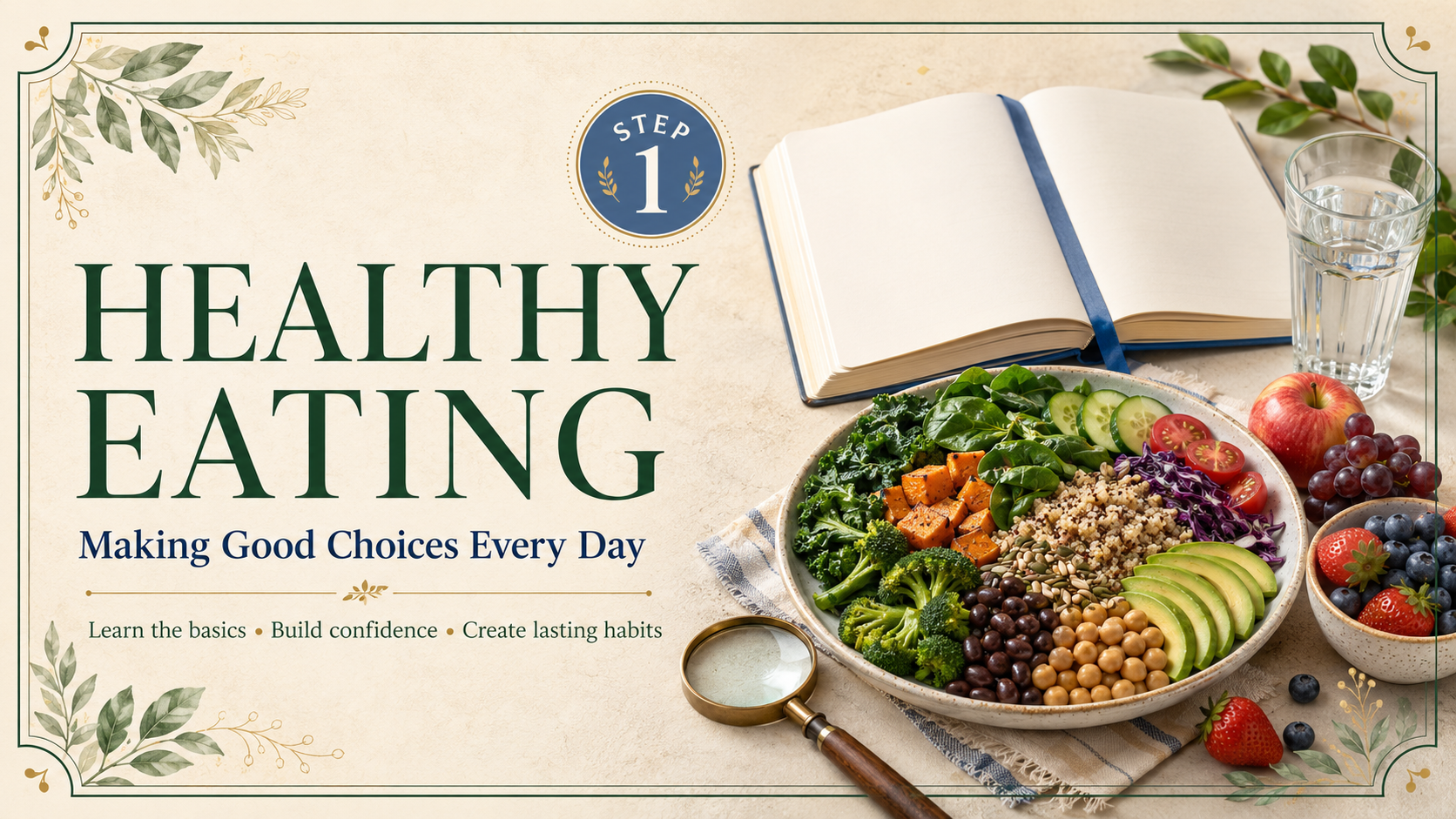
A balanced plate helps you stay full longer and avoid energy crashes.
Aim for:
- Color: At least 2–3 colorful vegetables or fruits
- Fiber: Whole grains or legumes
- Healthy fats: Avocado, nuts, seeds, or olive oil
- Lean or plant-strong proteins: Beans, tofu, tempeh, or fish if you include it
Balanced meals help stabilize blood sugar and reduce cravings.
3. Reduce Ultra‑Processed Foods
You don’t need perfection — just awareness.
Try to limit foods that are:
- High in added sugars
- High in refined oils
- Loaded with artificial ingredients
- Designed to be “hyper‑palatable”
These foods can disrupt appetite signals and make healthy eating harder than it needs to be.
4. Read Labels with Confidence
Food labels can be confusing, but a few simple habits make them easier to navigate.
Look for:
- Short ingredient lists
- Ingredients you recognize
- Low added sugars
- High fiber (3g or more per serving)
Be cautious of:
- “Natural flavors” as the main flavoring
- Health halos like “low fat,” “gluten-free,” or “keto”
- Products with long chemical-sounding ingredients
5. Make Small, Sustainable Changes
Healthy eating is a journey, not a race.
Start with one or two simple shifts:
- Add one extra serving of vegetables each day
- Swap sugary drinks for water or herbal tea
- Choose whole grains instead of refined
- Prep a few healthy snacks for the week
Small steps compound into big results.
6. Give Yourself Grace
There’s no such thing as perfect eating. What matters is your overall pattern — not any single meal.
Celebrate progress. Stay curious. Keep learning what your body responds to best.A Gentle Reminder
You deserve to feel energized, nourished, and supported. Every good choice you make is a vote for your long-term well-being.
Author’s Note
I created this page to remind you that healthy eating isn’t about perfection — it’s about progress. Every small choice you make to nourish your body is a powerful step toward clarity, energy, and long-term wellbeing.
This isn’t a list of rules. It’s a gentle guide to help you feel more confident, more informed, and more supported in your journey. Whether you’re just starting out or refining your habits, I hope these ideas feel doable, uplifting, and grounded in real life.
You deserve to feel your best — and I’m honored to walk this path with you.
Warmly,
---- Robert
Continue The Conversation
Every wellness journey is unique, and we can learn a great deal from one another's experiences.
What stood out to you in this article?
Have you faced similar challenges, discovered helpful strategies, or gained insights of your own?
I invite you to share your thoughts in the comments below. Your experience may encourage someone else who is taking the next step on their own journey.
Remember, meaningful change often begins with a single step—and none of us has to walk the path alone.
Reference List
- Harvard T.H. Chan School of Public Health. The Nutrition Source: Healthy Eating Plate.
https://www.hsph.harvard.edu/nutritionsource/healthy-eating-plate(hsph.harvard.edu in Bing) - Mayo Clinic. Nutrition and Healthy Eating.
https://www.mayoclinic.org/healthy-lifestyle/nutrition-and-healthy-eating(mayoclinic.org in Bing) - Cleveland Clinic. How to Read Food Labels.
https://health.clevelandclinic.org/how-to-read-food-labels(health.clevelandclinic.org in Bing) - National Institutes of Health (NIH). Dietary Guidelines for Americans.
https://www.nutrition.gov/topics/dietary-guidelines(nutrition.gov in Bing) - Academy of Nutrition and Dietetics. Smart Snacking for Adults and Teens. https://www.eatright.org
Disclaimer
The information provided in this article is for educational and informational purposes only and is not intended as medical, psychological, or professional advice. The content reflects general wellness principles and personal development concepts designed to encourage self-reflection and healthy lifestyle choices.
Individual circumstances vary, and readers should consult qualified healthcare professionals, mental health providers, or other appropriate experts regarding specific concerns or conditions. Never disregard professional advice or delay seeking help because of information contained in this article.
The author and publisher assume no responsibility for actions taken based on the information presented. Your health and well-being are ultimately your responsibility, and any changes to your lifestyle should be made thoughtfully and in consultation with appropriate professionals when necessary.