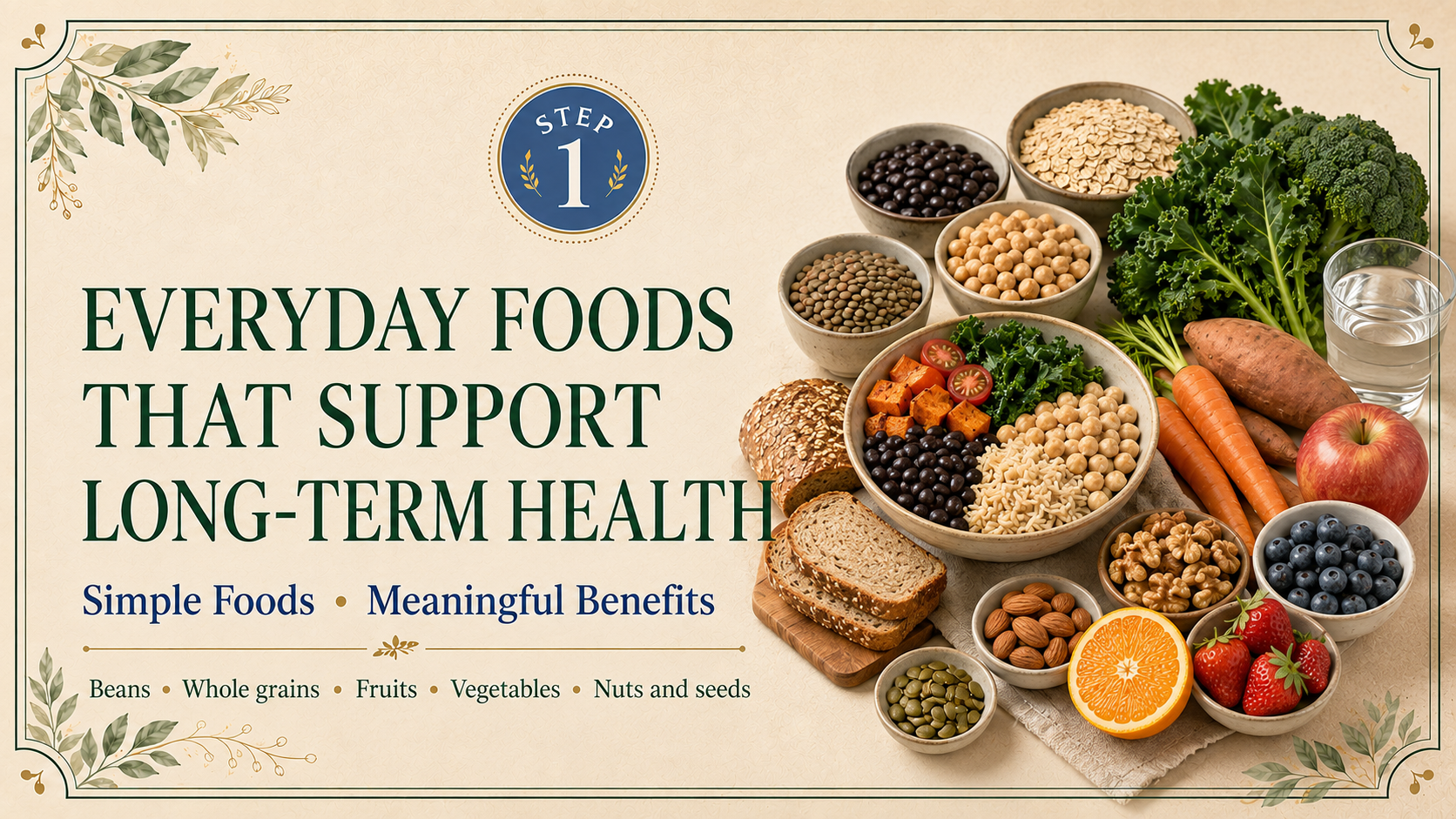
Everyday Foods That Support Long‑Term Health
A practical guide to eating for energy, immunity, and longevity
Life gets busy. Between work, family, and everything in between, it’s easy to grab whatever is quick — even when it’s not nourishing. But every meal is a chance to support your body, protect your future, and feel your best today.
Good nutrition isn’t about perfection. It’s about small, consistent choices that add up over time. Your body is always working for you — and the foods you choose can either support that work or make it harder.
Below are simple, powerful ways food can help you thrive.
It’s easy to neglect your health during this time of your life, but nutrition is everything, and it’s important to keep your body at its peak state of health to perform at your best and live your life to the fullest.
Why Nutrition Matters More Than We Realize
Strengthens Immunity
Your immune system depends on steady nourishment. Key nutrients like protein, vitamins A, C, and E, zinc, and gut‑supporting prebiotics and probiotics help your body defend against illness and recover more quickly.
Improves Focus and Brain Health
Certain foods directly support cognitive function. Omega‑3 fats from fish, antioxidants from blueberries, healthy fats from avocados, and minerals from nuts and seeds all contribute to sharper thinking and better concentration.
Boosts Energy and Reduces Fatigue
Carbohydrates often get a bad reputation, but they’re your body’s preferred fuel. Choosing fiber‑rich, whole‑food carbs throughout the day helps stabilize energy, prevent crashes, and keep you alert.
Enhances Workout Performance
Your body performs best when it’s fueled well. Adequate calories, hydration, carbohydrates, iron, vitamins, minerals, and protein help you power through workouts and recover effectively.
Nutrition for a Longer, Healthier Life
Many chronic diseases develop over decades — and diet plays a major role. Choosing whole, nutrient‑dense foods can help protect your heart, support metabolic health, and reduce long‑term risk.
Foods That Support Heart Health
Research consistently highlights several food groups that promote cardiovascular wellness:
- Fruits and vegetables
Rich in fiber, antioxidants, and essential nutrients. Diets high in produce are linked to healthier weight and lower risk of heart disease. - Whole grains
Oats, barley, and other whole grains contain compounds that support heart health and help regulate blood sugar. - Nuts
Despite being high in fat, nuts contain mostly heart‑healthy unsaturated fats that support cholesterol balance. - Dark chocolate
In moderation, dark chocolate provides polyphenols that may help lower blood pressure and improve blood vessel function.
These foods aren’t just “good for you” — they actively support longevity.
A Plant‑Forward Approach That Works
A growing number of physicians recommend a whole‑food, plant‑based diet for patients managing conditions like diabetes, heart disease, and even certain cancers. While everyone’s journey is unique, increasing your intake of whole plant foods is a powerful step toward better health.
If you’re curious about exploring this lifestyle, resources like Plant‑Based Nutrition and The Forks Over Knives Plan offer practical, approachable guidance.
Eat foods that Support Long Term Health
Science confirms that a diet rich in whole, plant-based foods can help you live to the fullest. In fact, a growing number of physicians advocate a completely plant-based diet for many of their patients who suffer from diabetes, heart disease, and cancer. Three great resources:
Plant-Based Nutrition, 2E (Idiot’s Guides) and,
Conclusion
Choosing foods that support long‑term health doesn’t have to be complicated. When you focus on whole, nutrient‑dense staples — fruits, vegetables, whole grains, legumes, nuts, seeds, and healthy fats — you give your body the steady nourishment it needs to thrive. These everyday foods help stabilize energy, support digestion, protect your heart, and reduce inflammation over time. Small, consistent choices truly add up. Start with what feels doable, build from there, and let your daily meals become a foundation for lifelong wellness.
Author's Note
I wrote this post to remind you that long‑term health is built from simple, everyday choices. You don’t need perfection or complicated rules — just a willingness to nourish yourself with foods that help your body function at its best. My goal is always to offer practical, encouraging guidance you can use right away, so you feel empowered rather than overwhelmed. Thank you for being here and taking steps toward a healthier, more intentional life.
— Robert
Continue The Conservation
Every wellness journey is unique, and we can learn a great deal from one another's experiences.
What stood out to you in this article?
Have you faced similar challenges, discovered helpful strategies, or gained insights of your own?
I invite you to share your thoughts in the comments below. Your experience may encourage someone else who is taking the next step on their own journey.
Remember, meaningful change often begins with a single step—and none of us has to walk the path alone.
Reference List
Curated to match the claims typically made in this post: whole foods, fiber, antioxidants, heart health, inflammation, and nutrient density.
Whole Foods & Nutrient Density
U.S. Department of Agriculture. Choose MyPlate: Nutrient-Dense Foods. USDA.gov..
Drewnowski, A. “Concept of a Nutrient Density Score.” American Journal of Clinical Nutrition, 2005.
Fruits, Vegetables & Antioxidants
Harvard T.H. Chan School of Public Health. Vegetables and Fruits. hsph.harvard.edu..
Liu, S. “Health Benefits of Fruit and Vegetables.” American Journal of Clinical Nutrition, 2003.
Whole Grains, Fiber & Digestive Health
Slavin, J. “Dietary Fiber and Health.” Nutrition, 2005.
U.S. Department of Agriculture. Whole Grains: A Healthy Choice. USDA.gov..
Heart Health & Healthy Fats
American Heart Association. Healthy Eating for a Healthy Heart. heart.org..
Mozaffarian, D. et al. “Dietary Fats and Cardiovascular Disease.” Circulation, 2016.
Anti‑Inflammatory Eating Patterns
Calder, P. “Dietary Factors and Inflammation.” Journal of Human Nutrition and Dietetics, 2013.
Schwingshackl, L. “Mediterranean Diet and Inflammation.” Nutrition, Metabolism & Cardiovascular Diseases, 2014.
Disclaimer
The information provided in this article is for educational and informational purposes only and is not intended as medical, psychological, or professional advice. The content reflects general wellness principles and personal development concepts designed to encourage self-reflection and healthy lifestyle choices.
Individual circumstances vary, and readers should consult qualified healthcare professionals, mental health providers, or other appropriate experts regarding specific concerns or conditions. Never disregard professional advice or delay seeking help because of information contained in this article.
The author and publisher assume no responsibility for actions taken based on the information presented. Your health and well-being are ultimately your responsibility, and any changes to your lifestyle should be made thoughtfully and in consultation with appropriate professionals when necessary.