Introduction
A Fresh Look at a Familiar Food
Most of us grew up hearing the same message: “Drink your milk — it’s good for you.”
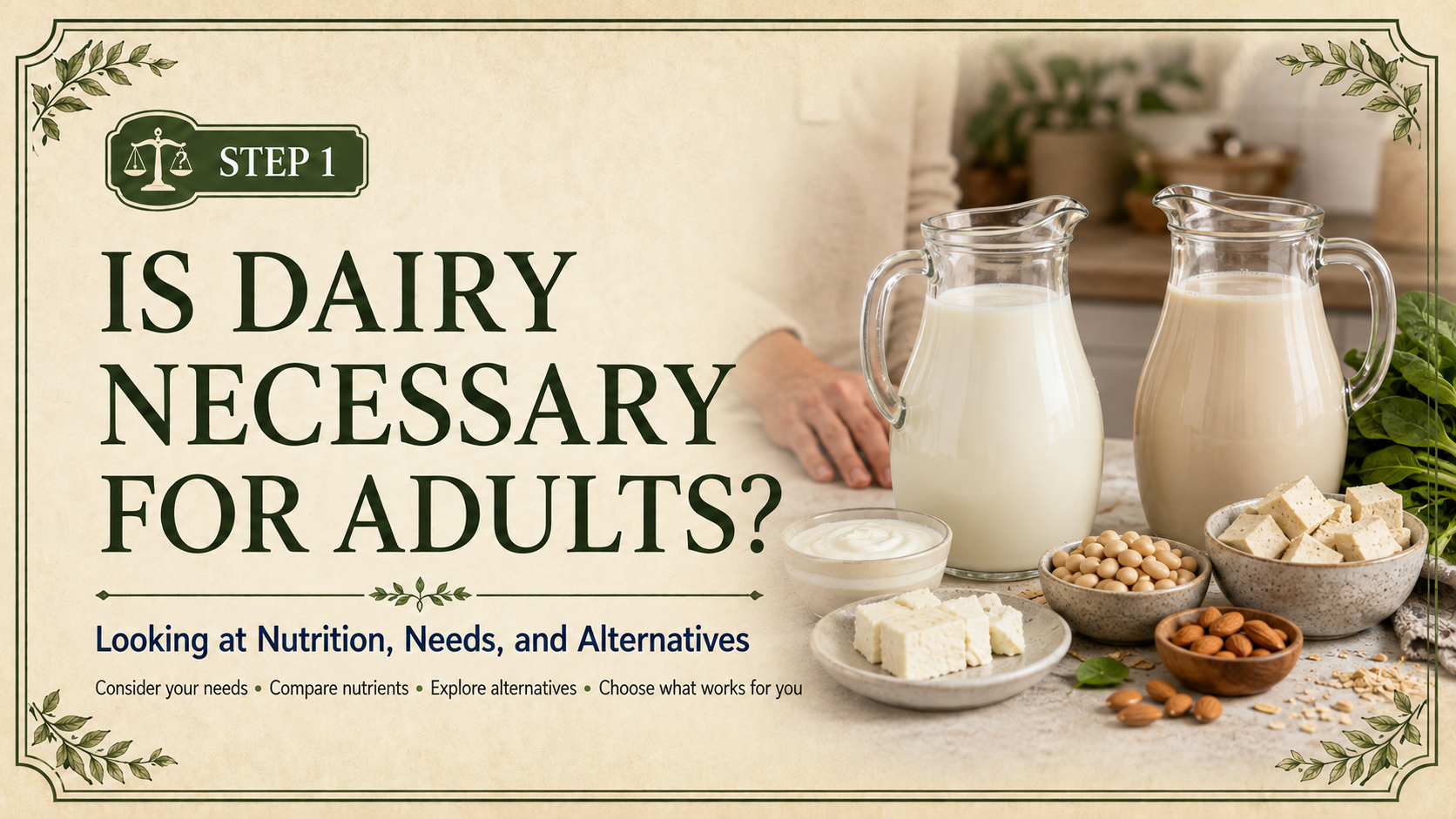
But as adults, our bodies, lifestyles, and nutritional needs change. So does the science. Today, more people are asking a simple, honest question:
Do adults actually need dairy to stay healthy?
Now, let’s take a closer look at some often-overlooked downsides of dairy for adults.
For many adults, dairy isn’t the nutritional hero it’s been marketed to be. In fact, removing dairy can bring meaningful benefits for certain people.
1. Digestive Relief
People with IBS or lactose intolerance often experience less bloating, gas, and discomfort when they reduce or eliminate dairy.
( revolutionalizeurhealth.com)
2. Reduced Inflammation
If you struggle with sinus issues, post‑nasal drip, chronic cough, or unexplained inflammation, dairy may be playing a role. Many individuals discover improvements after removing dairy and eggs — especially when guided by IgG testing.
( revolutionalizeurhealth.com)
3. Allergy‑Related Symptoms
For those with dairy allergies, even small amounts can trigger reactions. Eliminating dairy can bring noticeable relief.
( revolutionalizeurhealth.com)
4. Environmental Impact
Dairy production is resource‑intensive. Choosing plant‑based alternatives can reduce your environmental footprint.
What the Research — and Experts — Are Saying
Advocacy groups have criticized efforts to push dairy products onto vulnerable populations, including SNAP recipients, despite dairy’s links to heart disease, diabetes, and other chronic conditions.
( revolutionalizeurhealth.com)
Dairy and Prostate Cancer
Multiple studies—some dating back to the 1970s—have found associations between high dairy intake and increased prostate cancer risk. For example, Huncharek et al. (2008, pp. 421-41) report a consistent pattern in their meta-analysis. While research continues, the pattern is hard to ignore.
( revolutionalizeurhealth.com)
Marketing vs. Reality
From concussion‑recovery claims to “milk builds strong bones” messaging, dairy‑funded marketing has shaped public perception for decades. Independent reviews often tell a different story.
( revolutionalizeurhealth.com)
Video From the Exam Room
Books That Dig Deeper
Resources to consider when you consume dairy every day are found below. After reading, you may think you do not need dairy products in your diet!
- Whitewash: The Disturbing Truth about Cow’s Milk and Your Health
- Got Milked?: The Great Dairy Deception and Why You’ll Thrive without Milk
- What’s in Your Milk?: An Exposé of Industry and Government Cover-Up on the Dangers of the Genetically Engineered (rBGH) Milk You’re Drinking
- The Cheese Trap: How Breaking a Surprising Addiction Will Help You Lose Weight, Gain Energy, and Get Healthy
After examining research and personal experiences, a key question arises: So... do adults really need dairy?
No, adults do not necessarily need dairy.
Dairy is optional. Some tolerate it well; others benefit from avoiding it. Choose foods that suit your health, values, and wellbeing.
Some people tolerate it well. Others feel dramatically better without it. What matters most is choosing foods that support your health, values, and long‑term wellbeing.
If you’re considering reducing or eliminating dairy, a registered dietitian or healthcare provider can help you meet your nutritional needs through other foods.
Why This Matters
Understanding the truth about dairy helps you make choices based on your body, not marketing campaigns or outdated assumptions. When you know the facts, you can:
- Reduce inflammation
- Improve digestion
- Support long‑term health
- Align your diet with your ethics and values.
- Feel more in control of your wellness journey.
This is what your platform is all about — empowering people with clarity, compassion, and practical tools.
Conclusion / Final Thought
Dairy is not required for adults, and for many, it can contribute to inflammation, digestive issues, hormonal imbalance, or long-term health risks. At the same time, excluding dairy opens up a wider range of nutrient-dense, plant-based foods that support bone strength, gut health, and vitality. Whether you reduce or remove dairy, the key is to understand your needs and choose foods that make you feel your best. Explore and build an eating pattern that suits your health goals and values.
Author's Note
For many of us, dairy has been woven into our lives since childhood—marketed as essential, wholesome, and irreplaceable. But as adults, our nutritional needs shift, and so does the science. My goal with this article is not to tell you what to eat, but to give you the clarity and confidence to make informed choices that support your long‑term health. When we look closely at the research, a different picture emerges—one that invites us to question old assumptions and explore alternatives that may better serve our bodies. I hope this piece empowers you to approach your health with curiosity, compassion, and a willingness to choose what truly nourishes you.
---- Robert
Continue The Conversation
Reference List
- U.S. Department of Health and Human Services & U.S. Department of Agriculture. Dietary Guidelines for Americans, 2020–2025.
- Harvard T.H. Chan School of Public Health. “The Nutrition Source: Dairy.”
- National Institutes of Health. “Lactose Intolerance.”
- Willett, W. C., & Ludwig, D. S. (2020). “Milk and Health.” New England Journal of Medicine.
- Melnik, B. C. (2015). “Milk—A Nutrient System of Mammalian Evolution Promoting mTORC1‑Driven Aging.” Nutrients.
- Qin, L. et al. (2009). “Milk Consumption and Prostate Cancer Risk: A Meta‑Analysis.” Nutrition and Cancer.
- Feskanich, D. et al. (2014). “Milk Consumption and Hip Fractures: A Prospective Study.” JAMA Pediatrics.
- Thorning, T. K. et al. (2016). “Milk and Dairy Products: Good or Bad for Human Health?” Food & Nutrition Research.
Huncharek, M., Muscat, J. & Kupelnick, B. (2008). Dairy products, dietary calcium, and vitamin D intake as risk factors for prostate cancer: a meta-analysis of 26,769 cases from 45 observational studies. Nutr Cancer 60(4), pp. 421-41. https://doi.org/10.1080/01635580801911779
Nieman, K., Anderson, B. & Cifelli, C. (2020). The Effects of Dairy Product and Dairy Protein Intake on Inflammation: A Systematic Review of the Literature. Current Developments in Nutrition 4(2). https://doi.org/10.1093/cdn/nzaa060_009
Nolden, A. A. & Forde, C. G. (2023). The Nutritional Quality of Plant-Based Foods. Sustainability 15(4). https://doi.org/10.3390/su15043324
Disclaimer
The information provided in this article is for educational and informational purposes only and is not intended as medical, psychological, or professional advice. The content reflects general wellness principles and personal development concepts designed to encourage self-reflection and healthy lifestyle choices.
Individual circumstances vary, and readers should consult qualified healthcare professionals, mental health providers, or other appropriate experts regarding specific concerns or conditions. Never disregard professional advice or delay seeking help because of information contained in this article.
The author and publisher assume no responsibility for actions taken based on the information presented. Your health and well-being are ultimately your responsibility, and any changes to your lifestyle should be made thoughtfully and in consultation with appropriate professionals when necessary.