Introduction: Your Body’s Messengers
A gentle guide to understanding the food–hormone connection
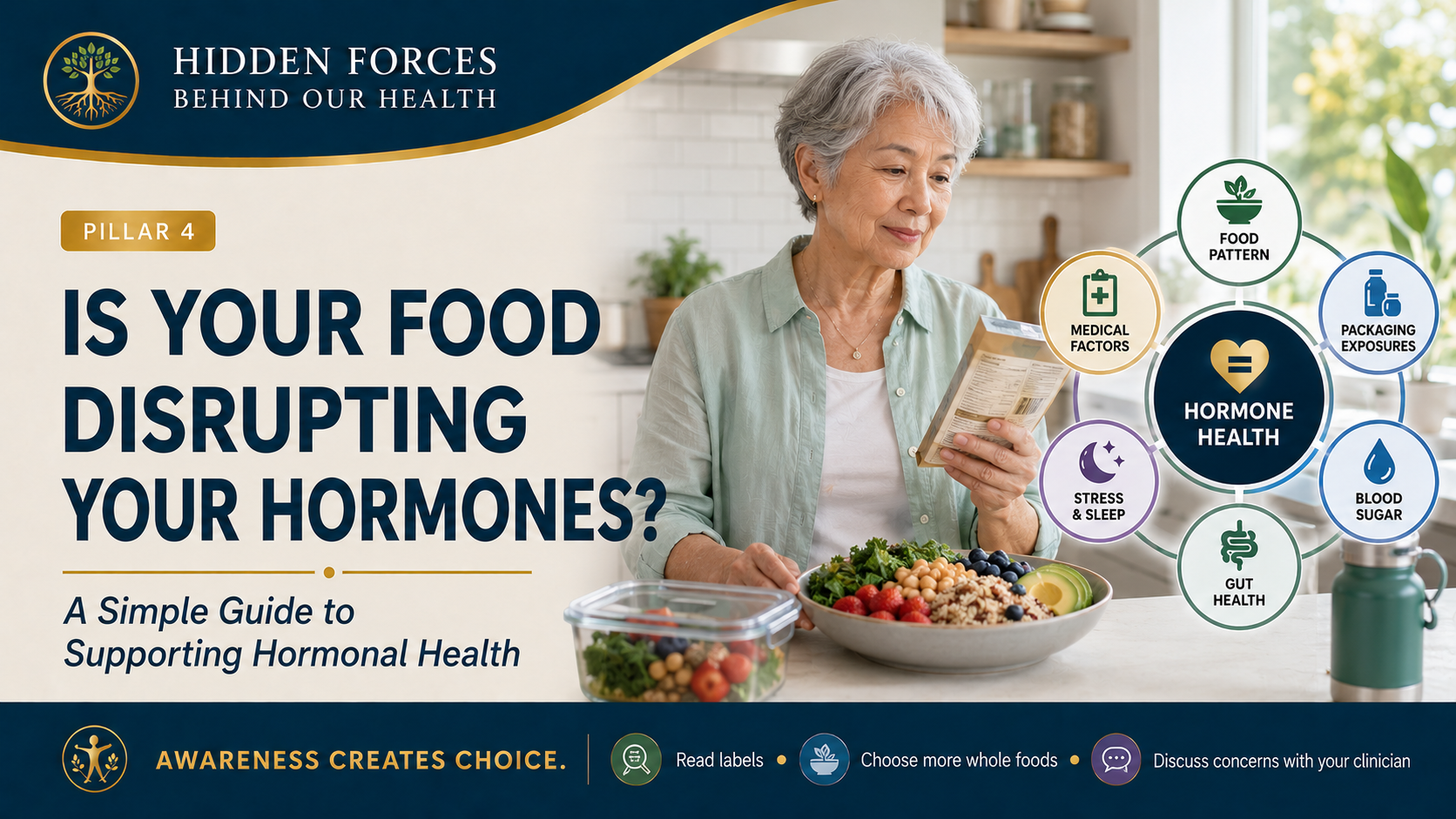
Hormones are messengers that control your energy, mood, sleep, metabolism, appetite, stress, and recovery. When these signals are balanced, your body runs smoothly; imbalances complicate everything.
Your food choices shape hormone balance. Awareness and consistent habits—not perfection—drive powerful change.
Why This Matters
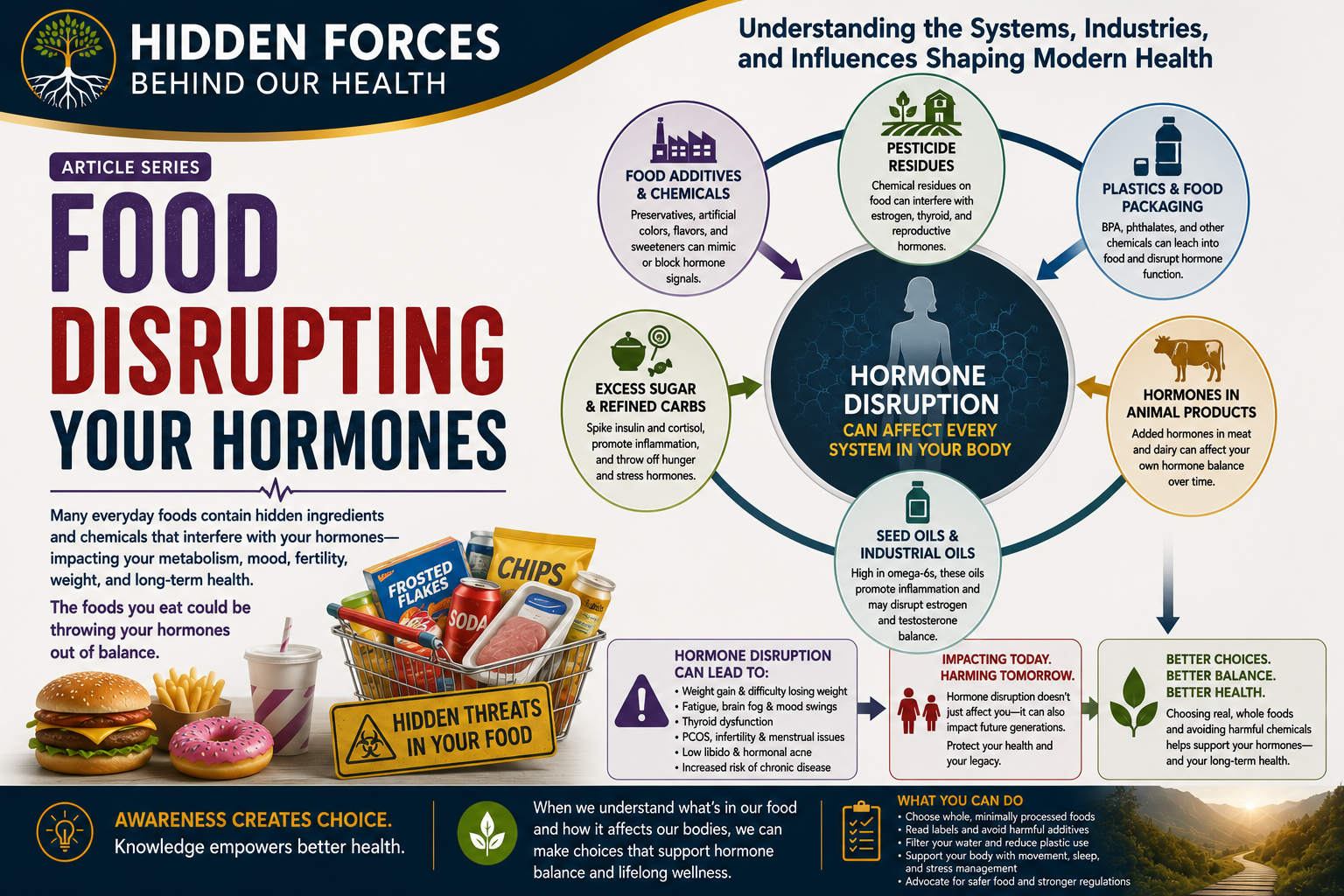
Hormone issues may seem confusing, but everyday patterns—like blood sugar swings, chronic inflammation, ultra-processed foods, and gut stress—are often the biggest disruptors.
Understanding these forces offers control. Thoughtful, consistent actions help restore healthy hormone signaling.
How Food Influences Hormones
1. Blood Sugar Swings
Meals high in refined carbs, sugary snacks, or long gaps can spike and crash your blood sugar.
This triggers:
- Elevated insulin
- Increased cortisol
- Fatigue and cravings
- Irritability or “brain fog.”
Stable blood sugar = calmer hormones.
2. Inflammation From Ultra‑Processed Foods
Many packaged foods contain additives, seed oils, sweeteners, and preservatives that may cause low‑grade inflammation. (Warner, 2024, pp. 882-885)
Inflammation interferes with:
- Thyroid function
- Estrogen balance
- Insulin sensitivity
- Metabolic health
The main takeaway: reducing these foods can help keep your hormone signals clearer and support balance.
3. Gut Health and Hormone Recycling
Your gut microbiome regulates estrogen, cortisol, and neurotransmitters. (Needham et al., 2020) When stressed by:
- High sugar
- Frequently processed foods
- Alcohol
If stressed, your gut can’t clear hormones, leading to an imbalance. (Beurel, 2024)
4. Healthy Fats and Hormone Production
Hormones are made from fats. Without whole-food fats, hormone production is harder. (Whittaker & Wu, 2022)
Supportive fats include:
- Avocado
- Nuts and seeds
- Olive oil
- Coconut
- Fatty fish
The key takeaway: supportive fats help stabilize appetite, mood, and energy for better hormone function.
Everyday Habits That Support Hormone Balance
1. Build Balanced Meals
Aim for:
- A palm‑sized protein
- A generous serving of colorful plants
- A source of healthy fat
- Optional whole‑food carbs
Main takeaway: Creating a balanced meal steadies blood sugar and helps regulate hormone-related stress signals.
2. Prioritize Fiber
Fiber feeds your gut microbiome and removes excess hormones. (Liu et al., 2022)
Simple ways to add more:
- Berries
- Leafy greens
- Beans
- Chia or flax
- Whole vegetables at every meal
3. Reduce Ultra‑Processed Foods
Key takeaway: focus on increasing real foods over aiming for total elimination of processed foods.
4. Hydrate Consistently
Even mild dehydration raises cortisol and slows digestion, disrupting hormone balance. (Castro-Sepulveda et al., 2018)
5. Eat at Regular Intervals
Your body needs rhythm. Long gaps between meals spike stress hormones and can lead to overeating. (Evening Hours May Pose Higher Risk for Overeating, Especially When Under Stress, Study Finds, 2018)
A Gentle Reminder
Balancing hormones is not about rigid rules. The goal is clearer communication within your body for improved well-being.
Takeaway: gradual daily changes in your eating patterns can increase calmness, clarity, and energy.
Try This Today
Choose one simple shift:
- Add a handful of greens to your next meal.
- Swap one processed snack for a whole‑food option.
- Include a healthy fat at breakfast.
- Drink a full glass of water before lunch.
Remember: small, consistent steps to nourish your body lead to lasting results. Every little change counts.
What you think may be healthy is not
However, we need to be careful what we eat, as not all food is as it seems. The Food Babe has written several books on this; I highly recommend "Feeding You Lies: How to Unravel the Food Industry’s Playbook and Reclaim Your Health."
Conclusion
Main takeaway: daily food choices strongly influence your hormones. Choosing more whole foods can boost energy, mood, and focus, while relying on processed options can contribute to symptoms.
Your body wants balance. Even small, intentional food choices can reduce hormonal stress and support well-being. Consistency—rather than perfection—is what matters most.
Author’s Note
I wrote this article because many experience symptoms—fatigue, irritability, cravings, and sleep issues—without realizing food's impact. My goal is to offer clarity, so you understand the “why” behind your feelings.
Nutrition advice can be confusing, with trends and conflicting messages drowning out basics. I focus on simple, evidence-based choices to support your body in finding balance. If this brings you new clarity, explore more in this series and trust your ability to change. ----- Robert
Continue The Conversation
Every wellness journey is unique, and we can learn a great deal from one another's experiences.
What stood out to you in this article?
Have you faced similar challenges, discovered helpful strategies, or gained insights of your own?
I invite you to share your thoughts in the comments below. Your experience may encourage someone else who is taking the next step on their own journey.
Remember, meaningful change often begins with a single step—and none of us has to walk the path alone.
Reference List
Whelan, K., Bancil, A. S., Lindsay, J. O., & Chassaing, B. (2024). Ultra-processed foods and food additives in gut health and disease. Nature Reviews Gastroenterology & Hepatology 21. https://doi.org/10.1038/s41575-024-00893-5
Warner, J. O. (2024). Artificial food additives: hazardous to long-term health?. Archives of Disease in Childhood 109(11), pp. 882-885. https://doi.org/10.1136/archdischild-2023-326565
Needham, B. D., Kaddurah-Daouk, R., & Mazmanian, S. K. (2020). Gut microbial molecules in behavioral and neurodegenerative conditions. Nature Reviews Neuroscience 21. https://doi.org/10.1038/s41583-020-00381-0
Beurel, E. (2024). Stress in the microbiome-immune crosstalk. Gut Microbes 16(1). https://doi.org/10.1080/19490976.2024.2327409
Whittaker, J. & Wu, K. (2022). Low-fat diets and testosterone in men: Systematic review and meta-analysis of intervention studies. arXiv preprint. https://doi.org/10.48550/arXiv.2204.00007
Liu, H., Liao, C., Wu, L., Tang, J., Chen, J., Lei, C., Zheng, L., Zhang, C., Liu, Y., Xavier, J., & Dai, L. (2022). Ecological dynamics of the gut microbiome in response to dietary fiber. The ISME Journal 16. https://doi.org/10.1038/s41396-022-01253-4
Castro-Sepúlveda, M., Ramírez-Campillo, R., Abad-Colil, F., Monje, C., Peñailillo, L., Cancino, J. & Zbinden-Foncea, H. (2018). Basal Mild Dehydration Increases Salivary Cortisol After a Friendly Match in Young Elite Soccer Players. Frontiers in Physiology 9. https://doi.org/10.3389/fphys.2018.01347
(January 15, 2018). Evening Hours May Pose Higher Risk for Overeating, Especially When Under Stress, Study Finds. Johns Hopkins Medicine. https://www.hopkinsmedicine.org/news/newsroom/news-releases/2018/01/16/evening-hours-may-pose-higher-risk-for-overeating-especially-when-under-stress-study-finds
Disclaimer
The information provided in this article is for educational and informational purposes only and is not intended as medical, psychological, or professional advice. The content reflects general wellness principles and personal development concepts designed to encourage self-reflection and healthy lifestyle choices.
Individual circumstances vary, and readers should consult qualified healthcare professionals, mental health providers, or other appropriate experts regarding specific concerns or conditions. Never disregard professional advice or delay seeking help because of information contained in this article.
The author and publisher assume no responsibility for actions taken based on the information presented. Your health and well-being are ultimately your responsibility, and any changes to your lifestyle should be made thoughtfully and in consultation with appropriate professionals when necessary