Introduction
The past can be a valuable teacher, but it can also become a prison if we allow old experiences, mistakes, and disappointments to define who we are today.
Many people believe they are responding to the present when, in reality, they are reacting to stories, fears, and beliefs formed years ago. A past failure may still influence current decisions. An old criticism may continue to shape self-confidence. A difficult experience may create barriers that no longer need to exist.
The good news is that while you cannot change the past, you can change the meaning you give it—and that can change your future.
How the Past Shapes the Present
Every experience leaves an impression.
Some impressions empower us:
- Success builds confidence.
- Encouragement builds self-belief.
- Achievement creates momentum.
Others can create limitations:
- Failure can lead to fear.
- Criticism can weaken confidence.
- Disappointment can discourage action.
Over time, these experiences often become beliefs.
The Hidden Chain
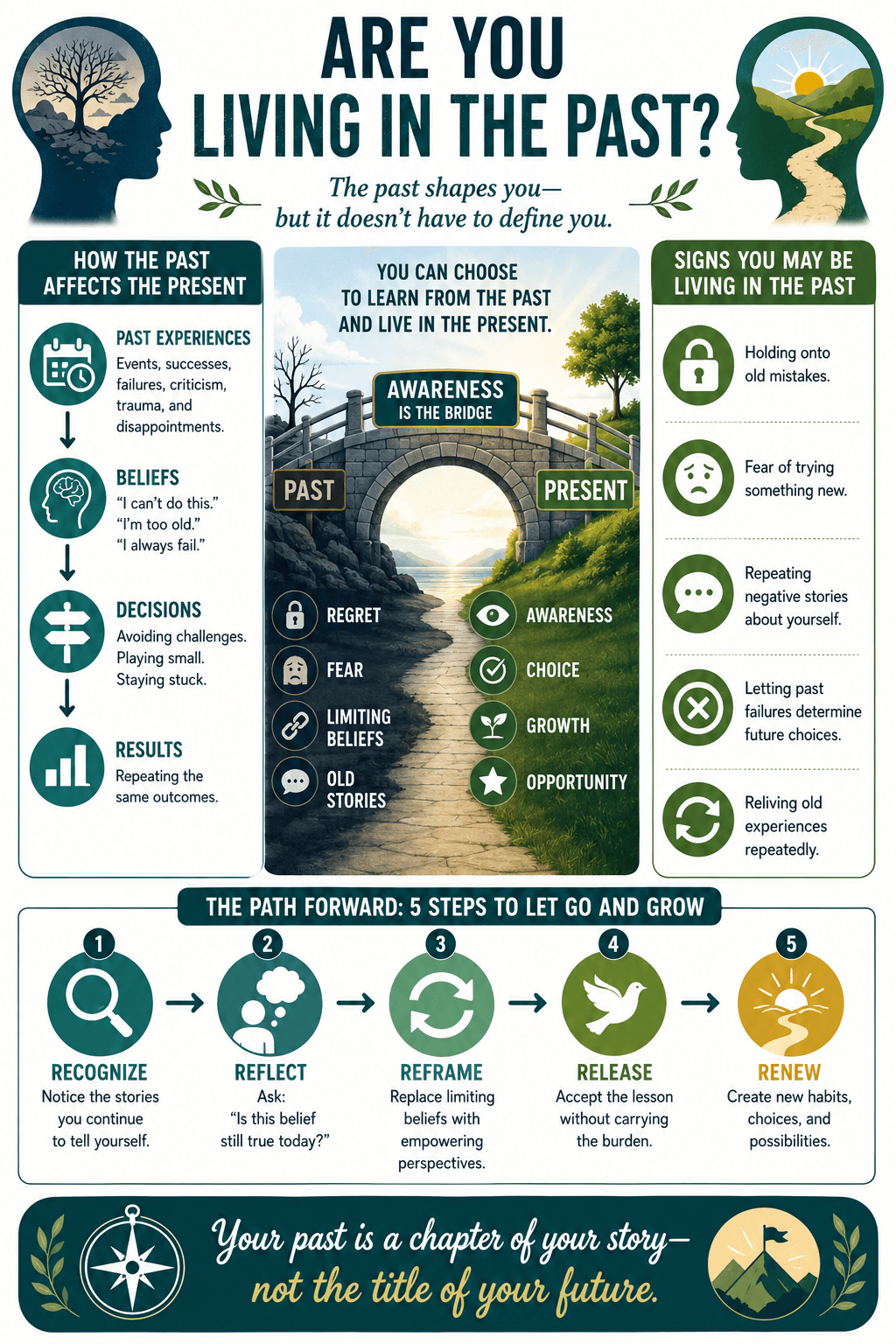
Past Experience
↓
Belief
↓
Decision
↓
Habit
↓
Result
If the belief is limiting, the cycle can repeat itself for years without conscious awareness.
Signs You May Be Living in the Past
You may be carrying the past into the present if you find yourself:
Replaying Old Mistakes
Frequently focusing on what went wrong rather than what can be learned.
Defining Yourself by Past Failures
Believing that a previous outcome predicts future results.
Avoiding New Opportunities
Allowing fear of failure to prevent growth.
Holding On to Old Labels
Accepting identities such as:
- "I'm too old."
- "I'm not athletic."
- "I've never been successful."
- "I always fail."
Reliving Past Experiences
Allowing yesterday's challenges to dominate today's thinking.
The Cost of Staying Stuck
When we live in the past, we often:
- Miss opportunities for growth.
- Resist positive change.
- Repeat unhealthy patterns.
- Limit our potential.
- Undervalue our ability to learn and adapt.
The past becomes a lens through which we view the world rather than a chapter from which we learn.
Moving Forward: The Five-Step Process
1. Recognize
Become aware of the stories you repeatedly tell yourself.
Ask:
"What belief am I carrying from the past?"
2. Reflect
Examine whether that belief is still accurate today.
Ask:
"Is this belief based on current reality or an old experience?"
3. Reframe
Replace limiting interpretations with more empowering perspectives.
Instead of:
"I failed."
Try:
"I learned something valuable."
4. Release
Accept the lesson while letting go of unnecessary emotional baggage.
You do not need to carry every mistake forever.
5. Renew
Create new habits, choices, and actions that support the future you want to build.
A Different Perspective
Your past contains lessons.
It does not contain your destiny.
Every day offers an opportunity to make a new choice, develop a new habit, and create a new direction.
The question is not:
"What happened to me?"
The more powerful question is:
"What do I choose to do next?"
Key Takeaway
The past may explain where you are today, but it does not determine where you can go tomorrow. By becoming aware of old stories and limiting beliefs, you can release what no longer serves you and move forward with greater clarity, confidence, and purpose.
Closing Reflection
What belief from your past might be holding you back today—and what would change if you chose to let it go?
This article should fit beautifully between The Hidden Patterns Running Your Life and Building Awareness, creating a natural progression deeper into the mindset journey.
Author’s Note
Throughout my years as an educator, I have learned that meaningful change rarely happens all at once. More often, it begins with awareness, understanding, and a willingness to take the next small step forward.
The ideas shared in this article are intended to encourage reflection and personal growth. My hope is that they help you better understand yourself and provide practical insights you can apply to your own life and wellness journey.
Remember, lasting change is not about perfection. It is about learning, growing, and making choices that move you closer to the life you want to create.
We all carry experiences from the past, but those experiences do not have to define our future. The lessons may stay with us, but the limitations do not have to. --- Robert
Continue The Conversation
Every wellness journey is unique, and we can learn a great deal from one another's experiences.
What stood out to you in this article?
Have you faced similar challenges, discovered helpful strategies, or gained insights of your own?
I invite you to share your thoughts in the comments below. Your experience may encourage someone else who is taking the next step on their own journey.
If you would like to receive future wellness insights, practical tips, and updates from Revolutionize Your Health, you are also welcome to join our community and stay connected.
Remember, meaningful change often begins with a single step—and none of us has to walk the path alone.
Reference List
American Psychological Association (APA). “Understanding the Impact of Past Experiences on Emotional Health.”
Mayo Clinic. “Emotional Wellness: Why It Matters.”
National Institutes of Health (NIH). “Mindfulness and Mental Wellbeing.”
Stanford Mind & Body Lab. “Mindset and Personal Transformation.”
Cleveland Clinic. “Forgiveness and Emotional Healing.”
Science confirms that a diet rich in whole, plant-based foods can help you live to the fullest and still get adequate protein. (Publishing, 2020) In fact, a growing number of physicians advocate a completely plant-based diet for many of their patients who suffer from diabetes, heart disease, and cancer. (Position Statement on Plant-based Health and Nutrition in Adults, n.d.)
Ph.D., R. C. (May 21, 2024). The Five Cornerstones of Holistic Mental Wellness. Psychology Today. https://www.psychologytoday.com/us/blog/leadership-diversity-and-wellness/202405/the-five-cornerstones-of-holistic-mental-wellness
Check out these other great sources:
Plant-Based Nutrition, 2E (Idiot’s Guides),
Nutrition Facts: The Truth About Food and
The Forks Over Knives Plan - Forks over Knives, a simple plan that focuses on hearty comfort foods and does not involve portion control or worrying about obtaining single nutrients like protein and calcium.
Disclaimer
The information provided in this article is for educational and informational purposes only and is not intended as medical, psychological, or professional advice. The content reflects general wellness principles and personal development concepts designed to encourage self-reflection and healthy lifestyle choices.
Individual circumstances vary, and readers should consult qualified healthcare professionals, mental health providers, or other appropriate experts regarding specific concerns or conditions. Never disregard professional advice or delay seeking help because of information contained in this article.
The author and publisher assume no responsibility for actions taken based on the information presented. Your health and well-being are ultimately your responsibility, and any changes to your lifestyle should be made thoughtfully and in consultation with appropriate professionals when necessary.