Introduction: The Pharmaceutical Influence
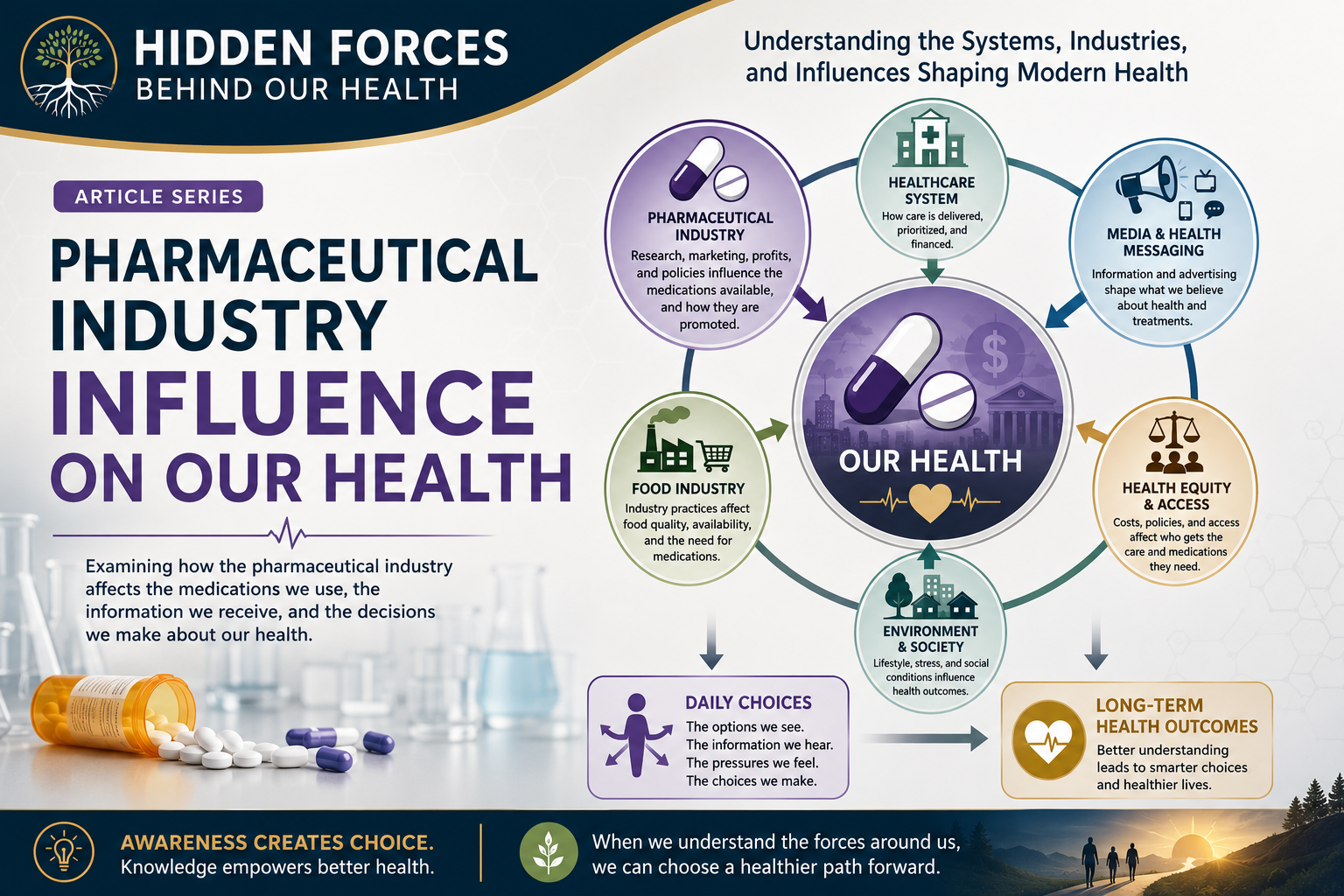
Most of us interact with the pharmaceutical world without ever thinking about it. We see the ads, we hear the warnings, we fill the prescriptions, and we assume the system around us is neutral — or at least aligned with our best interests.
But like every major industry shaping our health, Pharma is not just a medical system. It’s a business system.
And understanding that system helps us reclaim clarity, agency, and perspective.
This isn’t about rejecting medicine. It’s about seeing the forces that shape the choices we’re offered.
1. The Constant Stream of TV Ads
If you live in the United States, you’ve seen more drug ads than almost anyone else in the world.
That’s because the U.S. and New Zealand are the only two countries that allow direct‑to‑consumer pharmaceutical advertising.
These ads:
- Normalize medication as the first solution
- Shape public perception of what “health” looks like
- Encourage people to “ask their doctor” about specific drugs
- Cost billions each year — costs that ultimately show up in drug prices
And the repetition matters. When you see the same message hundreds of times, it becomes part of your mental landscape. It subtly shifts what feels normal.
2. Lobbying and Government Influence
Pharma is consistently one of the top‑spending lobbying industries in the United States.
This influence touches:
- Drug pricing laws
- FDA approval processes
- Patent extensions
- Insurance coverage decisions
- The revolving door between regulators and industry
None of this is illegal. But it does mean that policy is shaped long before the public ever hears about it.
When an industry spends billions influencing lawmakers, it’s worth asking:
Whose interests are being protected?
3. Fines, Lawsuits, and Settlements
Every industry makes mistakes. But the scale of pharmaceutical settlements tells a story worth noticing.
Over the past two decades, major companies have paid tens of billions of dollars in fines and settlements for issues such as:
- Concealing known side effects
- False or misleading marketing
- Illegal kickbacks to physicians
- Off‑label promotion
- Opioid‑related misconduct
Some single settlements have reached into the billions.
And here’s the part that matters for your readers:
These fines are often treated as “the cost of doing business.”
They don’t necessarily change the underlying incentives.
4. Why This Matters for Everyday People
Medications can be lifesaving. Many are essential.
But the system around them is not neutral.
When profit shapes:
- Research priorities
- Public messaging
- Government policy
- What conditions get attention
- What treatments are promoted
…then the public receives a distorted picture of health.
Understanding these forces doesn’t create fear — it creates clarity.
It helps people ask better questions.
It helps them see the difference between care and marketing.
And it helps them reclaim their role in their own health story.
A Grounded, Empowering Closing
This isn’t about rejecting medicine or distrusting doctors.
It’s about recognizing the landscape we’re navigating.
When we understand the forces shaping our choices, we make clearer, more intentional decisions.
We become participants in our health — not passive recipients of a system designed around profit.
Awareness is not cynicism.
Awareness is empowerment.
Check out these great sources:
- Plant-Based Nutrition, 2E (Idiot’s Guides),
- Nutrition Facts: The Truth About Food and
- The Forks Over Knives Plan
A Final Thought
When we step back and look at the larger landscape of health, it becomes clear that many of the messages we receive are shaped long before they reach us. The pharmaceutical industry plays a significant role in that landscape — not because medications aren’t valuable, but because the system around them is built on incentives that don’t always align with clarity or prevention.
By understanding these forces, we’re not rejecting medicine; we’re reclaiming perspective. We’re choosing to see the full picture so we can make decisions with confidence, curiosity, and intention. Awareness is a form of empowerment — and it’s one of the most powerful tools we have in shaping our own health story.
Author’s Note
My goal is never to create fear or distrust — but to offer clarity in a world where health information is shaped by many competing interests. When we understand the forces influencing our choices, we make decisions with more confidence, more intention, and more peace. Thank you for being part of this journey toward a clearer, more empowered approach to wellness.
— Robert
Continue The Conversation
Every wellness journey is unique, and we can learn a great deal from one another's experiences.
What stood out to you in this article?
Have you faced similar challenges, discovered helpful strategies, or gained insights of your own?
I invite you to share your thoughts in the comments below. Your experience may encourage someone else who is taking the next step on their own journey.
Remember, meaningful change often begins with a single step—and none of us has to walk the path alone.
Reference List
- U.S. Food & Drug Administration. “Prescription Drug Advertising: Questions and Answers.”
- Congressional Research Service. “Pharmaceutical Industry and Lobbying Expenditures.”
- Government Accountability Office. “Drug Pricing and Industry Influence Reports.”
- Federal Trade Commission. “Overview of Pharmaceutical Marketing Practices.”
- U.S. Department of Justice. “Major Pharmaceutical Settlements and Enforcement Actions.”
- Pew Research Center. “Public Perception of Pharmaceutical Advertising and Influence.”
- National Institutes of Health. “Industry Funding and Research Priorities.”
Disclaimer
The information provided in this article is for educational and informational purposes only and is not intended as medical, psychological, or professional advice. The content reflects general wellness principles and personal development concepts designed to encourage self-reflection and healthy lifestyle choices.
Individual circumstances vary, and readers should consult qualified healthcare professionals, mental health providers, or other appropriate experts regarding specific concerns or conditions. Never disregard professional advice or delay seeking help because of information contained in this article.
The author and publisher assume no responsibility for actions taken based on the information presented. Your health and well-being are ultimately your responsibility, and any changes to your lifestyle should be made thoughtfully and in consultation with appropriate professionals when necessary.