
Introduction
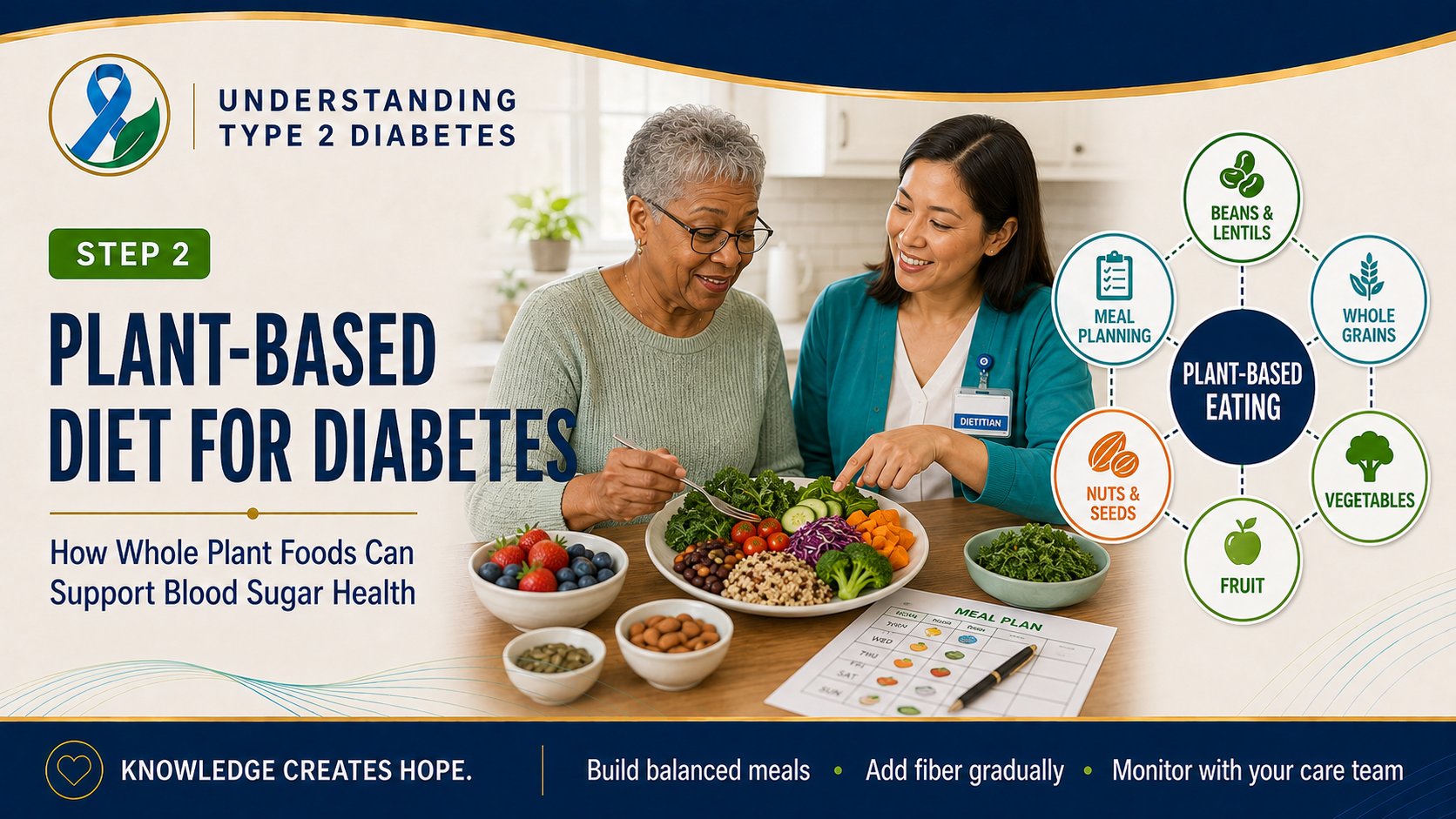
A plant‑based diet supports blood sugar control, improves insulin sensitivity, and helps reduce the risk of diabetes complications. (Thompson et al., 2024) Instead of limiting choices, it encourages enjoying whole grains, legumes, vegetables, fruits, nuts, and seeds for steady energy and nourishment.
These foods are high in fiber, antioxidants, and phytonutrients that regulate glucose, reduce inflammation, and promote metabolic health. (Sarkar et al., 2022) Many experience more stable blood sugar, improved digestion, and greater control over their health through plant-based eating. (Termannsen et al., 2024)
What to Eat: A Simple, Practical Framework
A plant‑based diet for diabetes doesn’t need to be complicated. Key takeaway: Use these categories to build meals that keep blood sugar steady.
- Whole grains — oats, quinoa, brown rice, barley, farro
- Legumes — lentils, chickpeas, black beans, pinto beans
- Vegetables — leafy greens, cruciferous vegetables, colorful non‑starchy veggies
- Fruits — berries, apples, pears, citrus, melons
- Nuts & seeds — almonds, walnuts, chia, flax, pumpkin seeds
- Healthy fats — avocado, tahini, nut butters
- Minimally processed plant proteins — tofu, tempeh, edamame
These foods slow digestion and steady glucose, keeping you full key for diabetes management. (Termannsen et al., 2024)
How to Build a Balanced Plant‑Based Plate
A simple way to structure meals:
- ½ plate non‑starchy vegetables
- ¼ plate whole grains or starchy vegetables
- ¼ plate of legumes or plant‑based proteins
- Add healthy fats in small amounts.
This approach supports blood sugar control while allowing flexibility and variety. (Hanick et al., 2024)
Bringing the Guidance to Life Through Real Stories
Knowing what to eat is one thing—seeing how real people apply it is another. Practical examples demonstrate how small choices and steady habits can improve blood sugar, energy, and confidence. (Termannsen et al., 2024) The stories ahead highlight how plant-based eating adapts to real-life routines and challenges, showing that progress requires only the willingness to begin.
Real Stories from Real People
Maria: Finding Steady Energy Through Simple Swaps
Maria lived with Type 2 diabetes for nearly a decade, with energy that rose and fell. When she shifted to a plant‑based pattern, she didn’t change everything at once. She started by trading her usual pastry for oatmeal, berries, and chia seeds. Within two weeks, she saw fewer mid‑morning crashes and more consistent blood sugar. She felt satisfied — nourished, not deprived. Her story shows how one small, steady change creates momentum.
James: Discovering That Plant‑Based Doesn’t Mean Complicated
James thought plant‑based eating would be too time‑consuming. But after trying a simple lunch of brown rice, black beans, salsa, and avocado, he realized it was easier than expected. His blood sugar stabilized after lunch, and he felt lighter and more focused in the afternoon. For him, the main shift was realizing healthy meals need not be elaborate. His experience shows practicality often beats perfection.
Denise: Rebuilding Confidence One Meal at a Time
Denise struggled with emotional eating and confusing nutrition advice. Adding more vegetables, lentils, and whole grains eased her cravings and grew her confidence. Her A1C improved over the months, but feeling empowered mattered most. (Toumpanakis et al., 2018) Denise’s journey shows that plant‑based eating builds trust in both body and choices.
Conclusion
A well-planned plant-based diet improves blood sugar, insulin sensitivity, weight, and metabolic health. Focusing on whole, fiber-rich foods and reducing saturated fat intake improves insulin sensitivity and glucose stability. (Reynolds et al., 2020) Results come from consistent, nourishing choices over time. The power of this approach is its sustainability, which supports long-term health without complicated rules.
Author's Note
I wrote this guide to make plant‑based eating feel doable, personal, and encouraging — especially for those managing diabetes. Key takeaway: Change is possible and achievable, as demonstrated through real-life examples, supporting both confidence and health.
---- Robert
Continue The Conversation
Every wellness journey is unique, and we can learn a great deal from one another's experiences.
What stood out to you in this article?
Have you faced similar challenges, discovered helpful strategies, or gained insights of your own?
I invite you to share your thoughts in the comments below. Your experience may encourage someone else who is taking the next step on their own journey.
Remember, meaningful change often begins with a single step—and none of us has to walk the path alone.
Reference List
- American Diabetes Association. Plant‑Based Eating and Diabetes Management.
- Centers for Disease Control and Prevention (CDC). Healthy Eating for Type 2 Diabetes.
- Harvard T.H. Chan School of Public Health. Plant‑Based Diets and Blood Sugar Control.
- National Institute of Diabetes and Digestive and Kidney Diseases (NIDDK). Nutrition and Diabetes: Whole‑Food Approaches.
- Mayo Clinic. Benefits of Whole‑Food, Plant‑Based Eating for Metabolic Health.
- Journal of the American College of Nutrition. Plant‑Based Diets and Improvements in Glycemic Outcomes.
- Nutrients Journal. Dietary Fiber, Plant Foods, and Insulin Sensitivity.
- Thompson, A. S., Sowah, S. A., Forouhi, N. G., Kuh, D., Hardy, R., Wareham, N. J., Khaw, K. & Forouhi, N. G. (2024). A healthful plant-based diet is associated with lower type 2 diabetes risk via improved metabolic state and organ function: A prospective cohort study. Diabetes & Metabolism 50(1). https://doi.org/10.1016/j.diabet.2023.101499
- Sarkar, D., Christopher, A. & Shetty, K. (2022). Phenolic Bioactives From Plant-Based Foods for Glycemic Control. Frontiers in Endocrinology 12. https://doi.org/10.3389/fendo.2021.727503
- Termannsen, A., Søndergaard, C. S., Færch, K., Andersen, T. H., Raben, A. & Quist, J. S. (2024). Effects of Plant-Based Diets on Markers of Insulin Sensitivity: A Systematic Review and Meta-Analysis of Randomized Controlled Trials. Nutrients 16(13). https://doi.org/10.3390/nu16132110
- Hanick, C. J., Peterson, C. M., Davis, B. C., Sabaté, J., & Jr., J. H. (2024). A whole-food, plant-based intensive lifestyle intervention improves glycaemic control and reduces medications in individuals with type 2 diabetes: a randomized controlled trial. Diabetologia 68. https://doi.org/10.1007/s00125-024-06272-8
- Toumpanakis, A., Turnbull, T. & Alba-Barba, I. (2018). Effectiveness of plant-based diets in promoting well-being in the management of type 2 diabetes: a systematic review. BMJ Open Diabetes Research & Care 6(1). https://doi.org/10.1136/bmjdrc-2018-000534
- Reynolds, A. N., Akerman, A. P. & Mann, J. (2020). Dietary fiber and whole grains in diabetes management: Systematic review and meta-analyses. PLoS Med 17(3). https://doi.org/10.1371/journal.pmed.1003053
Disclaimer
The information provided in this article is for educational and informational purposes only and is not intended as medical, psychological, or professional advice. The content reflects general wellness principles and personal development concepts designed to encourage self-reflection and healthy lifestyle choices.
Individual circumstances vary, and readers should consult qualified healthcare professionals, mental health providers, or other appropriate experts regarding specific concerns or conditions. Never disregard professional advice or delay seeking help because of information contained in this article.
The author and publisher assume no responsibility for actions taken based on the information presented. Your health and well-being are ultimately your responsibility, and any changes to your lifestyle should be made thoughtfully and in consultation with appropriate professionals when necessary.