Introduction
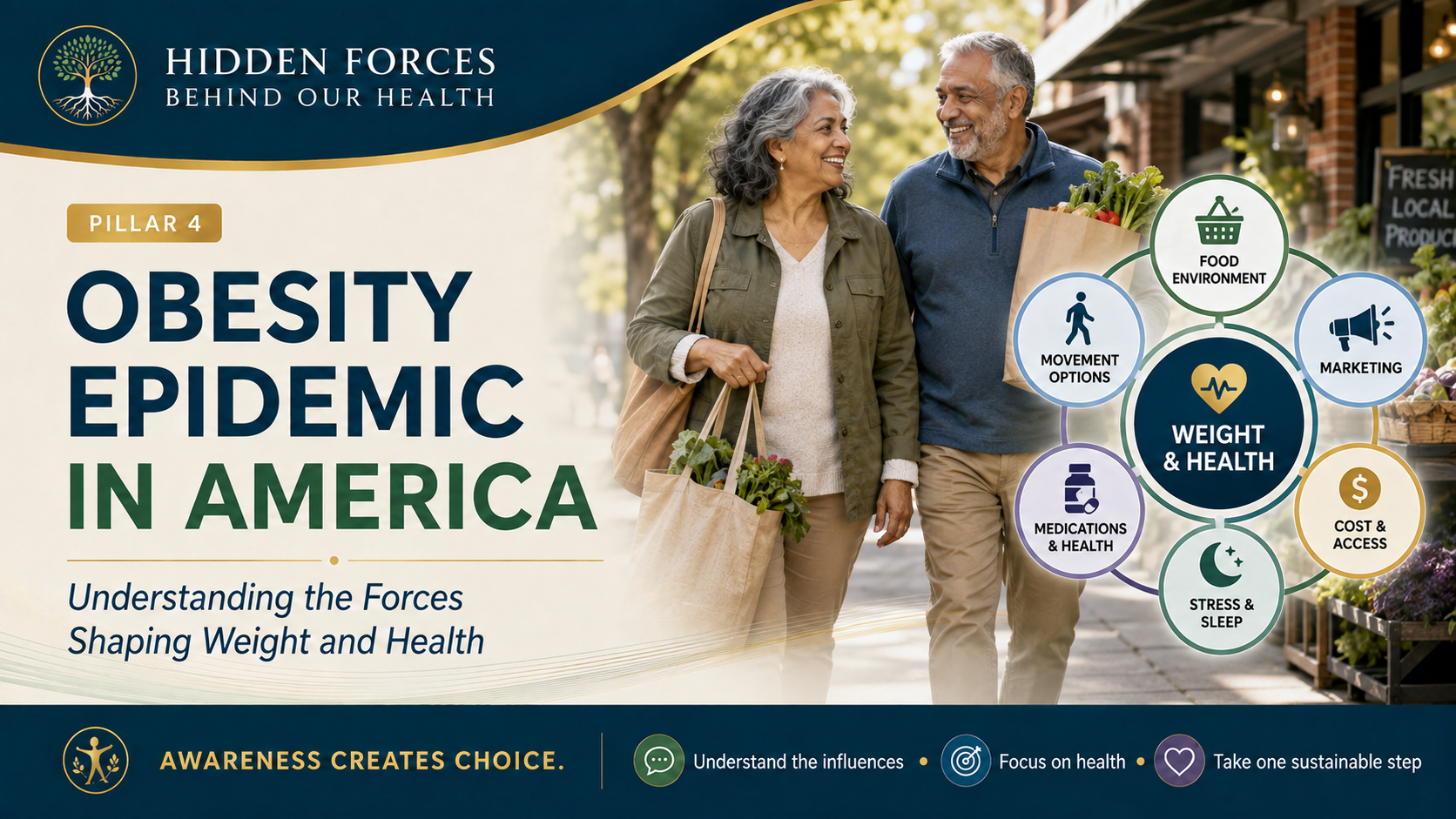
America faces a health crisis affecting all communities and generations. This series explores causes like chronic disease, food systems, lifestyle habits, and environmental pressures. Each article stands alone, but together they show that real change starts with awareness, empowerment, and practical action. My goal: help you understand what’s happening, why it matters, and how you can take control of your health—even when it’s hard.
The Obesity Epidemic in America: A Deepening Public Health Crisis
A Growing Challenge with Far‑Reaching Consequences
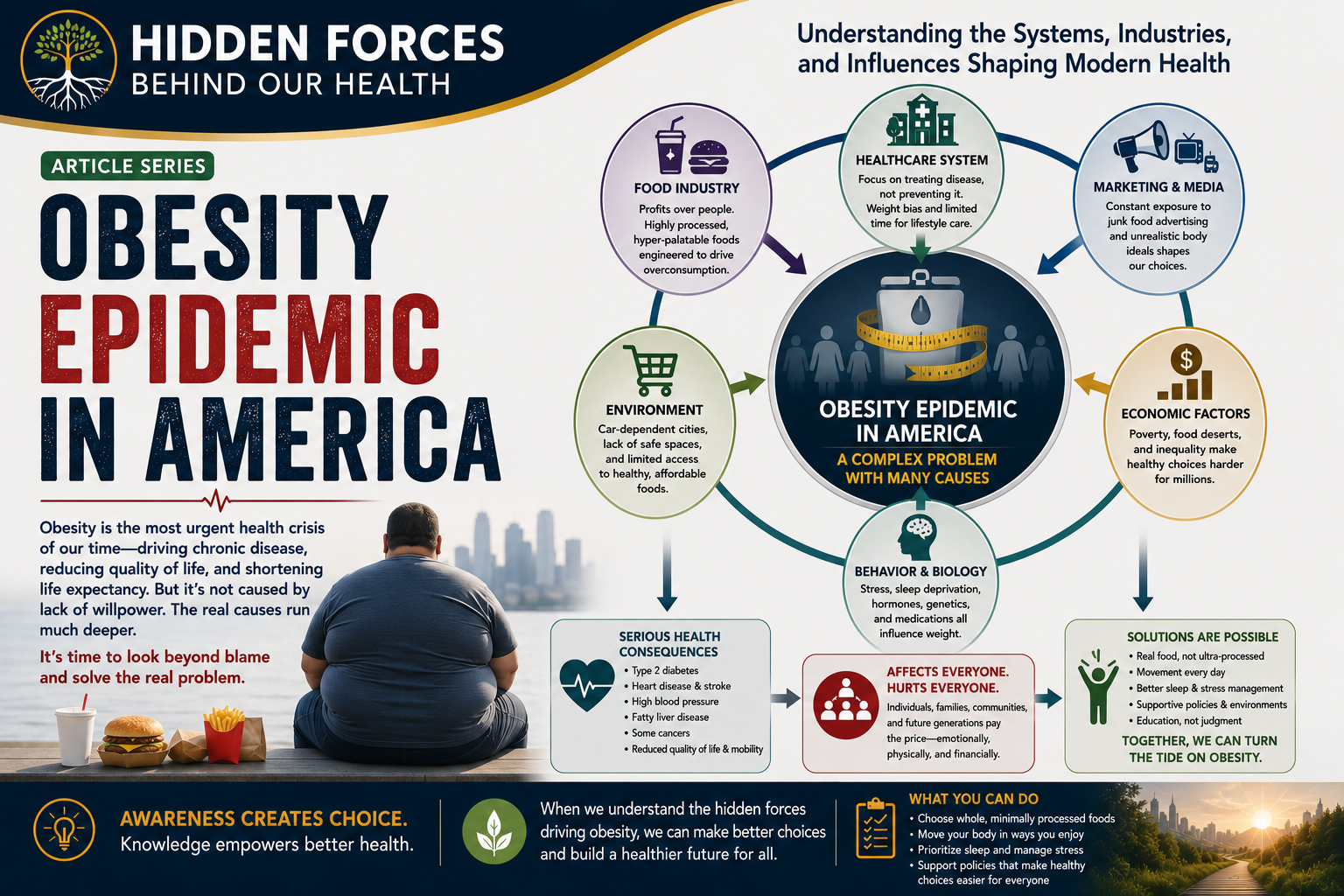
Obesity in America is now a major and complex health issue. In 2023, data showed that in 23 states, more than 35% of adults had obesity, whereas in the 1960s, the national rate was about 13%. Today, over 40% of U.S. adults are obese. Severe obesity in adults is now about ten times more common than it was sixty years ago. (Emmerich et al., 2024)
This is not simply a matter of weight. It is a crisis that affects:
- Individual health and longevity
- Healthcare costs and system capacity
- Workforce productivity
- Community well‑being
- National economic stability
Obesity is linked with heart disease, type 2 diabetes, stroke, and some cancers. These conditions together account for a significant number of preventable deaths in the United States. (Adult Obesity Facts, 2024)
A Crisis of Inequity
Not all Americans are equally affected. Groups with less access to healthy food, safe exercise spaces, or quality healthcare have higher obesity rates. This highlights wider problems of health equity, food access, and the social factors shaping health. Addressing these issues is needed to change the trend.
Why Obesity Continues to Rise
Solving the obesity epidemic requires understanding the forces that drive it. These include:
1. The Standard American Diet (SAD)
Highly processed foods, too much sugar, and high-calorie meals are now common. People often choose what’s easy instead of what’s healthy.
2. Environmental and Social Pressures
Fast-food restaurants are everywhere. For example, there are over 33,000 McDonald’s in 119 countries, serving 68 million people every day. (Cohen, 2026) Marketing, large portions, and how food is made all encourage people to eat more than they need.
3. Habitual Overeating
For many, binge eating or overeating is a daily habit, leading to insulin resistance, prediabetes, and eventually type 2 diabetes.
4. Biological and Psychological Factors
Stress, lack of sleep, emotional eating, and hormonal changes also influence our health journey.
5. Lack of Access to Healthy Options
Millions live in “food deserts” or “food swamps,” where unhealthy foods are easy to find and cheap, but healthy foods are hard to get or expensive. (RDN & RD, 2021)
The Strong Link Between Obesity and Diabetes
Obesity and type 2 diabetes are closely linked: studies find that between 80% and 90% of people with obesity are also diagnosed with type 2 diabetes. (Prevention, 2024)
- Having too much body fat, especially around the belly, leads to insulin resistance.
- Insulin resistance leads to chronically high blood glucose levels, the hallmark of type 2 diabetes.
Health experts acknowledge that obesity is the main factor driving type 2 diabetes. As obesity rates go up, so do diabetes rates.
It’s not surprising that we now see both obesity and diabetes spreading around the world.
Obesity Is Not Just Physical—It’s Emotional and Social
Obesity impacts more than physical health.
Many individuals experience:
- Social stigma
- Discrimination in the workplace
- Bullying in schools
- Lower self‑esteem
- Anxiety and depression
People with obesity are sometimes labeled unfairly as "lazy" or "less competent," whether at work or in school. Hurtful remarks or actions from others can leave emotional scars that may last longer than the physical challenges.
Addressing the Epidemic: A Collective Responsibility
Reversing the obesity epidemic requires a multi‑layered approach:
Policy and Community Action
- Improve access to nutritious foods.
- Create safe spaces for physical activity.
- Regulate misleading food marketing.
- Support health education in schools and communities.
Healthcare System Support
- Routine screening for obesity
- Counseling and lifestyle guidance
- Referrals to nutritionists, wellness programs, and support groups
Individual Empowerment
System-wide changes are vital, but personal choices play a powerful role. By learning, staying aware, and making consistent changes, you can support your well-being.
A Path Forward: Prevention and Reversal Are Possible
Here’s the most hopeful news:
Obesity and type 2 diabetes can both be prevented, and in many cases, reversed.
Research shows that:
- A whole‑food, plant‑based diet can dramatically improve weight, blood sugar, and overall health.
- Just 30 minutes of moderate to vigorous physical activity most days can reduce the risk of diabetes by 40–60%. (Staff, 2024)
- Small, steady changes in your habits can add up to big improvements in your life.
Taking charge of your health requires effort, but the rewards are great: a longer, healthier, more vibrant life.
Check out the Harvard School of Public Health article, An Epidemic of Obesity: U.S. Obesity Trends, for more details. If you’re concerned, I hope this helps you see the issue clearly and inspires healthier choices.
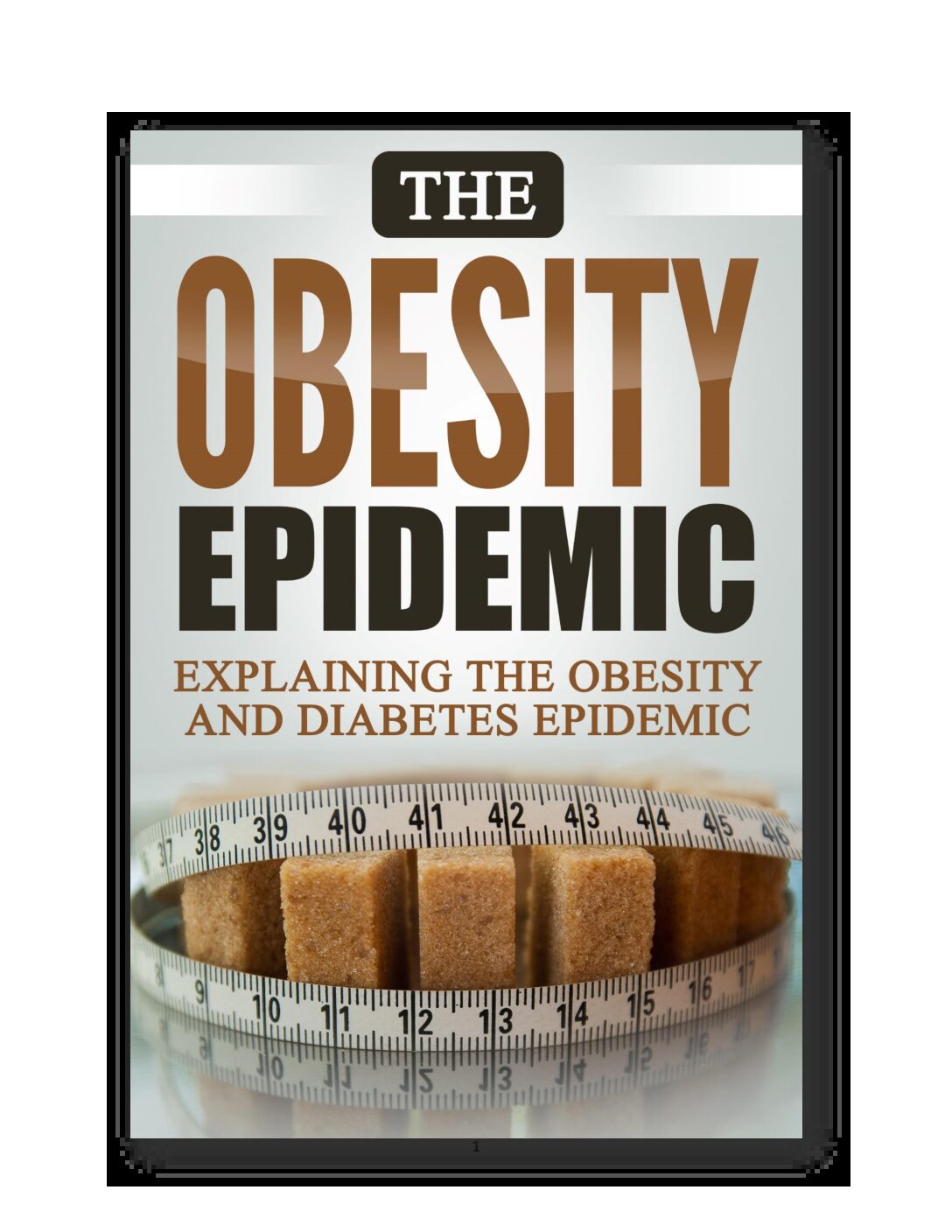
Get Your Free Obesity Epidemic eBook
Click on the eBook image to receive your free eBook instantly.
Conclusion / Final Thoughts
The obesity epidemic in America results from a food system, environment, and culture that make unhealthy choices the easiest. Millions do their best in systems that were never designed to support long-term health.
Awareness is powerful. Understanding what shapes our habits helps us make better choices and support change. Progress isn’t about perfection, but about regaining control. Every step you take for your body leads to a healthier, more confident future.
Author's Note
Thank you for taking the time to consider this important topic. My purpose in covering the obesity epidemic is not to place blame or point fingers, but to highlight broader challenges that influence health well before food choices are made. Increased understanding can help us view wellness with greater compassion and clarity.
If this article offers a new perspective, I encourage you to continue learning, asking questions, and advocating for positive change. The health journey is individual, but support is always available. I am grateful to assist you in building a life centered on awareness, purpose, and lasting well-being.
---- Robert
Continue The Conversation
Every wellness journey is unique, and we can learn a great deal from one another's experiences.
What stood out to you in this article?
Have you faced similar challenges, discovered helpful strategies, or gained insights of your own?
I invite you to share your thoughts in the comments below. Your experience may encourage someone else who is taking the next step on their own journey.
Remember, meaningful change often begins with a single step—and none of us has to walk the path alone.
Reference List
Emmerich, S. D., Fryar, C. D., Stierman, B., & Ogden, C. L. (2024). Obesity and Severe Obesity Prevalence in Adults: United States, August 2021–August 2023. NCHS Data Brief No. 508. https://doi.org/10.15620/cdc:128013
(2024). Adult Obesity Facts. Centers for Disease Control and Prevention. https://www.cdc.gov/obesity/adult-obesity-facts/index.html
Cohen, G. (February 13, 2026). Mapped: Countries With the Most McDonald's Locations. Visual Capitalist. https://www.visualcapitalist.com/mapped-the-number-of-mcdonalds-by-country/
RDN, A. C. & RD, S. M. (2021). Food Deserts: Causes, Effects, and Solutions. Healthline. https://www.healthline.com/nutrition/food-deserts
Prevention, C. f. (2024). Prevalence of Total, Diagnosed, and Undiagnosed Diabetes in Adults: United States, August 2021–August 2023. NCHS Data Brief No. 460. https://doi.org/10.15620/cdc:124123
Staff, M. C. (2024). Vegetarian diet: Can it help me control my diabetes? Mayo Clinic. https://www.mayoclinic.org/diseases-conditions/diabetes/expert-answers/diabetes/faq-20058117
Disclaimer
The information provided in this article is for educational and informational purposes only and is not intended as medical, psychological, or professional advice. The content reflects general wellness principles and personal development concepts designed to encourage self-reflection and healthy lifestyle choices.
Individual circumstances vary, and readers should consult qualified healthcare professionals, mental health providers, or other appropriate experts regarding specific concerns or conditions. Never disregard professional advice or delay seeking help because of information contained in this article.
The author and publisher assume no responsibility for actions taken based on the information presented. Your health and well-being are ultimately your responsibility, and any changes to your lifestyle should be made thoughtfully and in consultation with appropriate professionals when necessary.