Introduction
A practical, empowering guide for lasting change
Whether you're motivated by health, compassion, or sustainability, shifting to a plant-based lifestyle is one of the most impactful choices you can make. But it doesn’t have to be overwhelming.
This guide walks you through the transition step by step — with clarity, encouragement, and real-world tips to help you thrive.
Start Where You Are
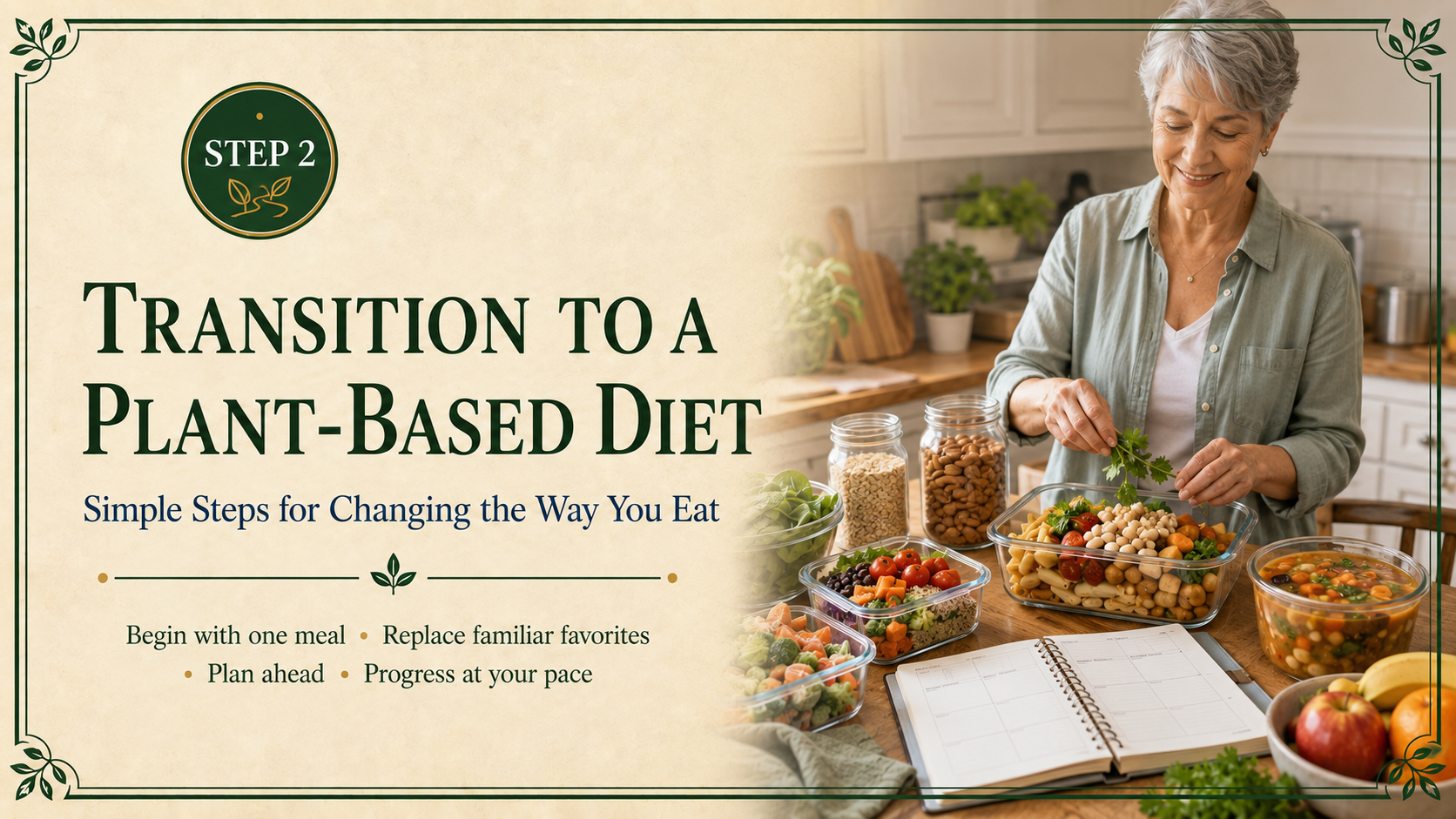
You don’t need to go all-in overnight. Begin with:
- One plant-based meal per day or per week
- Swapping dairy milk for plant-based alternatives
- Adding more vegetables, legumes, and whole grains to your plate
Small steps build confidence. Confidence builds momentum.
Focus on Adding, Not Just Removing
Instead of fixating on what you’re giving up, celebrate what you’re gaining:
- Vibrant produce
- Flavorful spices
- New culinary traditions
Explore lentils, tofu, tempeh, quinoa, nuts, seeds, and whole grains. Let curiosity guide your plate
View The (MD, 2026) Video on Easing into the Plant-Based Diet
Know Your Nutrients
A well-planned plant-based diet can meet all your nutritional needs. Pay special attention to:
Nutrient | Plant-Based Sources | Notes |
Protein | Beans, lentils, tofu, tempeh, quinoa | Variety is key |
Iron | Leafy greens, legumes, fortified cereals | Pair with vitamin C for absorption |
B12 | Fortified foods, supplements | Essential to supplement |
Omega-3s | Flaxseeds, chia seeds, walnuts | Consider algae-based supplement |
Plan Ahead, Shop Smart
Meal planning helps you stay consistent and inspired (Sustainable Plant-Based Eating Guide, 2026). Try:
- Weekly meal maps with breakfast, lunch, and dinner ideas
- A go-to grocery list of staples (beans, grains, frozen veggies)
- Batch cooking or prepping ingredients in advance
Need inspiration? Try lentil chili, veggie stir-fry, tofu scrambles, or roasted grain bowls.
Dining Out Without Stress
Eating out can be easy with a little prep:
- Research menus ahead of time
- Ask for plant-based swaps (tofu, no cheese, dairy-free dressing)
- Customize your order with sides and veggies.
Most restaurants are happy to accommodate — just ask kindly and clearly.
Weight Loss & Wellness
Plant-based diets naturally support weight management:
- High in fiber, low in saturated fat
- Help regulate blood sugar and reduce cravings.
- Promote fullness and stable energy.
Focus on whole foods, not processed vegan snacks, for the best results.
Sustainability & Compassion
Choosing plants over animal products reduces:
- Greenhouse gas emissions
- Water usage and land degradation
- Harm to animals in factory farming systems
It’s a powerful way to align your values with your lifestyle.
Resources to Support Your Journey
- Forks Over Knives Plan — Simple, comforting, meal-by-meal guidance
- Plant-Based Diet for Beginners — A motivating, practical starting point
- The T. Colin Campbell Center for Nutrition Studies — Evidence-based insights
- Physicians Committee for Responsible Medicine — Health-focused advocacy
- Minimalist Baker — Easy, delicious recipes
Author's Note
Transitioning to a plant‑based lifestyle is a personal journey—one that unfolds step by step, with curiosity, patience, and self‑compassion. My goal with this guide is to offer practical, encouraging support as you explore new foods, build confidence in the kitchen, and discover what nourishes your body and spirit.
Whether you make small changes or a full transformation, progress matters more than perfection. Every plant‑forward choice is an investment in your long‑term health and well‑being. I’m honored to support you on your journey to a sustainable, joyful way of eating.
— Robert
Continue The Conservation
Reference List
- Academy of Nutrition and Dietetics. Position of the Academy of Nutrition and Dietetics: Vegetarian Diets. Journal of the Academy of Nutrition and Dietetics. 2023.
- Satija A, Hu FB. Plant‑based diets and chronic disease prevention. Annual Review of Public Health. 2023.
- U.S. Department of Agriculture & U.S. Department of Health and Human Services. Dietary Guidelines for Americans, 2020–2025.
- Turner‑McGrievy GM, et al. Behavioral strategies that support successful transitions to plant‑based eating patterns. Nutrients. 2024.
- Clarys P, et al. Nutritional considerations when shifting toward plant‑forward diets. Advances in Nutrition. 2024.
- Harvard T.H. Chan School of Public Health. Healthy Eating Plate: Plant‑Forward Guidance. Updated 2024.
- Kahleova H, et al. Practical approaches to adopting plant‑based diets for metabolic health. Journal of Geriatric Cardiology. 2023.
- American Heart Association. Plant‑Based Eating and Heart Health. Updated 2025.
(2026). Sustainable Plant-Based Eating Guide. Nutrition and Food Services. https://www.nutrition.va.gov/NUTRITION/docs/UpdatedPatientEd/SustainablePlantBasedEatingGuideApr2026.pdf
MD, H. E. (2026). Planning a plant-based diet. Harvard Health. https://www.health.harvard.edu/healthbeat/planning-a-plant-based-diet
Sanders, T. A. (1999). The nutritional adequacy of plant-based diets. Proc Nutr Soc 58(2), pp. 265-269. https://doi.org/10.1017/s0029665199000361
Disclaimer
The information provided in this article is for educational and informational purposes only and is not intended as medical, psychological, or professional advice. The content reflects general wellness principles and personal development concepts designed to encourage self-reflection and healthy lifestyle choices.
Individual circumstances vary, and readers should consult qualified healthcare professionals, mental health providers, or other appropriate experts regarding specific concerns or conditions. Never disregard professional advice or delay seeking help because of information contained in this article.
The author and publisher assume no responsibility for actions taken based on the information presented. Your health and well-being are ultimately your responsibility, and any changes to your lifestyle should be made thoughtfully and in consultation with appropriate professionals when necessary.