
Introduction
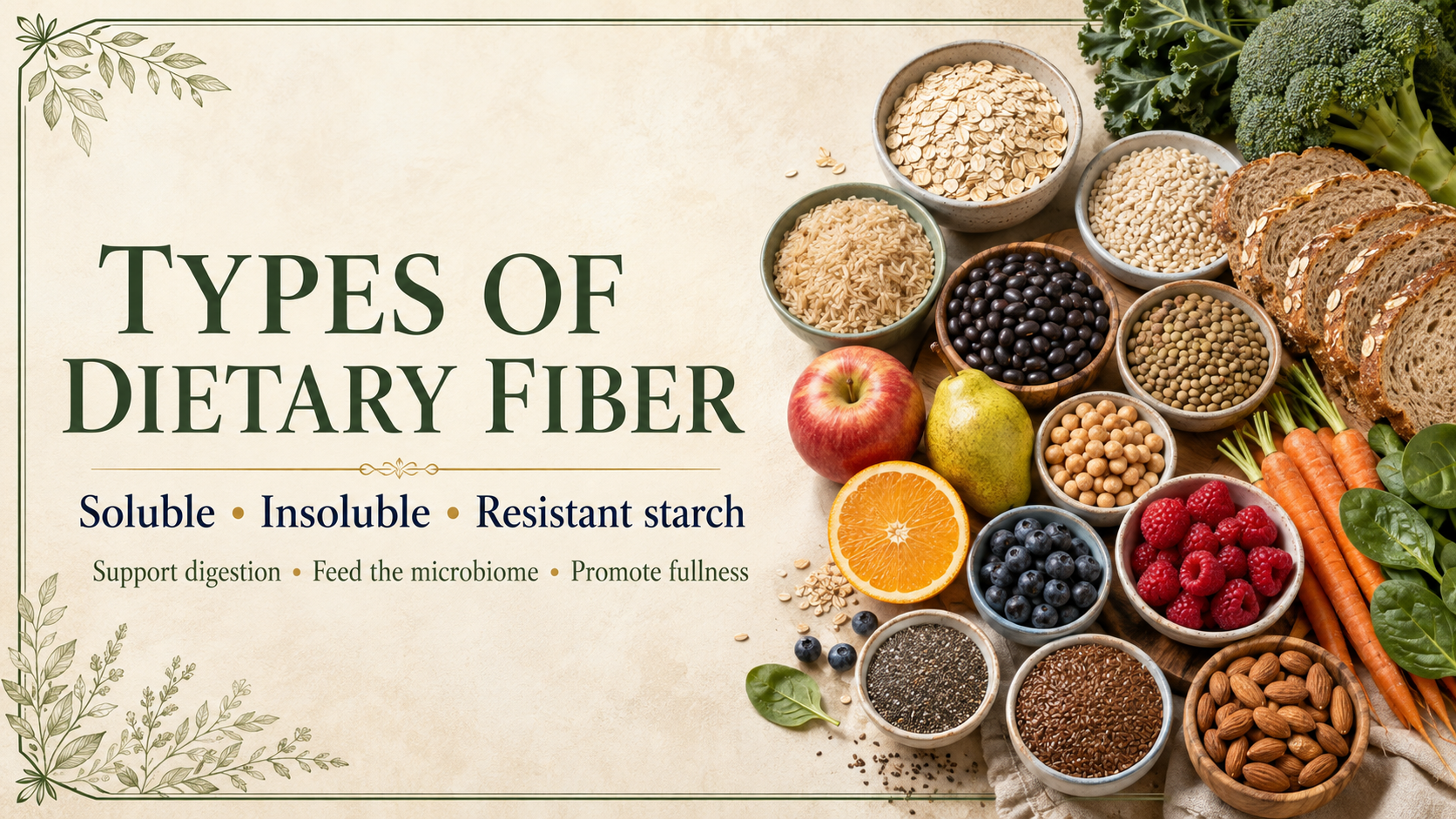
Dietary fiber is one of the most powerful nutrients for long‑term health, yet most people get far less than they need. Fiber supports digestion, stabilizes blood sugar, nourishes your gut microbiome, reduces inflammation, and even lowers the risk of chronic disease. When you understand the different types of fiber and where to find them, it becomes much easier to build meals that support steady energy and lifelong health.
What Dietary Fiber Is
Fiber is the structural part of plant foods — the parts your body can’t fully break down. You’ll find it in vegetables, fruits, beans, lentils, nuts, seeds, and whole grains. There is no fiber in meat, poultry, fish, eggs, or dairy.
Despite its importance, the average American eats only 10–15 grams per day, far below the recommended 25–30 grams. (Hoy & Goldman, 2014) That gap means many people miss out on fiber’s protective benefits. (Solan, 2024)
Why Fiber Matters So Much
Fiber is the quiet superhero of nutrition. It helps:
- Support healthy digestion
- Reduce cravings and promote fullness.
- Lower cholesterol
- Stabilize blood sugar
- Feed beneficial gut bacteria, known as the microbiome (the community of helpful microorganisms in your intestines).
- Reduce inflammation
- Lower the risk of heart disease, diabetes, and certain cancers. (Reynolds et al., 2022)
It’s no exaggeration to say that fiber-rich diets help people live longer, healthier lives. (Veronese et al., 2018, pp. 436-444)
How Much Fiber You Need
Most adults need 25–30 grams of fiber per day, ideally from whole foods. (Fiber: The Carb That Helps You Manage Diabetes, 2024) Children, older adults, and individuals with certain medical conditions may have different needs, so it’s always wise to check with a healthcare provider if you’re unsure.
If your current intake is low, increase fiber gradually over a few weeks and drink plenty of water to support digestion.
Types of Dietary Fiber
Soluble Fiber
Soluble fiber dissolves in water and forms a gel-like substance in the gut. It helps:
- Reduce blood sugar spikes.
- Lower LDL (“bad”) cholesterol
- Slow digestion for steadier energy
- Support heart and metabolic health.
Common sources: oats, beans, lentils, apples, citrus fruits, barley, psyllium, chia seeds, and pectins.
Insoluble Fiber
Insoluble fiber does not dissolve in water. It adds bulk to stool and helps food move efficiently through the digestive tract.
It supports:
- Regular bowel movements
- Digestive comfort
- Prevention of constipation
Common sources: whole grains, wheat bran, nuts, seeds, carrots, cauliflower, and the skins of fruits and vegetables.
Soluble vs Insoluble Fiber
You may often hear fiber described as “soluble” or “insoluble.” What do these terms mean, and how do they affect your health? The difference is simple but important. For more information, see Healthline: What’s the Difference Between Soluble and Insoluble Fiber?
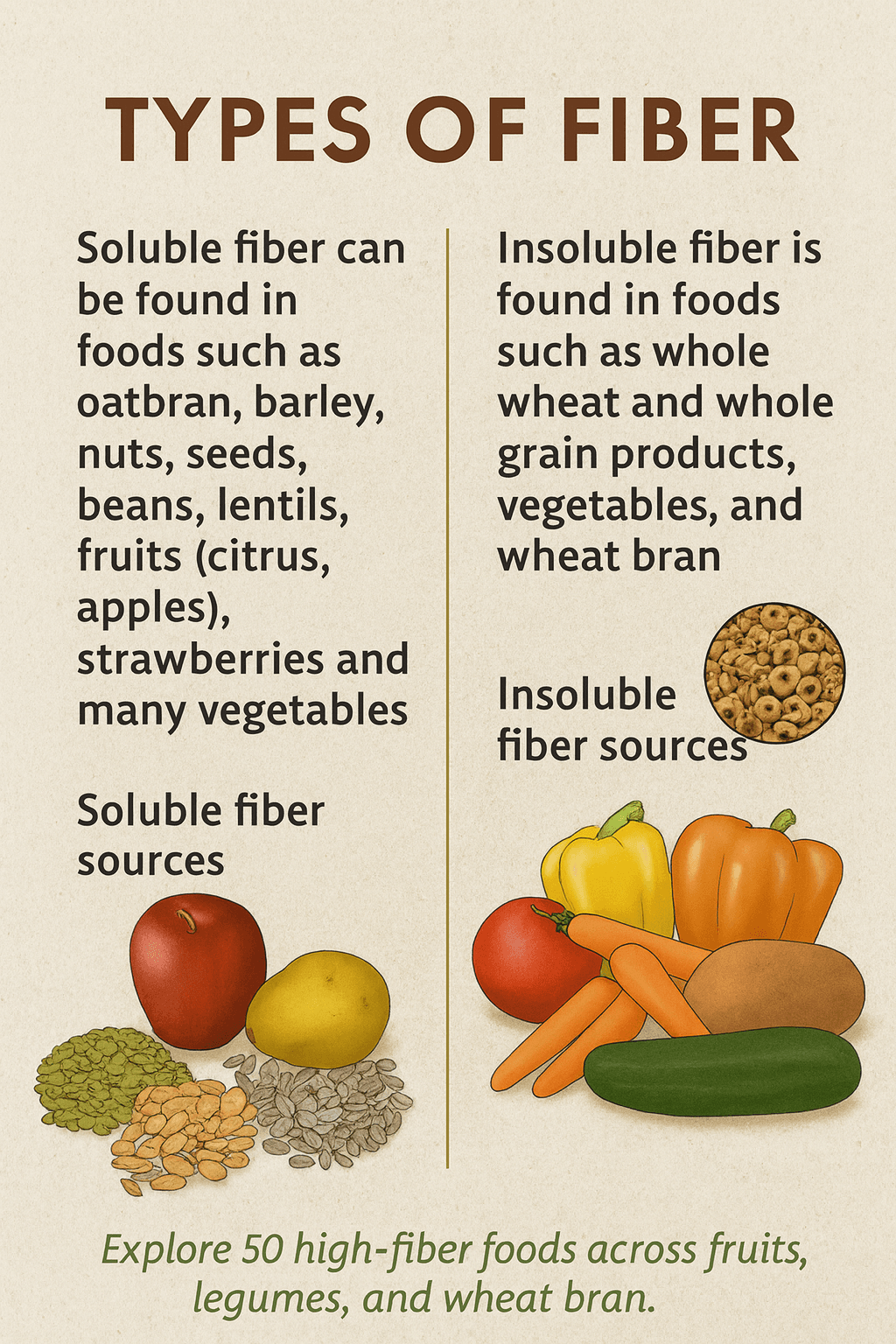
Solubility of fiber means whether it dissolves in water.
Based on this, fiber has often been categorized as either soluble or insoluble:
- Soluble fiber dissolves in water, forming a gel that supports metabolic health and steadies blood sugar.
- Insoluble fiber does not dissolve in water and acts as a bulking agent, helping food move through your gut.
Soluble fibers include gums, pectins, psyllium, beta-glucans, and others. Insoluble fibers include lignin and cellulose.
Different plant foods have varying proportions of soluble and insoluble fibers.
Fiber is often split into soluble and insoluble types. Soluble fiber benefits metabolic health, while insoluble fiber adds bulk.
Viscous Fiber (A Special Subtype of Soluble Fiber)
Some soluble fibers form a thick, gel-like substance in the gut. These are called viscous fibers (meaning they thicken when mixed with water), and are especially powerful for:
- Increasing fullness
- Reducing appetite
- Supporting weight management
- Improving cholesterol and blood sugar control
A review of 44 studies found that only viscous fibers consistently reduced food intake and supported weight loss. (Jovanovski et al., 2020, pp. 471-485)
Sources: glucomannan, beta‑glucans, pectins, guar gum, psyllium
Whole‑food sources: oats, legumes, Brussels sprouts, asparagus, flaxseed
Whole‑Food Sources of Fiber
- Beans and lentils
- Oats and barley
- Berries and apples
- Leafy greens and cruciferous vegetables
- Nuts and seeds
- Whole grains like brown rice, quinoa, millet, and whole‑wheat products
- Sweet potatoes, carrots, and squash
Eating a variety of plant foods ensures you get a mix of soluble, insoluble, and viscous fibers.
Tips for Increasing Dietary Fiber Intake
- Eat whole fruits with skin more often than fruit juices.
- Use whole fruit as a dessert.
- Eat a variety of whole vegetables – cooked and raw – freely.
- Use 100% whole grain breads, waffles, cereals, rolls, English muffins, and crackers instead of those made with refined white flour.
- Use corn tortillas rather than flour.
- Use brown rice, wild rice, millet, barley, and cracked wheat as alternatives to white rice.
- Add beans to main dish soups, stews, chili, or salads.
- If you have trouble meeting your fiber intake, you can use fiber supplements. But remember that fiber supplements don’t replace the healthy fruits, vegetables, and whole grains that you should be consuming.
You might be wondering: Are you getting enough fiber in your daily diet?
The solution is simple: eat more whole, plant‑based foods. Even one or two small changes — adding beans to dinner, choosing whole grains, or eating fruit with breakfast — can make a meaningful difference.
A growing number of physicians recommend plant‑forward or fully plant‑based diets for patients with diabetes, heart disease, and cancer, given the powerful role fiber plays in metabolic and digestive health. (Mozaffarian, 2024)
Conclusion
Understanding the different types of dietary fiber—soluble, insoluble, and viscous—gives you a practical roadmap for supporting digestion, stabilizing blood sugar, nurturing your microbiome, and protecting long‑term health. Each type plays a unique role, yet they all work together when you build your meals around whole, plant‑based foods. Small, consistent choices—adding beans to a salad, choosing whole grains, enjoying fruit with breakfast, or including more vegetables at dinner—can make a meaningful difference over time. My hope is that this guide helps you feel more confident and inspired as you bring more fiber‑rich foods into your daily routine, one simple step at a time.
Author’s Note
Fiber has always been one of the most powerful — yet most misunderstood — parts of a healthy diet. I wrote this post to help you see that fiber isn’t just “roughage,” but a diverse family of nutrients that support digestion, blood sugar balance, heart health, and long‑term vitality. Understanding the differences between soluble, insoluble, and viscous fibers makes it easier to choose foods that truly nourish your body. My hope is that this guide gives you clarity and confidence as you add more whole, fiber‑rich foods to your daily routine.
— Robert
Continue The Conversation
Reference
(May 14, 2024). Fiber: The Carb That Helps You Manage Diabetes. Centers for Disease Control and Prevention. https://www.cdc.gov/diabetes/healthy-eating/fiber-helps-diabetes.html
Hoy, M. K. & Goldman, J. D. (2014). Fiber intake of the U.S. population - FSRG Dietary Data Briefs. FSRG Dietary Data Briefs. https://doi.org/10.1093/advances/nmz019
Solan, M. (2024). The facts on fiber. Harvard Health. https://www.health.harvard.edu/nutrition/the-facts-on-fiber
Veronese, N., Solmi, M., Caruso, M. G., Giannelli, G., Osella, A. R., Evangelou, E., Maggi, S., Fontana, L., Stubbs, B. & Tzoulaki, I. (2018). Dietary fiber and health outcomes: an umbrella review of systematic reviews and meta-analyses. The American Journal of Clinical Nutrition 107(3), pp. 436-444. https://doi.org/10.1093/ajcn/nqx082
Reynolds, A. N., Akerman, A., Kumar, S., Pham, H. T., Coffey, S., & Mann, J. (2022). Dietary fiber in hypertension and cardiovascular disease management: systematic review and meta-analyses. BMC Medicine 20. https://doi.org/10.1186/s12916-022-02328-x
Jovanovski, E., Mazhar, N., Komishon, A., Khayyat, R., Li, D., Mejia, S. B., Khan, T., Jenkins, A. L., Smircic-Duvnjak, L., Sievenpiper, J. L., & Vuksan, V. (2020). Can dietary viscous fiber affect body weight independently of an energy-restrictive diet? A systematic review and meta-analysis of randomized controlled trials. The American Journal of Clinical Nutrition 111(2), pp. 471-485. https://doi.org/10.1093/ajcn/nqz292
Mozaffarian, D. (2024). Plant-Based Diets and Diabetes Risk: Which Foods, What Mechanisms?. Diabetes Care 47(5). https://doi.org/10.2337/dci24-0011
Disclaimer
The information provided in this article is for educational and informational purposes only and is not intended as medical, psychological, or professional advice. The content reflects general wellness principles and personal development concepts designed to encourage self-reflection and healthy lifestyle choices.
Individual circumstances vary, and readers should consult qualified healthcare professionals, mental health providers, or other appropriate experts regarding specific concerns or conditions. Never disregard professional advice or delay seeking help because of information contained in this article.
The author and publisher assume no responsibility for actions taken based on the information presented. Your health and well-being are ultimately your responsibility, and any changes to your lifestyle should be made thoughtfully and in consultation with appropriate professionals when necessary.
Good to know this. I knew we all needed it, and the basic why, but to see more in depth info on it is great.