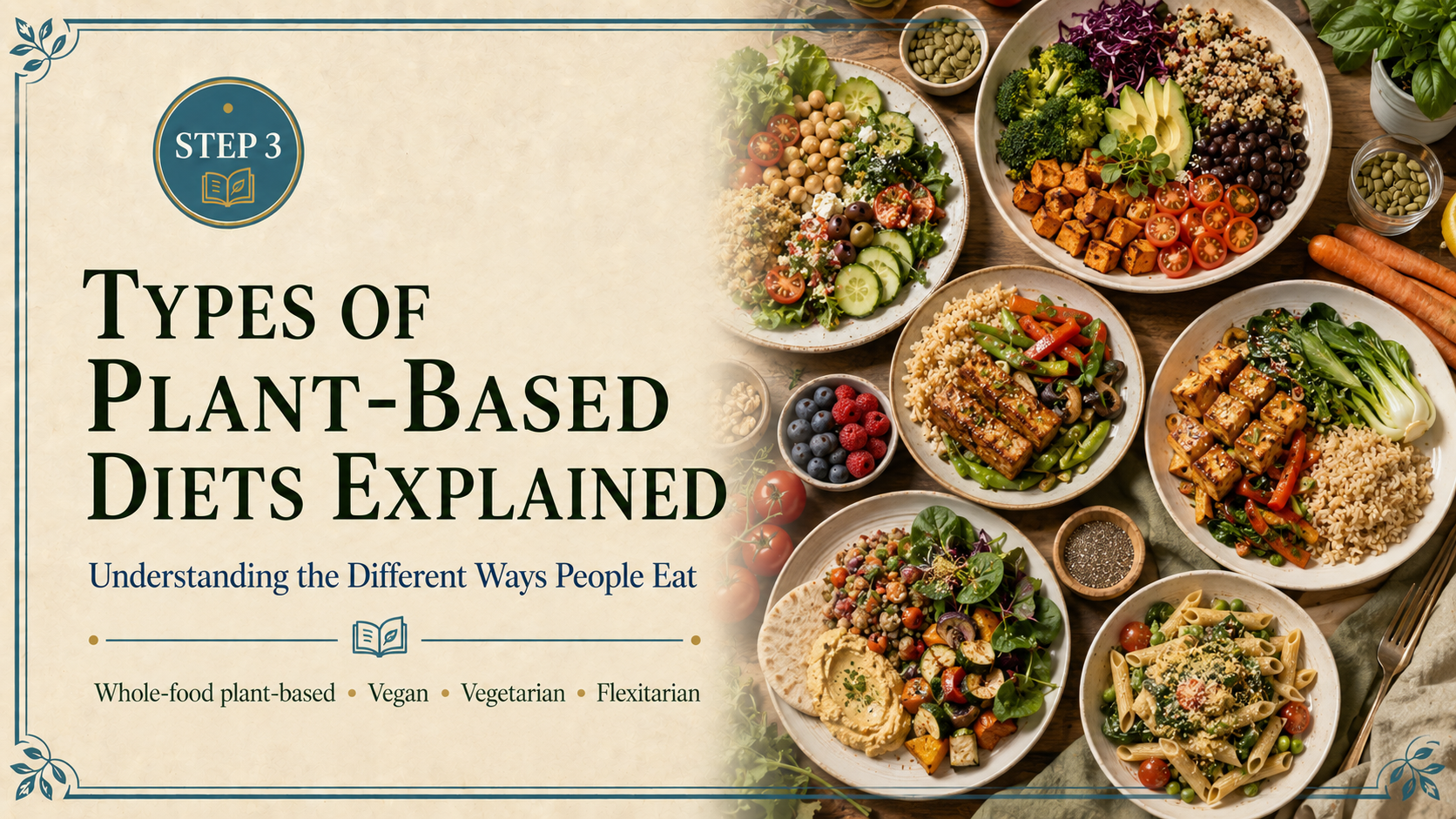
Choosing a plant‑based lifestyle doesn’t mean following one rigid set of rules. In fact, there are many different ways to eat more plants — each with its own strengths, structure, and level of flexibility. Whether you’re easing into healthier habits or ready for a full transformation, understanding the various plant‑based eating styles can help you find the approach that feels natural, sustainable, and aligned with your goals. The key is discovering the version that supports your health, your values, and your everyday life.
Comparison of Popular Plant‑Based Diets
Diet Type | Includes | Excludes | Best For | Difficulty |
Plant-Based / Flexitarian | Mostly plants; occasional meat, fish, eggs, dairy | None strictly | Beginners easing into plant‑based eating | Easy |
| Lacto‑Ovo Vegetarian | Dairy + eggs | Meat, poultry, fish | Balanced transition without giving up familiar foods | Easy |
| Lacto Vegetarian | Dairy | Meat, fish, eggs | Those who enjoy dairy but avoid eggs | Easy |
| Ovo Vegetarian | Eggs | Meat, fish, dairy | People avoiding dairy but wanting high‑quality protein | Easy |
Vegan | All plant foods | All animal products | Ethical eaters, environmental focus, strict plant‑based | Moderate |
| Mediterranean | Plants, fish, olive oil, moderate dairy/eggs | Red meat (limited) | Heart health, longevity, balanced lifestyle | Easy |
| Anti‑Inflammatory (Weil) | Plants, spices, mushrooms, moderate wine | Processed foods, added sugars | Reducing inflammation, boosting immunity | Moderate |
Whole‑Food Plant‑Based / Plant strong | Whole grains, legumes, vegetables, fruits | Oils, processed foods, animal products | Weight loss, disease reversal | Challenging |
| Traditional Asian | Grains, vegetables, legumes, fish | Red meat (rare) | Balanced, cultural, moderate plant‑based | Easy |
| Eco‑Atkins | Plant proteins, healthy fats | Animal products, refined carbs | Low‑carb eaters wanting a plant‑based option | Moderate |
| Macrobiotic | Whole grains, vegetables, sea vegetables | Processed foods, most animal products | Holistic lifestyle, mindful eating | Moderate |
| Ornish | Very low‑fat plant foods | Oils, meat, nuts, high‑fat foods | Heart disease reversal | Challenging |
| Raw Food | Raw fruits, vegetables, nuts, seeds | Cooked foods | Raw lifestyle, enzyme‑focused eaters | Challenging |
Short Definitions for Each Diet
Flexitarian Diet
A flexible, approachable way to eat mostly plants while still allowing occasional meat, fish, eggs, or dairy. Ideal for beginners who want to reduce animal products without eliminating them.
Vegetarian Diet
A vegetarian diet excludes meat, poultry, and fish but includes a wide variety of plant foods. Depending on the version, it may include dairy, eggs, or both. The focus is on eating mostly plants while avoiding animal flesh.
Vegetarian Diet — References
- Harvard T.H. Chan School of Public Health — Vegetarian Diet Overview
- Mayo Clinic — Vegetarian Diet: How to Get the Best Nutrition
- Academy of Nutrition and Dietetics — Position on Vegetarian Diets
Vegan Diet
A vegan diet eliminates all animal products — including meat, dairy, eggs, and often honey. It centers entirely on plant foods and can be followed for health, environmental, or ethical reasons.
Mediterranean Diet
The Mediterranean diet emphasizes vegetables, fruits, whole grains, legumes, nuts, olive oil, and moderate fish intake. It limits red meat and processed foods and is known for supporting heart and metabolic health. (Finicelli et al., 2022)
Dr. Weil's Anti-Inflammatory Diet
Dr. Weil’s Anti‑Inflammatory Diet focuses on whole, colorful plant foods, healthy fats, herbs, and spices that help reduce chronic inflammation. It includes fish and some animal products but prioritizes plants and nutrient‑dense foods. (Dr. Weil's Anti-Inflammatory Food Pyramid, 2024)
Traditional Asian Diet
The Traditional Asian Diet is built around rice, vegetables, soy foods, legumes, and small amounts of fish. It uses minimal dairy and very limited meat, emphasizing balance, simplicity, and plant‑forward meals. ((NL), 2019)
Plant-strong Diet / Whole Food Plant-Based Diet
The Plant‑Strong or Whole‑Food Plant‑Based (WFPB) diet centers on unprocessed or minimally processed plant foods — vegetables, fruits, whole grains, legumes, nuts, and seeds — while avoiding oils, refined foods, and animal products. It’s designed for maximum nutrient density and long‑term health. (RD, 2025)
Eco-Atkins Diet
Eco‑Atkins is a plant‑based version of the Atkins diet. It’s higher in plant proteins and healthy fats — such as nuts, seeds, tofu, and legumes — while keeping carbohydrates lower than typical plant‑based diets. (Zelman, 2009)
Macrobiotic Diet
The macrobiotic diet emphasizes whole grains, vegetables, beans, and sea vegetables, with limited fruit and occasional fish. It focuses on balance, simplicity, and mindful eating rooted in traditional Japanese principles. (The Macrobiotic Diet: Pros and Cons, 2015)
Ornish Diet
The Ornish Diet is a very low‑fat, whole‑food, plant‑based approach designed to improve heart health. It emphasizes vegetables, fruits, whole grains, and legumes while avoiding oils, animal products, and processed foods. (Zumpano, 2024)
Raw Food Diet
The raw food diet consists mainly of uncooked, unprocessed plant foods — such as fruits, vegetables, nuts, seeds, and sprouted grains. The idea is that raw foods retain more natural enzymes and nutrients. (RD, 2023)
Conclusion
As discussed, there is not just one plant-based diet. The information above can help you choose the right one for you. Shifting from a traditional meat-based diet requires a new mindset toward food.
Plant-based diets have unique structures and rules, so you can choose one that fits your lifestyle and goals.
Ultimately, adopting a plant-based diet is a step toward improved health and wellness, helping you make long-term, mindful changes.
After considering the plant-based diets above, select the one that best fits your needs. Share your choice in the comments to join the conversation and let others know about your decision.
Ready to Take the Next Step?
Whether you’re already a convert and just want a dietary reboot, or you’re trying a plant-based diet for the first time, The Forks Over Knives Plan makes it easier to transition to this healthiest way of eating…and maintain it for life.
Join the Physicians Committee’s 21-Day Vegan Kickstart to receive meal plans, recipes, and advice from nutrition experts. This service is free and will help you take control of your health with a vegan diet.
Further Reading
Below are other great resources to help you get on the right track.
- The Plant-Based Solution: America’s Healthy Heart Doc’s Plan to Power Your Health
- The China Study Solution: The Simple Way to Lose Weight and Reverse Illness, Using a Whole-Food, Plant-Based Diet
- The Plant-Based Solution: America’s Healthy Heart Doc’s Plan to Power Your Health
- The China Study Solution: The Simple Way to Lose Weight and Reverse Illness, Using a Whole-Food, Plant-Based Diet
- How Not to Die: Discover the Foods Scientifically Proven to Prevent and Reverse Disease
- The Forks Over Knives Plan: How to Transition to the Life-Saving, Whole-Food, Plant-Based Diet
Author's Note
Over the years, I’ve met so many people who wanted to eat healthier but felt overwhelmed by all the labels — vegan, vegetarian, flexitarian, Mediterranean, whole‑food plant‑based, and everything in between. My goal with this guide is to take the pressure off and replace confusion with clarity.
There is no single “right” way to eat more plants. What matters most is finding an approach that feels realistic, enjoyable, and aligned with your values and long‑term goals. Whether you’re exploring plant‑based eating for the first time or refining a pattern you’ve followed for years, I hope this overview helps you understand your options and choose a path that supports your health and your lifestyle.
Thank you for taking this step toward mindful nourishment. Every choice and question you share adds to our supportive, plant-based community. Your progress is noticed and valued.
— Robert
Continue The Conversation
Every wellness journey is unique, and we can learn a great deal from one another's experiences.
What stood out to you in this article?
Have you faced similar challenges, discovered helpful strategies, or gained insights of your own?
I invite you to share your thoughts in the comments below. Your experience may encourage someone else who is taking the next step on their own journey.
Reference List
Harvard T.H. Chan School of Public Health. (2024). Healthy Eating Plate & Plant‑Forward Dietary Patterns. Provides evidence on Mediterranean, vegetarian, and plant‑forward diets and their long‑term health outcomes.
Mayo Clinic Staff. (2024). Plant‑Based Diets: Benefits and Practical Approaches. Covers flexitarian, vegetarian, and vegan patterns with emphasis on heart health and chronic disease prevention.
Cleveland Clinic. (2024). Whole‑Food, Plant‑Based Diet: What It Is and How It Works. Defines WFPB principles and summarizes research on inflammation, weight, and metabolic health.
National Institutes of Health. (2024). Dietary Patterns and Chronic Disease Risk: Evidence for Plant‑Based Approaches. Reviews large cohort studies comparing plant‑based, Mediterranean, and mixed dietary patterns.
Academy of Nutrition and Dietetics. (2024). Position of the Academy: Vegetarian and Vegan Diets Across the Lifespan. Authoritative guidance on nutrient considerations and safety for all ages.
American Heart Association. (2024). Mediterranean and Plant‑Forward Diets for Cardiovascular Health. Summarizes evidence for heart‑protective dietary patterns.
Satija, A., & Hu, F. B. (2023). Plant‑Based Diets and Cardiometabolic Health. Journal of the American College of Cardiology. Explains differences between healthy and less‑healthy plant‑based diets.
Ornish, D. (2023). Lifestyle Medicine and Plant‑Based Nutrition. Provides clinical outcomes from intensive WFPB interventions.
Campbell, T. C., & Campbell, T. M. (2023). The China Study (Updated Edition). Foundational epidemiological research on plant‑based dietary patterns.
Finicelli, M., Salle, A. D., Galderisi, U. & Peluso, G. (2022). The Mediterranean Diet: An Update of the Clinical Trials. Nutrients. https://doi.org/10.3390/nu14142956
(2024). Dr. Weil's Anti-Inflammatory Food Pyramid. Dr. Andrew Weil's official website. https://www.drweil.com/diet-nutrition/anti-inflammatory-diet-pyramid/dr-weils-anti-inflammatory-food-pyramid/
(NL), A. P. (2019). The Japanese Diet: Benefits, Food List, and Meal Plan. Healthline. https://www.healthline.com/nutrition/japanese-diet
RD, J. K. (2025). Whole-Foods, Plant-Based Diet: A Detailed Beginner's Guide. Healthline. https://www.healthline.com/nutrition/plant-based-diet-guide
Zelman, K. M. (June 7, 2009). The 'Eco Atkins' Diet. WebMD. https://www.webmd.com/diet/features/the-eco-atkins-diet
(2015). The Macrobiotic Diet: Pros and Cons. Healthline. https://www.healthline.com/health/food-nutrition/macrobioticdiet
Zumpano, J. (2024). What Is the Ornish Diet?. Cleveland Clinic. https://health.clevelandclinic.org/ornish-diet
RD, T. J. (2023). The Raw Food Diet: A Beginner's Guide and Review. Healthline. https://www.healthline.com/nutrition/raw-food-diet
Disclaimer
The information provided in this article is for educational and informational purposes only and is not intended as medical, psychological, or professional advice. The content reflects general wellness principles and personal development concepts designed to encourage self-reflection and healthy lifestyle choices.
Individual circumstances vary, and readers should consult qualified healthcare professionals, mental health providers, or other appropriate experts regarding specific concerns or conditions. Never disregard professional advice or delay seeking help because of information contained in this article.
The author and publisher assume no responsibility for actions taken based on the information presented. Your health and well-being are ultimately your responsibility, and any changes to your lifestyle should be made thoughtfully and in consultation with appropriate professionals when necessary.