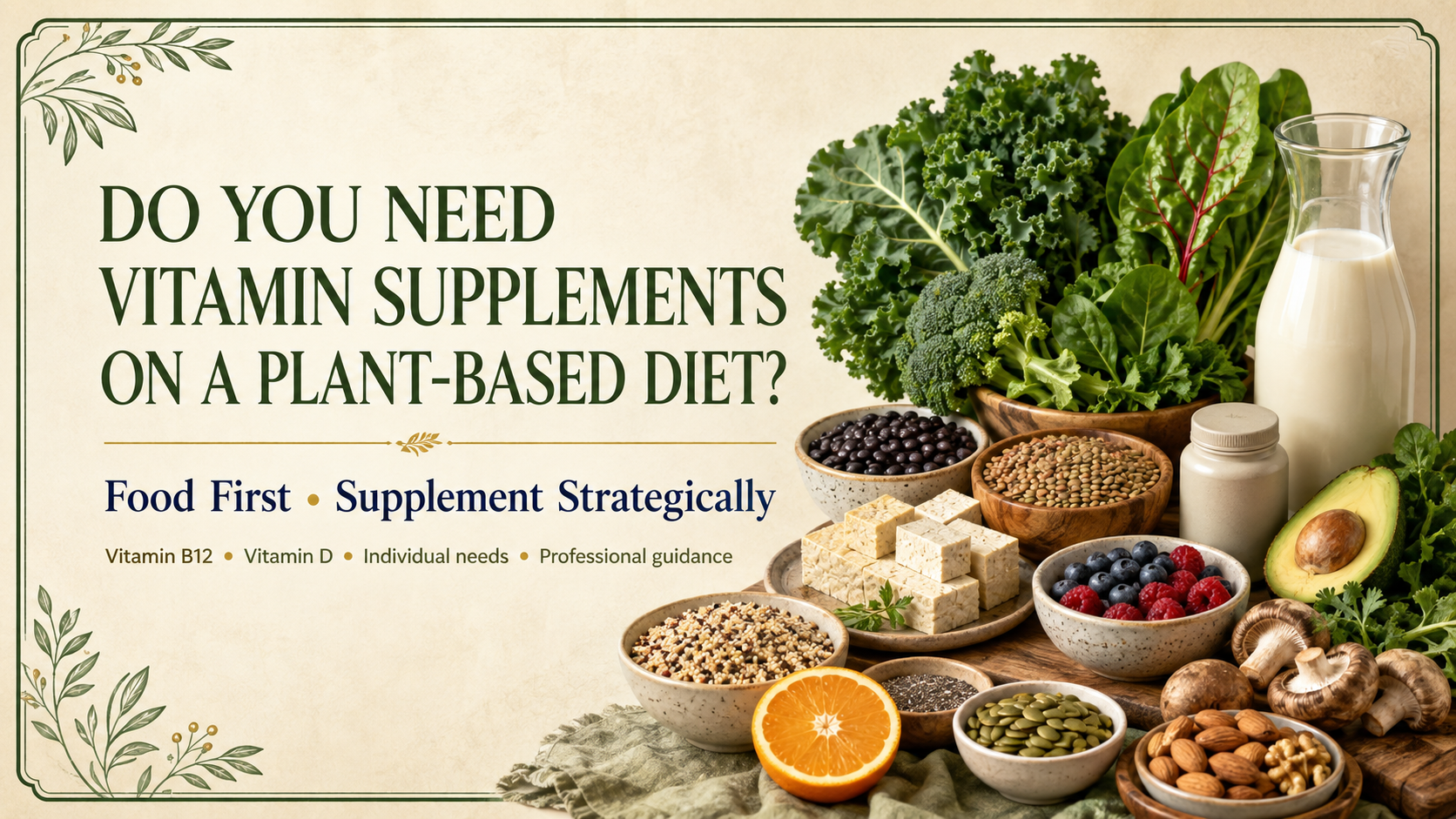
Do You Need Vitamin Supplements on a Plant‑Based Diet?
A Clear, Calm Guide for Everyday Living
A whole‑food, plant‑powered lifestyle gives your body an incredible foundation. It supports heart health, brain health, digestion, immunity, and long‑term vitality. But even with the best intentions — and the best meals — some nutrients can still fall short.
That’s where supplements may play a role. Not as replacements for real food, and not as magic fixes, but as simple tools that help fill nutritional gaps when needed.
This guide walks you through when supplements might be helpful, which nutrients are most commonly low, and how to choose high‑quality options without getting lost in the noise.
Why Supplements Are Sometimes Helpful
Even with a nutrient‑rich diet, certain vitamins and minerals can be harder to get consistently. Modern farming practices, soil depletion, indoor lifestyles, aging, medications, and digestive issues all influence how well we absorb nutrients.
Supplements can be useful when they help you:
- Support healthy aging
- Maintain energy and cognitive function
- Address low levels identified by a healthcare provider
- Fill gaps created by dietary restrictions
- Support nutrient absorption when digestion is compromised
The goal is not “more supplements.”
The goal is targeted support when it makes sense.
Key Nutrients/Vitamins People Commonly Fall Short On
Vitamin B12
B12 is essential for nerve health, red blood cell formation, and energy metabolism.
Because it’s primarily found in animal products, anyone eating mostly or entirely plant‑based may need supplemental support.
Vitamin D
Vitamin D plays a major role in immunity, bone strength, and mood regulation.
Low sun exposure, darker skin tones, indoor lifestyles, and aging all increase the likelihood of deficiency.
Omega‑3 Fatty Acids (EPA & DHA)
These long‑chain omega‑3s support brain health, heart health, and inflammation balance.
Plant foods provide ALA, but conversion to EPA/DHA is limited for many people.
Other nutrients that may need attention
Depending on your diet and health history, you may also want to monitor:
- Iodine
- Iron
- Zinc
- Calcium
- Magnesium
A simple blood test and a conversation with a healthcare provider can help you understand your personal needs.
Food First — Supplements Second
Your body is designed to thrive on real food. Supplements work best when they complement a nutrient‑rich lifestyle, not replace it.
A strong foundation includes:
- A variety of colorful fruits and vegetables
- Whole grains
- Legumes
- Nuts and seeds
- Healthy fats
- Adequate hydration
- Consistent movement
- Rest and stress management
Supplements simply help fill the gaps that food alone may not cover.
How to Choose a High‑Quality Supplement
Not all supplements are created equal. Look for:
- Third‑party testing (USP, NSF, ConsumerLab)
- Minimal fillers and additives
- Clear labeling
- Evidence‑based dosages
- Brands that prioritize transparency and quality
You don’t need the most expensive product — you need the most reliable one.
When to Consider Talking with a Healthcare Provider
It’s especially helpful to get guidance if you:
- Are pregnant or breastfeeding
- Have digestive issues or absorption concerns
- Take medications
- Have chronic health conditions
- Are experiencing fatigue, numbness, mood changes, or other symptoms
- Want to confirm your nutrient levels with lab testing
A personalized approach is always best.
Conclusion
A well‑planned plant‑based diet provides abundant vitamins, minerals, antioxidants, and fiber—but certain nutrients can be harder to obtain consistently from food alone. Vitamin B12, vitamin D, iodine, and sometimes omega‑3s are the most common gaps, and addressing them can make a meaningful difference in energy, immunity, and overall well‑being. Whether you choose fortified foods, targeted supplements, or a combination of both, the key is awareness. When you understand your body’s needs, you can nourish yourself with confidence and enjoy the full benefits of a plant‑based way of living.
Author's Note
Plant‑based eating can be incredibly nourishing, but it also raises important questions about whether supplements are necessary. Over the years, I’ve seen many people thrive on plant‑forward diets once they understand which nutrients require special attention and how to meet those needs confidently. My goal with this article is to offer clarity—not fear—so you can make informed choices that support your long‑term health. Supplements aren’t a sign of failure; they’re simply tools. When used wisely, they help your body function at its best while you enjoy the benefits of a plant‑powered lifestyle.
---- Robert
Continue The Conservation
Every wellness journey is unique, and we can learn a great deal from one another's experiences.
What stood out to you in this article?
Have you faced similar challenges, discovered helpful strategies, or gained insights of your own?
I invite you to share your thoughts in the comments below. Your experience may encourage someone else who is taking the next step on their own journey.
Remember, meaningful change often begins with a single step—and none of us has to walk the path alone.
Reference List
- National Institutes of Health, Office of Dietary Supplements. Vitamin B12 Fact Sheet for Consumers. Updated 2024.
- National Institutes of Health, Office of Dietary Supplements. Vitamin D Fact Sheet for Consumers. Updated 2024.
- Academy of Nutrition and Dietetics. Position of the Academy of Nutrition and Dietetics: Vegetarian Diets. Journal of the Academy of Nutrition and Dietetics.
- Harvard T.H. Chan School of Public Health. The Nutrition Source: Plant‑Based Diets.
- World Health Organization. Micronutrient Deficiencies.
- U.S. Department of Agriculture. FoodData Central.
- Craig WJ, Mangels AR. Position of the American Dietetic Association: Vegetarian Diets. Journal of the American Dietetic Association.
Disclaimer
Disclaimer The information on this website is for educational purposes only and is not a substitute for professional medical advice, diagnosis, or treatment. Always consult with a qualified healthcare provider before making changes to your diet, lifestyle, or health routine, especially if you have existing medical conditions or take prescription medications.