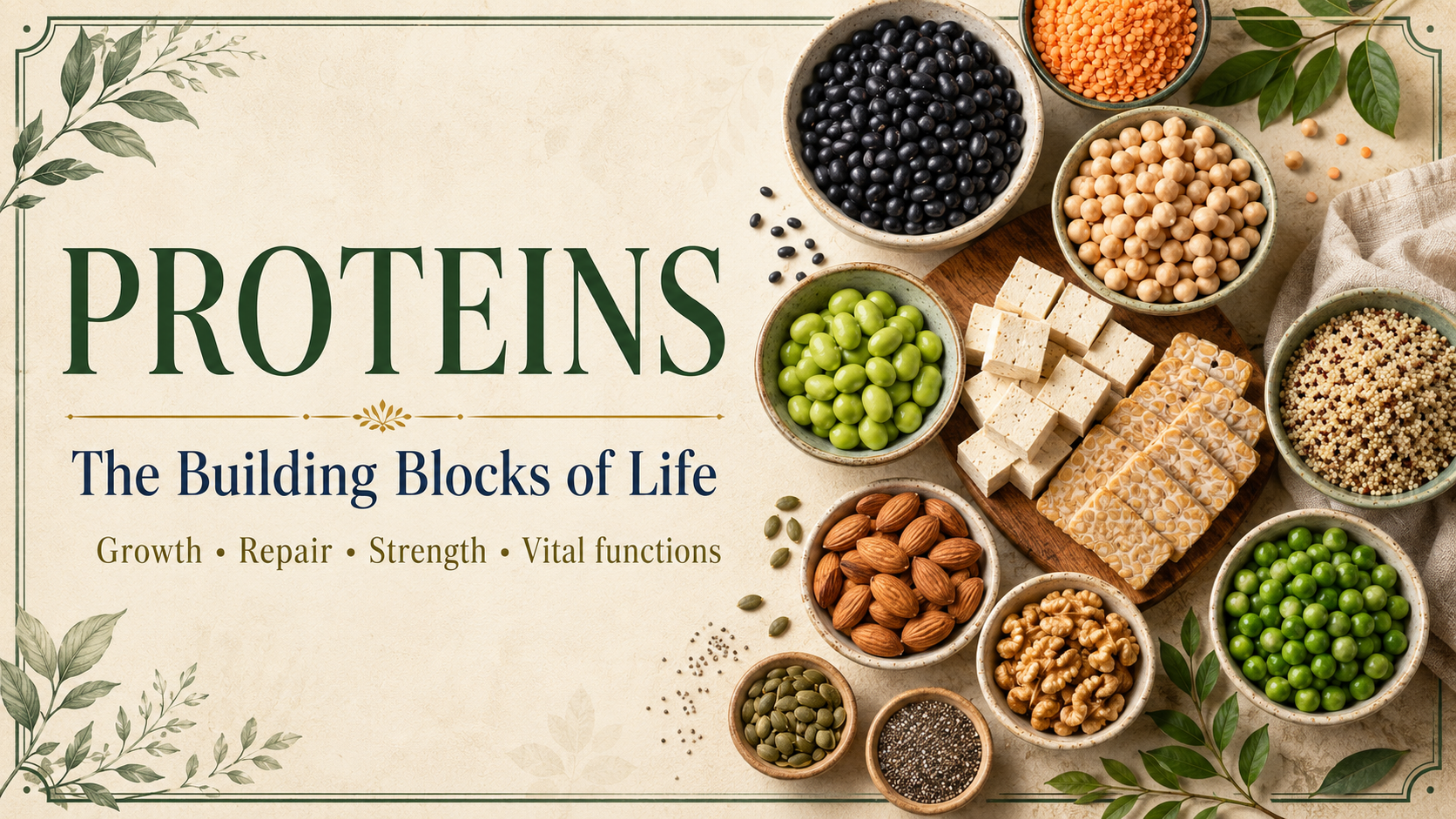
Proteins: Building Blocks of the Body
Proteins are essential for growth, repair, and daily function. Every cell in your body contains protein, and it plays a vital role in building muscle, supporting immunity, and maintaining healthy skin, hair, and nails.
What Proteins Do in the Body
Proteins are made of amino acids—some your body can produce, others must come from food. These amino acids help:
- Build and repair tissues
- Support immune function
- Maintain enzymes and hormones
- Transport nutrients
- Preserve lean muscle mass
Types of Protein Sources
1. Animal-Based Proteins
These are considered “complete” proteins, meaning they contain all essential amino acids.
Examples: meat, poultry, fish, eggs, dairy.
While effective, they can also come with saturated fat and cholesterol. Choosing lean, minimally processed options is key.
2. Plant-Based Proteins
Many plant proteins are “incomplete,” but combining them throughout the day provides all essential amino acids.
Examples: beans, lentils, tofu, tempeh, quinoa, nuts, seeds, whole grains.
Why Protein Matters for Wellness
Protein isn’t just for athletes—it’s vital for everyone. It helps:
- Preserve muscle as we age
- Support metabolism and satiety
- Repair tissues after injury or illness
- Maintain strong bones and immune resilience
The Great Protein Myth
The question that I get asked most often: “Where do you get your protein?” It is a common fact that my family and friends know that I do not eat meat or dairy and they are not concerned whether I am getting enough protein. They know I am getting protein I need from plants. My answer is that as a whole food plant-based individual who eats varied meals containing vegetables, beans, grains, nuts, and seeds. I rarely have any difficulty getting enough protein. Just like anyone else, I get my protein from the food. Of course, you must be sure your diet contains enough energy (calories) to maintain weight.
How Much Protein Do You Need?
Most adults need 0.8 to 1.2 grams of protein per kilogram of body weight daily. Needs vary based on:
- Age
- Activity level
- Health status
- Dietary pattern
Plant-based eaters may benefit from slightly higher intake to ensure amino acid diversity.
Best Plant-Based Protein Sources
Food | Protein per serving | Bonus Nutrients |
Lentils (1 cup cooked) | 18g | Iron, fiber, folate |
Chickpeas (1 cup cooked) | 15g | Fiber, manganese |
Tofu (½ block) | 20g | Calcium, iron |
Tempeh (½ cup) | 15g | Probiotics, iron |
Quinoa (1 cup cooked) | 8g | Magnesium, complete protein |
Almonds (¼ cup) | 7g | Vitamin E, healthy fats |
Pumpkin seeds (¼ cup) | 9g | Zinc, magnesium |
Combining Plant Proteins for Full Coverage
You don’t need to combine proteins at every meal—just eat a variety throughout the day.
Smart pairings:
- Beans + rice
- Hummus + whole grain pita
- Lentil soup + whole grain bread
- Tofu stir-fry + quinoa
Protein and Satiety
Protein helps you feel full longer, stabilizes blood sugar, and reduces cravings. Including a protein source at each meal supports:
- Balanced energy
- Reduced overeating
- Better weight management
Practical Ways to Add Protein to Your Day
- Add lentils or beans to soups, salads, and bowls
- Use tofu or tempeh in stir-fries and wraps
- Snack on nuts, seeds, or roasted chickpeas
- Blend protein-rich ingredients into smoothies
- Choose whole grains like quinoa or buckwheat
Did you know Protein Deficiency is Rare?
How many individuals do you know of that have been diagnosed with protein deficiency? You may be surprised to hear, but protein deficiency is virtually nonexistent in the United States and other industrialized countries. Most American adults eat substantially more than the recommended amount, averaging over one hundred grams of protein per day.
Science and Protein
Science confirms that a diet rich in whole, plant-based foods can help you live to the fullest and still get adequate protein. A growing number of physicians advocate an entirely plant-based diet for many of their patients who have diabetes, heart disease, and cancer. Check out these great sources:
Final Thoughts
Protein plays a foundational role in every stage of life, from supporting muscle repair to strengthening your immune system and helping your body build essential enzymes and hormones. But understanding protein isn’t about chasing numbers or perfection—it’s about making intentional choices that help your body thrive.
When you include a variety of protein sources, especially alongside colorful fruits, vegetables, whole grains, and healthy fats, you create a balanced nutritional foundation that supports energy, clarity, and long-term health. Let this knowledge empower you to build meals that feel nourishing, sustainable, and aligned with your personal wellness goals.
Author's Note
As you explore the role of protein in your daily life, my hope is that this guide helps you feel more confident—not overwhelmed—about nourishing your body. Protein isn’t just a nutrient; it’s a partner in your strength, resilience, and long‑term well‑being. Whether you’re choosing plant-based options, balancing your meals, or simply learning what your body needs, remember that small, consistent steps create meaningful change. I’m honored to walk this journey with you.
---- Robert
Continue The Conversation
Every wellness journey is unique, and we can learn a great deal from one another's experiences.
What stood out to you in this article?
Have you faced similar challenges, discovered helpful strategies, or gained insights of your own?
I invite you to share your thoughts in the comments below. Your experience may encourage someone else who is taking the next step on their own journey.
Remember, meaningful change often begins with a single step—and none of us has to walk the path alone.
Reference List
- U.S. Department of Agriculture. Dietary Guidelines for Americans, 2020–2025.
- National Institutes of Health, Office of Dietary Supplements. “Protein Fact Sheet.”
- Harvard T.H. Chan School of Public Health. “Protein: Moving Toward a Plant-Based Diet.”
- Academy of Nutrition and Dietetics. “Protein and Health.”
- World Health Organization. “Protein and Amino Acid Requirements in Human Nutrition.”
Disclaimer
The information provided in this article is for educational and informational purposes only and is not intended as medical, psychological, or professional advice. The content reflects general wellness principles and personal development concepts designed to encourage self-reflection and healthy lifestyle choices.
Individual circumstances vary, and readers should consult qualified healthcare professionals, mental health providers, or other appropriate experts regarding specific concerns or conditions. Never disregard professional advice or delay seeking help because of information contained in this article.
The author and publisher assume no responsibility for actions taken based on the information presented. Your health and well-being are ultimately your responsibility, and any changes to your lifestyle should be made thoughtfully and in consultation with appropriate professionals when necessary.