Introduction
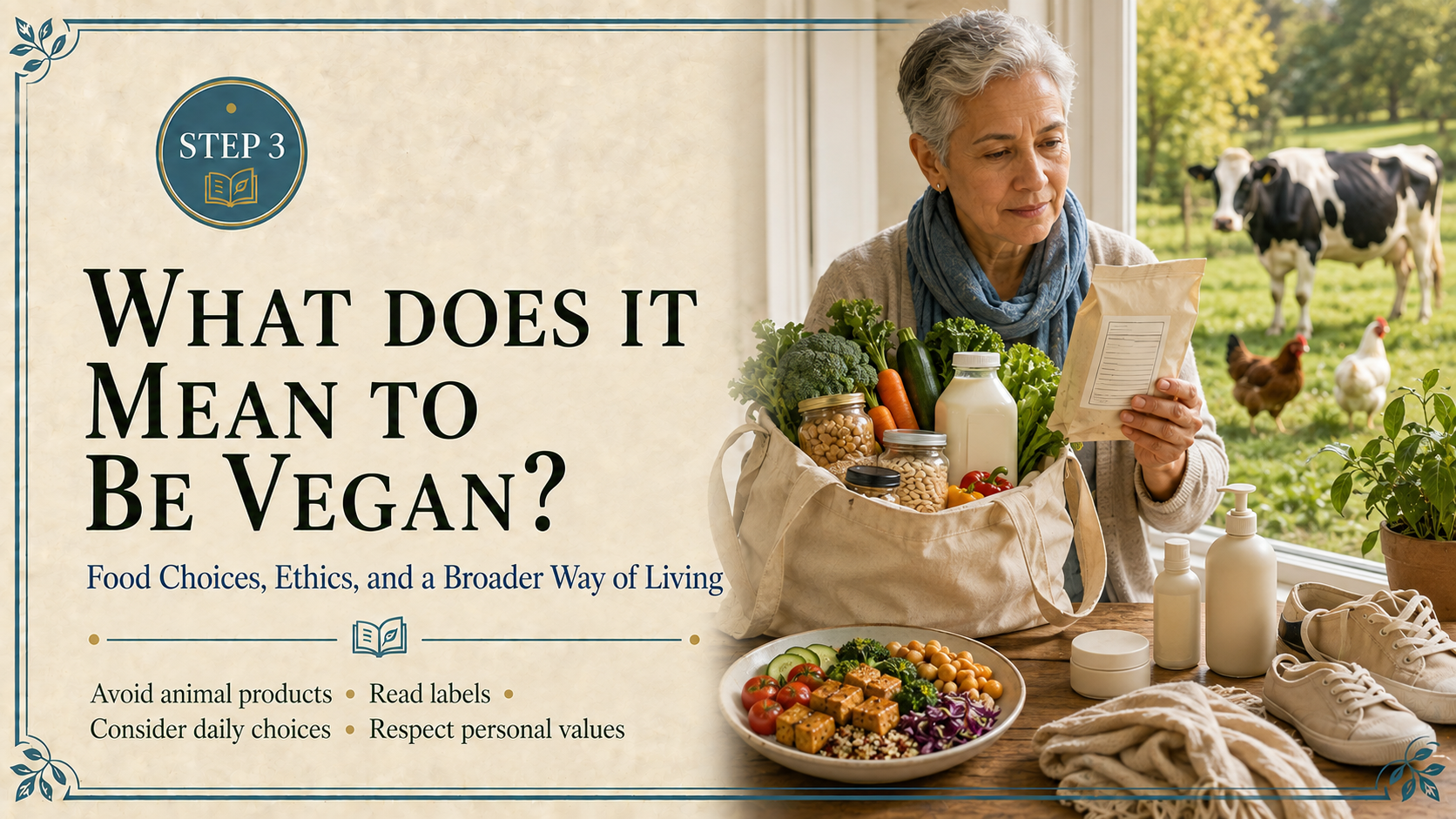
Veganism is often described simply as avoiding animal products, but in practice, it’s a lifestyle built around reducing harm as much as possible. Vegans choose not to eat or use animal‑derived products, though real‑world limitations — such as medical treatments or transportation — mean perfection isn’t always possible. The heart of veganism is intention, not purity.
Reasons why people choose To be Vegans
For animals
For health
A growing body of research links plant‑based eating to lower risks of heart disease, diabetes, and certain cancers. Many people adopt veganism to improve their long‑term health.
For the planet
Animal agriculture is a major driver of deforestation, water use, and greenhouse gas emissions. Vegan choices help reduce environmental impact.
For compassion and alignment
For some, veganism is a way to live in harmony with their values — choosing the path that causes the least harm whenever possible.
Vegan vs. Plant‑Based
All vegans eat a plant‑based diet, but not all plant‑based eaters identify as vegan.
- Plant‑based usually refers to eating primarily or exclusively plants for health reasons.
- Vegan includes food choices and lifestyle choices — clothing, cosmetics, household items, and more.
The Political Origin of the Word “Vegan”
The term vegan was created in 1944 by Donald Watson, founder of The Vegan Society, to clearly distinguish those who avoid all animal products from vegetarians. His intention was to define a lifestyle that rejects the use of animals “as far as possible and practicable.”
Special Political Meaning
Veganism has a specific political meaning: Donald Watson founder of The Vegan Society coined the term because vegetarians often still consumed dairy and eggs. His goal was to describe those who avoid all animal products whenever possible, as emphasized in a paper that distinguished veganism from vegetarianism. (Leneman, 1999, pp. 219-228)
He wanted to coin a term that meant that adherents did not consume or use any type of animal products if it could be prevented. He used it in a paper he wrote against vegetarians due to their consumption of dairy.
How Different People Interpret Veganism
There is a wide spectrum of practice:
- Some vegans avoid all animal‑derived clothing, furniture, and cosmetics.
- Some keep existing leather or wool items to avoid waste.
- Some refuse vaccines or animal-derived medical treatments.
- Others accept medical necessity while still identifying as vegan.
The common thread is the desire to reduce harm — even though individuals draw the line in different places.
Starting a Vegan Lifestyle
No matter your motivation — animals, health, or the environment — the key is simply to begin.
Recommended Resources:
- Join the Physicians Committee's 21-Day Vegan Kickstart.
- Plant‑Based Nutrition, 2E (Idiot’s Guides)
- Nutrition Facts: The Truth About Food
- The Forks Over Knives Plan — a simple, comfort‑food‑focused approach
Ready to Take the Next Step
If this post clarified what it means to be vegan, take one action today—try a vegan meal, explore a resource, or share this guide with someone. Every step, however small, makes a difference.
Author's Note
Veganism means different things to different people, but at its core, it’s about intention — choosing the path that reduces harm as much as possible. My goal with this article is not to tell you what you “should” be, but to offer clarity, compassion, and context so you can make choices that align with your values, your health, and your life circumstances.
Whether you are exploring veganism for animals, the planet, your well-being, or out of curiosity, I hope this guide helps you feel informed, empowered, and supported. Every step toward more mindful living matters, and it is important to grow at your own pace.
– Robert
Continue The Conversation
Every wellness journey is unique, and we can learn a great deal from one another's experiences.
What stood out to you in this article?
Have you faced similar challenges, discovered helpful strategies, or gained insights of your own?
I invite you to share your thoughts in the comments below. Your experience may encourage someone else who is taking the next step on their own journey.
Remember, meaningful change often begins with a single step—and none of us has to walk the path alone.
Reference List
- Academy of Nutrition and Dietetics. “Position of the Academy of Nutrition and Dietetics: Vegetarian Diets.” Journal of the Academy of Nutrition and Dietetics.
- The Vegan Society. “Definition of Veganism” and historical materials on Donald Watson.
- Harvard T.H. Chan School of Public Health. “Plant-Based Diets: Definitions and Health Benefits.”
- American Heart Association. “Plant-Based Diets and Heart Health.”
- United Nations Food and Agriculture Organization (FAO). Livestock’s Long Shadow: Environmental Issues and Options.
- Mayo Clinic. “Vegan Diet: How to Get the Nutrients You Need.”
- Physicians Committee for Responsible Medicine (PCRM). “Health Benefits of a Vegan Diet.”
- Environmental Working Group (EWG). Meat Eater’s Guide to Climate Change + Health.
- National Institutes of Health (NIH). “Nutrient Considerations for Plant-Based Diets.”
Wang, Y., Liu, B., Han, H., Hu, Y., Zhu, L., Rimm, E. B., Hu, F. B. & Sun, Q. (2023). Associations between plant-based dietary patterns and risks of type 2 diabetes, cardiovascular disease, cancer, and mortality - a systematic review and meta-analysis. Nutrients 22(1). https://doi.org/10.1186/s12937-023-00877-2
Wisser, D., Grogan, D. S., Lanzoni, L., Tempio, G., Cinardi, G., Prusevich, A. & Glidden, S. (2024). Water Use in Livestock Agri-Food Systems and Its Contribution to Local Water Scarcity: A Spatially Distributed Global Analysis. Water2024. https://doi.org/10.3390/w16121681
Leneman, L. (1999). No Animal Food: The Road to Veganism in Britain, 1909-1944. Society & Animals 7(3), pp. 219-228. https://doi.org/10.1163/156853099X00095
Disclaimer
The information provided in this article is for educational and informational purposes only and is not intended as medical, psychological, or professional advice. The content reflects general wellness principles and personal development concepts designed to encourage self-reflection and healthy lifestyle choices.
Individual circumstances vary, and readers should consult qualified healthcare professionals, mental health providers, or other appropriate experts regarding specific concerns or conditions. Never disregard professional advice or delay seeking help because of information contained in this article.
The author and publisher assume no responsibility for actions taken based on the information presented. Your health and well-being are ultimately your responsibility, and any changes to your lifestyle should be made thoughtfully and in consultation with appropriate professionals when necessary.