
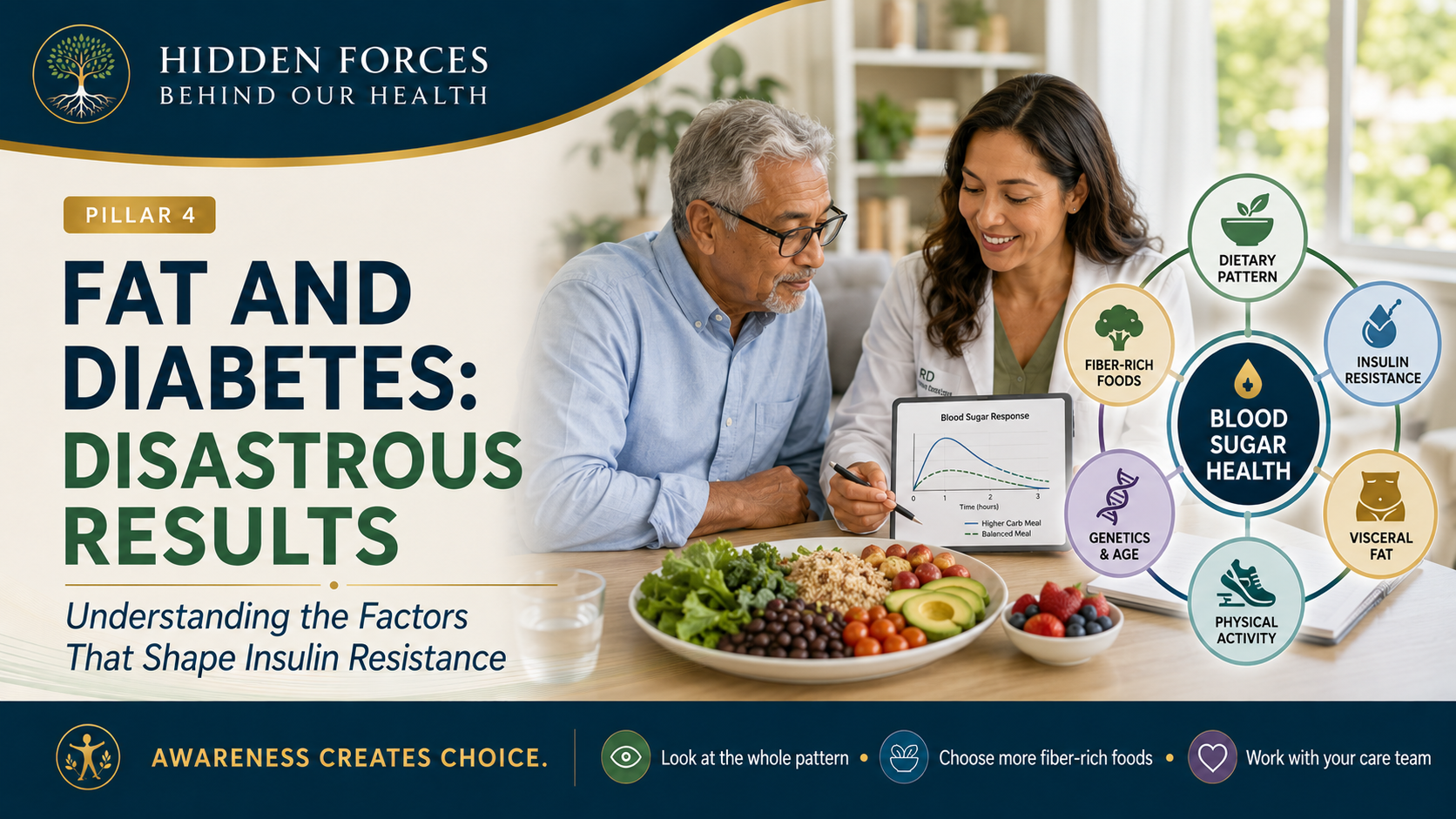
Fat And Diabetes: Disastrous Results
Understanding the connection between body fat and diabetes is crucial. Excess body fat sharply increases the risk of prediabetes and type 2 diabetes. (Diseases, 2024) See the Obesity Epidemic and the CDC’s resource: Adult Obesity Facts | Overweight & Obesity | CDC (cdc.gov in Bing).
Excess body fat increases the risk for several serious conditions, including heart disease, cancer, neurological disorders, and diabetes. (Excess body fatness and cancer risk: a summary of the epidemiologic evidence, 2023, pp. 742-745)
Body fat is only part of the problem. 'Dietary fat' means the fat we eat from food, which has different effects. Eating fat does not automatically make you gain weight. (Guarneiri & Cooper, 2020, pp. 384-401) Dietary fat is used by the body more slowly than simple sugars, which are more readily stored as fat. (Flatt, 1995)
Not all dietary fats are the same. Some can harm your health and may play a part in causing type 2 diabetes. (Basile et al., 2024) The type of fat you eat is important. Some fats, called 'essential fatty acids,' are needed for your body to work well—these are healthy fats. (Lands, 2012, pp. 1338-1357) In contrast, 'saturated fats,' often called 'bad fats,' have been shown in studies to increase the risk of insulin resistance (a condition in which the hormone that controls blood sugar becomes less effective) and diabetes. (Lee et al., 2006, pp. 1467-74)
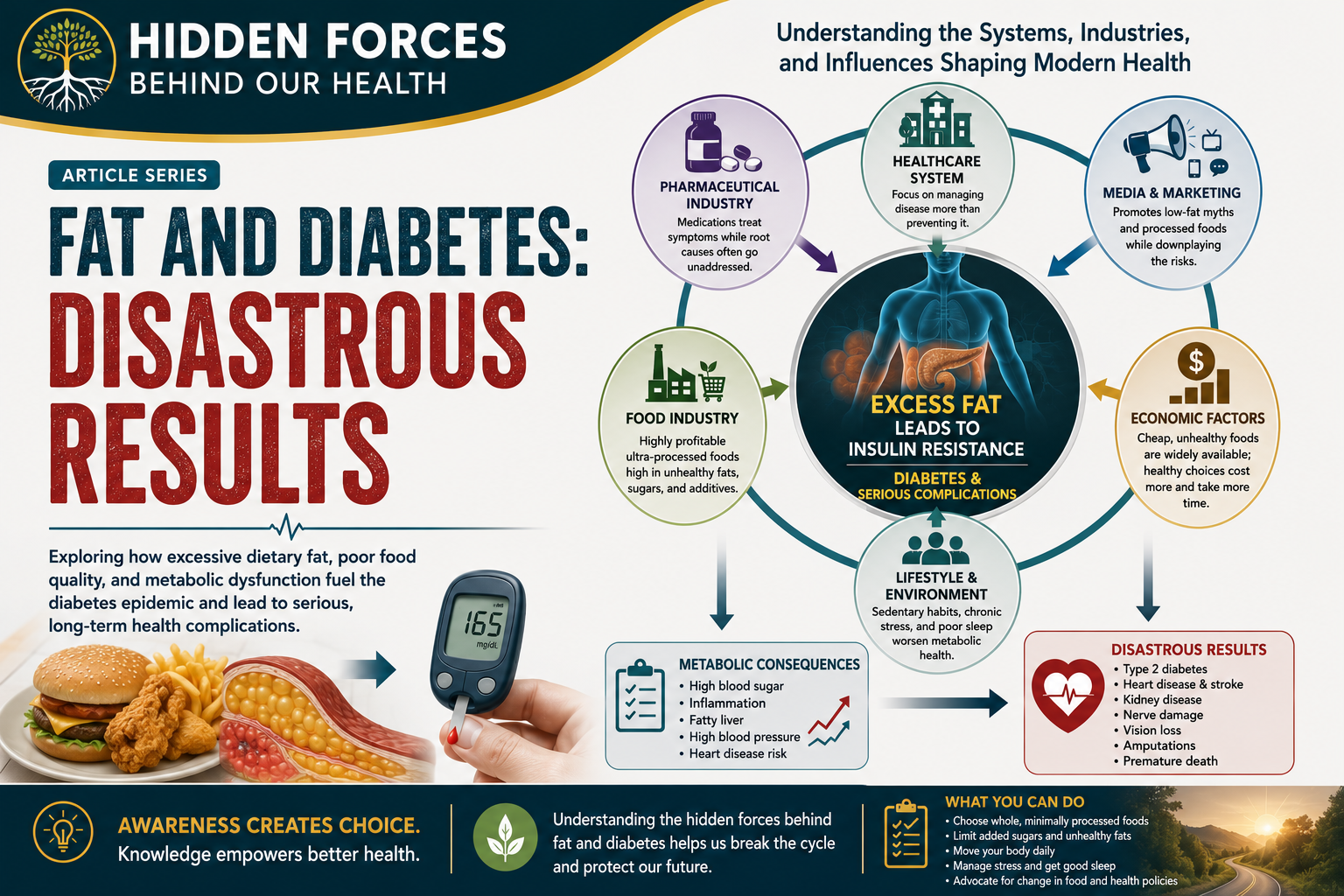
So, which fats do you really want to watch out for?
For over a century, researchers have found that high-fat diets are linked to higher rates of diabetes. (HIGH FAT DIETS IN DIABETES MELLITUS, 1923) Recent advances in the 21st century have clarified some of the mechanisms.
In one study, two groups of healthy young adults were observed. After only 2 days on a high-fat diet, one group showed a significant increase in glucose intolerance, while the low-fat diet group maintained normal insulin activity. (Durrer et al., 2019)
This effect was seen regardless of the type of fat people ate, but saturated fats were especially strong at reducing insulin sensitivity. (Lovejoy, 2002, pp. 435-440) Here’s how this happens:
Insulin helps move sugar from your blood into your muscles, where it can be used for energy. When there is not enough insulin, or when insulin does not work properly, sugar stays in the blood. This leads to high blood sugar and, over time, diabetes. (Richter et al., 2025, pp. 1867-1945)
Sometimes, even if the body makes insulin, it does not work well—this is called insulin resistance. Tiny fat droplets inside muscle cells can stop insulin from working properly. (Parry & Glancy, 2021) Too much sugar is the main cause of type 2 diabetes, but too much fat can also make it harder for the body to control blood sugar. Eating lots of fat and sugar together can cause diabetes faster. (Taylor, 2024, pp. 664-673)
You may experience blood sugar spikes within 160 minutes after eating saturated fats. (Hernández et al., 2016, pp. 4392-4406)
Foods High in Saturated Fat
- Fatty meats (beef, pork, lamb)
- Poultry with skin
- Lard, cream, butter, cheese
- Processed meats
- Baked goods, cooking oils, baking chocolate
- Many ultra-processed foods
A Better Path Forward
f you want to shed a few pounds or manage diabetes, steer clear of fast food and choose delicious, plant-based meals instead! Try swapping out foods high in saturated fat for vibrant, nutrient-packed options such as:
- Vegetables and fruits
- Nuts and berries
- Whole grains—both unprocessed and processed. These tasty choices help you manage blood sugar, calm inflammation, and spare you from the additives, preservatives, and toxins that sneak into many processed foods.
Conclusion
Fat and diabetes together carry major health risks. However, by making informed choices and staying consistent, you can prevent, treat, and even reverse type 2 diabetes. (Preventing Type 2 Diabetes, 2024)
If you’re looking to lose weight for diabetes prevention or treatment, try swapping fast food for satisfying, plant-based meals. Skip foods full of saturated fat and fill your plate with unprocessed vegetables, fruits, nuts, berries, and whole grains. Remember, excess fat and diabetes together can seriously impact your well‑being.
Author's Note
I wrote this piece because too many people are still being misled about the role dietary fat plays in diabetes. For decades, the conversation has been dominated by sugar alone, while the deeper metabolic story—how excess fat disrupts insulin’s ability to do its job—has remained largely hidden from public view. My goal here is not to shame or alarm, but to illuminate what the science has been telling us for years: when we understand the real mechanisms behind insulin resistance, we finally gain the power to change our health trajectory.
As someone who has spent years studying the intersection of nutrition, metabolism, and long-term wellness, I believe clarity is one of the greatest gifts we can offer each other. This article is part of my ongoing effort to cut through confusion and bring you evidence-based insights that support healing, confidence, and informed decision‑making.
If this post sparks questions or reflections, I’d love to hear from you. Your journey matters, and your voice helps shape a community where learning and transformation are possible for all of us.
---- Robert
Continue The Conversation
Every wellness journey is unique, and we can learn a great deal from one another's experiences.
What stood out to you in this article?
Have you faced similar challenges, discovered helpful strategies, or gained insights of your own?
I invite you to share your thoughts in the comments below. Your experience may encourage someone else who is taking the next step on their own journey.
Remember, meaningful change often begins with a single step—and none of us has to walk the path alone.
Reference List
Basile, A. J., Ruiz-Tejada, A., Mohr, A. E., & Sweazea, K. L. (2024). Food processing according to the NOVA classification is not associated with glycemic index and glycemic load: results from an analysis of 1995 food items. American Journal of Clinical Nutrition 120(5). https://doi.org/10.1016/j.ajcnut.2024.08.024
(1923). HIGH FAT DIETS IN DIABETES MELLITUS. JAMA 80(17). https://doi.org/10.1001/jama.1923.02640440057014
(2023). Excess body fatness and cancer risk: a summary of the epidemiologic evidence. Surgery for Obesity and Related Diseases 19(7), pp. 742-745. https://doi.org/10.1016/j.soard.2023.01.025
(2024). Preventing Type 2 Diabetes. Centers for Disease Control and Prevention. https://www.cdc.gov/diabetes/prevention-type-2/index.html
Durrer, C., Lewis, N., Wan, Z., Ainslie, P. N., Jenkins, N. T. & Little, J. P. (2019). Short-Term Low-Carbohydrate High-Fat Diet in Healthy Young Males Renders the Endothelium Susceptible to Hyperglycemia-Induced Damage, An Exploratory Analysis. Nutrients 11(3). https://doi.org/10.3390/nu11030489Diseases, N. I. (2024). Risk Factors for Type 2 Diabetes. NIDDK. https://www.niddk.nih.gov/health-information/diabetes/overview/risk-factors-type-2-diabetes
Flatt, J. P. (1995). Use and storage of carbohydrate and fat. American Journal of Clinical Nutrition 61(4). https://doi.org/10.1093/ajcn/61.4.952SGuarneiri, L. L. & Cooper, J. A. (2020). Intake of Nuts or Nut Products Does Not Lead to Weight Gain, Independent of Dietary Substitution Instructions: A Systematic Review and Meta-Analysis of Randomized Trials. Advances in Nutrition 12(2), pp. 384-401. https://doi.org/10.1093/advances/nmaa113
Hernández, E. Á., Kahl, S., Seelig, A., Begovatz, P., Irmler, M., Kupriyanova, Y., Nowotny, B., Nowotny, P., Herder, C., Barosa, C., Carvalho, F., Rozman, J., Neschen, S., Jones, J. G., Beckers, J., Angelis, M. H., & Roden, M. (2016). Acute dietary fat intake initiates alterations in energy metabolism and insulin resistance. J Clin Invest 126(11), pp. 4392-4406. https://doi.org/10.1172/JCI89444Lands, B. (2012). Consequences of Essential Fatty Acids. Nutrients 4(9), pp. 1338-1357. https://doi.org/10.3390/nu4091338
ee, J. S., Pinnamaneni, S. K., Eo, S. J., Cho, I. H., Pyo, J. H., Kim, C. K., Sinclair, A. J., Febbraio, M. A. & Watt, M. J. (2006). Saturated, but not n-6 polyunsaturated, fatty acids induce insulin resistance: role of intramuscular accumulation of lipid metabolites. Journal of Applied Physiology 100(5), pp. 1467-74. https://doi.org/10.1152/japplphysiol.01438.2005
Lytrivi, M., Cauduro, C. G., Kibanda, J., Kristanto, P., Paesmans, M. & Cnop, M. (2023). Impact of saturated compared with unsaturated dietary fat on insulin sensitivity, pancreatic β-cell function and glucose tolerance: a systematic review and meta-analysis of randomized, controlled trials. The American Journal of Clinical Nutrition 118(4), pp. 739-753. https://doi.org/10.1016/j.ajcnut.2023.07.018
Lovejoy, J. C. (2002). The influence of dietary fat on insulin resistance. Curr Diab Rep 2(5), pp. 435-440. https://doi.org/10.1007/s11892-002-0098-y
Parry, H. A. & Glancy, B. (2021). Energy transfer between the mitochondrial network and lipid droplets in insulin-resistant skeletal muscle. Current Opinion in Physiology 24. https://doi.org/10.1016/j.cophys.2022.100487
Richter, E. A., Bilan, P. J. & Klip, A. (2025). A comprehensive view of muscle glucose uptake: regulation by insulin, contractile activity, and exercise. Physiological Reviews 105(3), pp. 1867-1945. https://doi.org/10.1152/physrev.00033.2024
Taylor, R. (2024). Understanding the cause of type 2 diabetes. Lancet Diabetes Endocrinol 12(9), pp. 664-673. https://doi.org/10.1016/S2213-8587(24)00157-8
Disclaimer
The information provided in this article is for educational and informational purposes only and is not intended as medical, psychological, or professional advice. The content reflects general wellness principles and personal development concepts designed to encourage self-reflection and healthy lifestyle choices.
Individual circumstances vary, and readers should consult qualified healthcare professionals, mental health providers, or other appropriate experts regarding specific concerns or conditions. Never disregard professional advice or delay seeking help because of information contained in this article.
The author and publisher assume no responsibility for actions taken based on the information presented. Your health and well-being are ultimately your responsibility, and any changes to your lifestyle should be made thoughtfully and in consultation with appropriate professionals when necessary.