Introduction
Why It Feels That Way — and Why It Isn’t True**
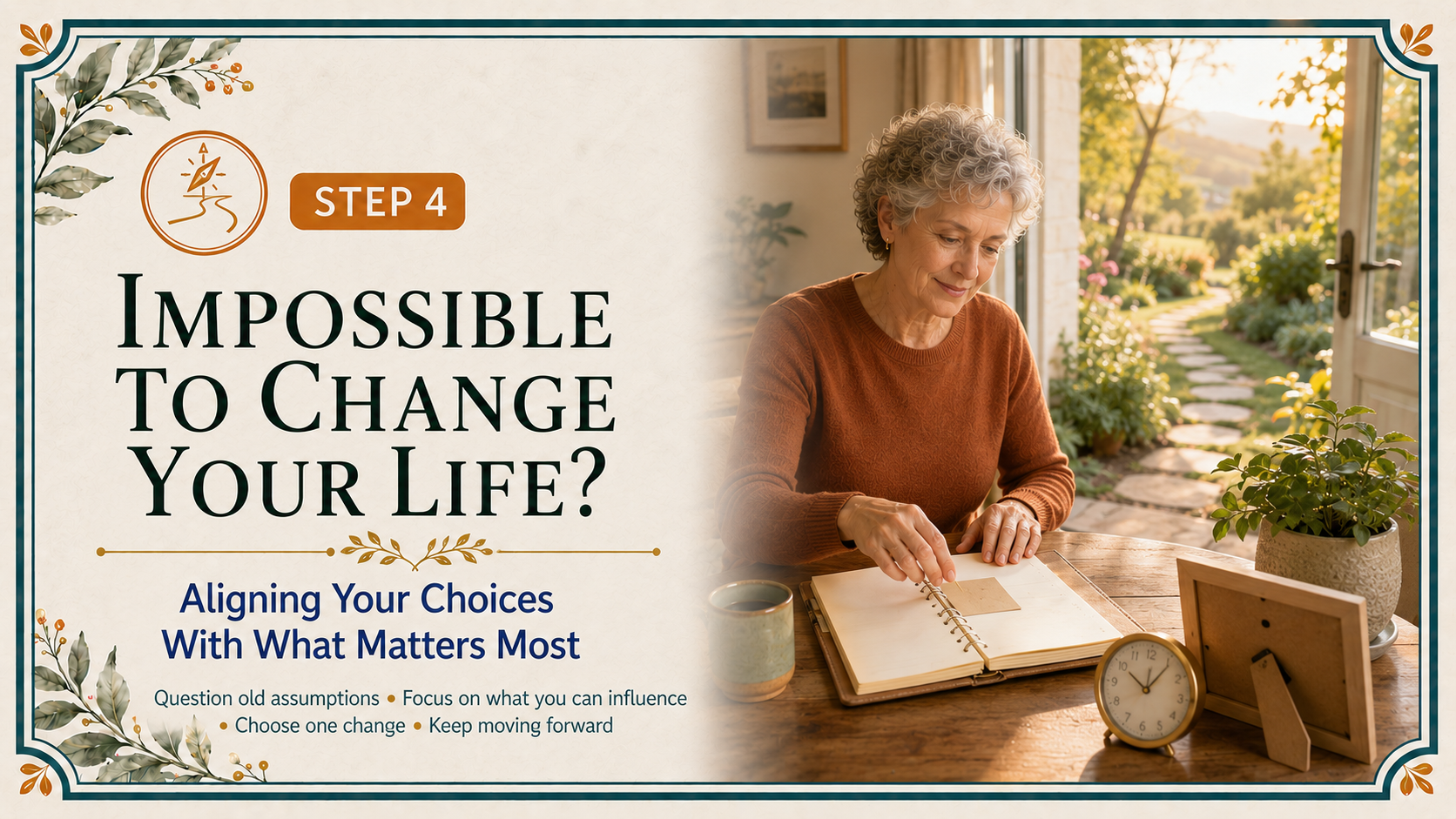
Most people don’t struggle because change is impossible.
They struggle because change feels impossible.
There’s a big difference.
When you’ve tried to improve your health, your habits, or your mindset — and nothing seems to stick — it’s easy to assume something is wrong with you. But the truth is far more hopeful: nothing is wrong with you. You’re simply working against patterns that were built long before you ever chose them.
And once you understand those patterns, everything begins to shift.
Why Change Feels So Hard
1. Your brain is wired for the familiar
Your mind loves what it already knows — even if what it knows isn’t good for you. Familiar routines feel safe. New routines feel risky. That’s biology, not failure.
2. You’re carrying old stories
Most of us walk around with quiet beliefs like:
- “I always fall back into old habits.”
- “I’m not disciplined enough.”
- “This is just who I am.”
These stories shape your choices until you learn to rewrite them.
3. You expect transformation to happen all at once
Real change rarely comes from dramatic leaps.
It comes from small, consistent shifts that compound over time.
The Moment Everything Changes
There’s a turning point in every transformation — a moment when you stop fighting yourself and start understanding yourself.
That moment is when you realize:
You don’t need to become a different person.
You need to become the person you were always capable of being.
Change becomes possible the moment you stop trying to force your way forward and start working with your mind instead of against it.
Three Mindset Shifts That Make Change Stick
1. Start with awareness, not willpower
Before you try to change a habit, understand the pattern behind it.
Ask yourself:
- What triggers this behavior?
- What emotion am I trying to soothe?
- What story am I believing in that moment?
Awareness is the foundation of every lasting change.
2. Focus on identity, not outcomes
Instead of saying:
- “I want to lose weight,”
try: - “I’m becoming someone who takes care of my body.”
Instead of:
- “I want to stop stressing,”
try: - “I’m becoming someone who protects their peace.”
Identity creates direction.
Direction creates momentum.
3. Celebrate small wins
Your brain needs evidence that change is working.
Every small win — every walk, every healthy meal, every moment of self-awareness — reinforces your new identity.
Small wins are not insignificant.
They are the building blocks of transformation.
You’re Not Starting Over — You’re Starting Differently
If you’ve tried to change before and slipped back into old patterns, that doesn’t mean you failed. It means you were missing the tools, the clarity, or the support you needed at the time.
You’re not behind.
You’re not broken.
You’re not stuck.
You’re simply ready for a new approach — one rooted in understanding, compassion, and intentional action.
A Final Word of Encouragement
Change isn’t about perfection.
It’s about direction.
Every step you take toward awareness, intention, and self-compassion reshapes your future in ways you can’t yet see.
You are capable of more than you realize.
And the moment you stop believing change is impossible…
is the moment it begins.
Just be Happy
No one likes grumpy and unhappy people. Don't blame your problems on someone else, Just Be Happy
Conclusion
Change rarely begins with a dramatic moment. It begins with a quiet decision — the decision to stop believing the story that says you can’t.
When life feels stuck, it’s easy to assume the problem is you. But more often, the real barrier is the belief that change is impossible, that your patterns are fixed, or that your past defines your future. The truth is far more hopeful: your mind is adaptable, your habits are trainable, and your life can shift in meaningful ways when you understand what’s shaping your choices.
You don’t need to overhaul everything at once. You just need to start with one honest insight, one small step, one new possibility.
Your life is not set in stone. And you are far more capable than the old story ever allowed you to believe.
Author's Note
Throughout my years as an educator, I have learned that meaningful change rarely happens all at once. More often, it begins with awareness, understanding, and a willingness to take the next small step forward.
The ideas shared in this article are intended to encourage reflection and personal growth. My hope is that they help you better understand yourself and provide practical insights you can apply to your own life and wellness journey.
Remember, lasting change is not about perfection. It is about learning, growing, and making choices that move you closer to the life you want to create.
One of the greatest misconceptions is that meaningful change is beyond our reach. In reality, change often begins with a single decision followed by small, consistent actions over time.
---- Robert
Continue The Conversation
Every wellness journey is unique, and we can learn a great deal from one another's experiences.
What stood out to you in this article?
Have you faced similar challenges, discovered helpful strategies, or gained insights of your own?
I invite you to share your thoughts in the comments below. Your experience may encourage someone else who is taking the next step on their own journey.
Remember, meaningful change often begins with a single step—and none of us has to walk the path alone.
Reference List
- Clear, J. (2018). Atomic Habits: An Easy & Proven Way to Build Good Habits & Break Bad Ones. Avery.
- Duhigg, C. (2012). The Power of Habit: Why We Do What We Do in Life and Business. Random House.
- Siegel, D. J. (2010). Mindsight: The New Science of Personal Transformation. Bantam.
- Brown, B. (2012). Daring Greatly: How the Courage to Be Vulnerable Transforms the Way We Live, Love, Parent, and Lead. Gotham Books.
- Prochaska, J. O., & DiClemente, C. C. (1983). Stages of Change Model. Journal of Consulting and Clinical Psychology.
The information provided in this article is for educational and informational purposes only and is not intended as medical, psychological, or professional advice. The content reflects general wellness principles and personal development concepts designed to encourage self-reflection and healthy lifestyle choices.
Individual circumstances vary, and readers should consult qualified healthcare professionals, mental health providers, or other appropriate experts regarding specific concerns or conditions. Never disregard professional advice or delay seeking help because of information contained in this article.
The author and publisher assume no responsibility for actions taken based on the information presented. Your health and well-being are ultimately your responsibility, and any changes to your lifestyle should be made thoughtfully and in consultation with appropriate professionals when necessary.