Introduction
Many of us grew up believing, “Milk builds strong bones.” Dairy was rarely questioned.
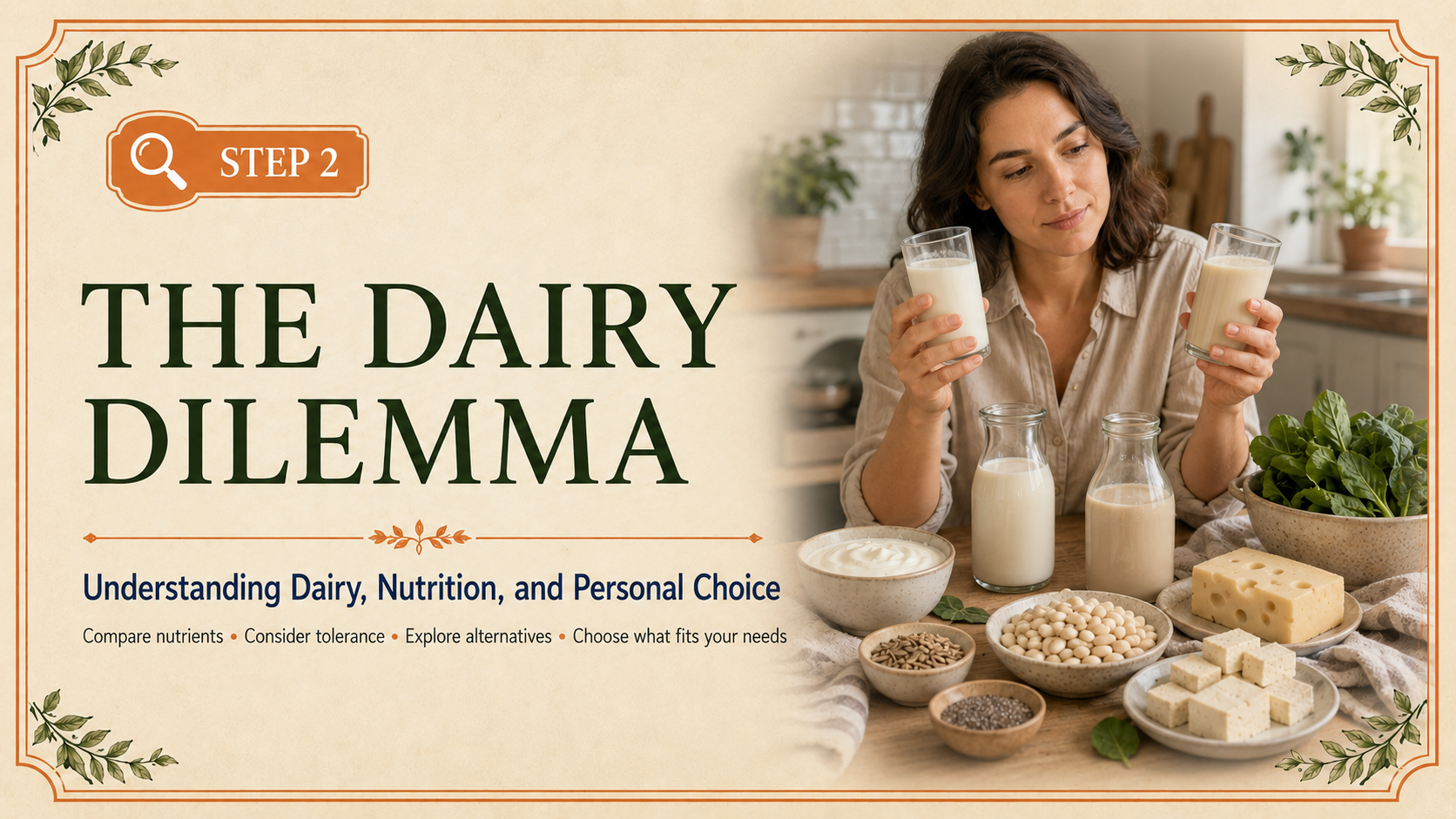
Today, rising lactose intolerance, new research on inflammation, and environmental concerns drive people to question dairy.
The question of whether dairy is truly beneficial for health, or simply a belief shaped by tradition and messaging, is receiving renewed attention.
This piece examines the forces behind dairy, current science, and how to choose for long-term health.
Why We Believe Dairy Is Essential
Dairy didn’t become a “health food” by accident. For decades, marketing campaigns, government programs, and industry influence shaped our beliefs about milk.
But here’s the truth:
- You don’t need dairy to get calcium
- You don’t need dairy for strong bones
- You don’t need dairy for protein
In fact, many cultures around the world thrive with little to no dairy at all.
This is a perfect example of what I call the Hidden Forces Behind Our Health—the systems, industries, and beliefs that quietly shape our choices without us realizing it.
What Science Says About Dairy Today
Dairy contains nutrients—calcium, protein, and certain vitamins. But nutrients alone don’t tell the whole story.
The benefits often cited:
- Calcium for bone health
- Complete protein
- Probiotics in fermented dairy
These are real, but they’re not unique to dairy. You can get all of these from plant‑strong foods without the drawbacks.
The Hidden Downsides of Dairy
This topic is both important and intriguing.
1. Lactose Intolerance Is the Norm, Not the Exception
About 65% of the world’s population cannot properly digest lactose. (Definition & Facts for Lactose Intolerance, 2018) Symptoms include:
- Bloating
- Gas
- Cramping
- Diarrhea
If you experience these symptoms, pay attention.
2. Hormones and Inflammation
Modern dairy farming often involves:
- Hormones
- Antibiotics
- Stress‑related inflammatory compounds (Hill et al., 2021, pp. 117-130)
Even organic dairy contains hormones that can affect human biology.
For many people, dairy contributes to:
- Sinus congestion
- Acne
- Joint inflammation
- Digestive discomfort (Nieman et al., 2020, pp. 571-582)
3. Saturated Fat and Heart Health
Dairy is a main source of saturated fat in the American diet. This affects heart health.
The Environmental Reality
Dairy production has a significant environmental footprint:
- High methane emissions
- Heavy water use
- Land degradation
- Feed crop production strains ecosystems. (Naranjo et al., 2020, pp. 345-355)
Choose plant-based alternatives to reduce environmental impact.
Ethical Considerations
Many people are surprised to learn how dairy is produced:
- Cows are repeatedly impregnated.
- Calves are separated from their mothers.
- Animals often live in stressful, confined conditions. (Placzek et al., 2021)
If you value compassion, this deserves your attention.
Plant‑Strong Alternatives That Support Your Health
Today’s plant‑based options are better than ever:
- Oat milk
- Almond milk
- Soy milk
- Coconut milk
- Cashew milk
And dairy‑free yogurts, cheeses, and creamers are widely available.
These alternatives can be fortified with:
- Calcium
- Vitamin D
- B12
- Protein
And they come without the inflammation, hormones, or digestive issues. (Milk and Plant-Based Milk Alternatives: Know the Nutrient Difference, 2023)
The answer to whether you should avoid dairy is not the same for everyone. Here’s a simple way to think about it:
There’s no one‑size‑fits‑all answer. But here’s a simple way to think about it:
If dairy makes you feel bloated, congested, inflamed, or sluggish… your body is telling you something.
And if you’re looking to:
Reduce inflammation
Improve digestion
Support heart health
Lower environmental impact
Live more intentionally
…then reducing or eliminating dairy is a powerful step
A Simple Path Forward
You don’t have to overhaul your diet overnight. Begin with one small shift:
- Swap your milk
- Try a dairy‑free yogurt.
- Replace cheese with a plant‑based version.
- Explore new recipes
Every small step supports your long-term well-being. The key takeaway: gradual changes with plant-based alternatives can improve how you feel, benefit the environment, and help you live in alignment with your values.
Conclusion
When you examine how milk affects digestion, inflammation, hormones, long‑term health, and the environment, it becomes clear: dairy is not essential for everyone. Alternatives exist, and the best choice is the one that fits your individual health, values, and goals. The main takeaways: dairy is optional, plant-based options are widely available, and prioritizing what works for your body leads to better health and a sense of purpose.
Author's Note
I wrote this piece because dairy is one of the most confusing and emotionally charged topics in nutrition. For years, I accepted the idea that milk was essential — until I began listening more closely to the science and to the experiences of people trying to heal their bodies. My goal isn’t to tell you what to eat. It’s to give you the clarity and confidence to make choices that genuinely support your wellbeing.
If dairy works for you, that’s your path. If it doesn’t, you deserve to understand why — and to know that you have options. Thank you for being open, curious, and willing to explore what health can look like when you trust your body and question old assumptions. It’s an honor to walk this journey with you.
---- Robert
Continue The Conversation
Every wellness journey is unique, and we can learn a great deal from one another's experiences.
What stood out to you in this article?
Have you faced similar challenges, discovered helpful strategies, or gained insights of your own?
I invite you to share your thoughts in the comments below. Your experience may encourage someone else who is taking the next step on their own journey.
Remember, meaningful change often begins with a single step—and none of us has to walk the path alone.
Reference List
(2018). Definition & Facts for Lactose Intolerance. National Institute of Diabetes and Digestive and Kidney Diseases. https://www.niddk.nih.gov/health-information/digestive-diseases/lactose-intolerance/definition-facts
Hill, D., Morra, M. J., Stalder, T., Jechalke, S., Top, E., Pollard, A. T. & Popova, I. (2021). Dairy manure is a potential source of crop nutrients and environmental contaminants. Journal of Environmental Sciences 100, pp. 117-130. https://doi.org/10.1016/j.jes.2020.07.016
Malekinejad, H., Scherpenisse, P. & Bergwerff, A. A. (2006). Naturally Occurring Estrogens in Processed Milk and in Raw Milk (from Gestated Cows). Journal of Agricultural and Food Chemistry 54(26). https://doi.org/10.1021/jf061972e
Nieman, K. M., Anderson, B. D., & Cifelli, C. J. (2020). The Effects of Dairy Product and Dairy Protein Intake on Inflammation: A Systematic Review of the Literature. Journal of the American College of Nutrition 40(6), pp. 571-582. https://doi.org/10.1080/07315724.2020.1800532
(2023). Dairy, Meat, Seafood, and Plant Sources of Saturated Fat: United States, Ages Two Years and Over, 2017–2020. The Journal of Nutrition 153(9), pp. 2689-2698. https://doi.org/10.1016/j.tjnut.2023.06.040
Naranjo, A., Johnson, A., Rossow, H. & Kebreab, E. (2020). Greenhouse gas, water, and land footprint per unit of production of the California dairy industry over 50 years. Journal of Dairy Science 103(4), pp. 345-355. https://doi.org/10.3168/jds.2019-16576
Disclaimer
The information provided in this article is for educational and informational purposes only and is not intended as medical, psychological, or professional advice. The content reflects general wellness principles and personal development concepts designed to encourage self-reflection and healthy lifestyle choices.
Individual circumstances vary, and readers should consult qualified healthcare professionals, mental health providers, or other appropriate experts regarding specific concerns or conditions. Never disregard professional advice or delay seeking help because of information contained in this article.
The author and publisher assume no responsibility for actions taken based on the information presented. Your health and well-being are ultimately your responsibility, and any changes to your lifestyle should be made thoughtfully and in consultation with appropriate professionals when necessary.