Introduction
Carbs, protein, and healthy fats do more than fuel your body—they influence energy, mood, and health. This post explains how each macronutrient works and how to build truly balanced meals.
Understanding Macronutrients
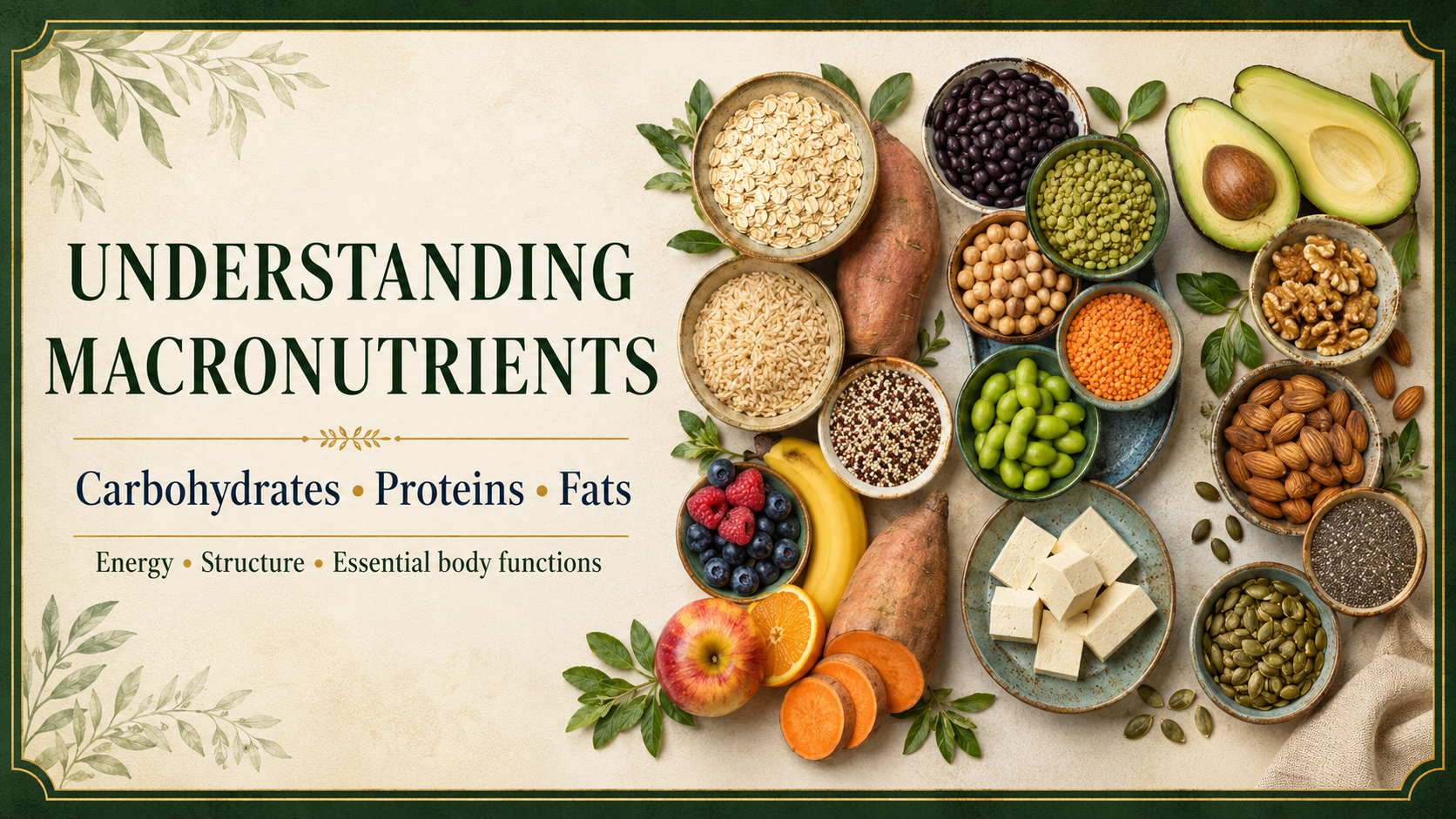
After outlining the basics, let's explore each macronutrient in more detail. Macronutrients—carbohydrates, proteins, and fats—do more than fuel your body. When you understand each one, you can build meals that keep you energized, satisfied, and resilient throughout the day...
Carbohydrates: Your Body’s Preferred Energy Source
First, let’s talk about carbohydrates. Carbohydrates are broken down into glucose, which fuels the brain and muscles. (The Functions of Carbohydrates in the Body, 2020) Whole‑food carbs—fruits, vegetables, beans, and whole grains—provide steady energy, fiber, and nutrients. (Staff, 2025) Refined carbs burn fast, spike blood sugar, and leave you hungry. (Roberts, 2000) Choose slow‑burning carbs to steady energy and curb cravings.
Proteins: The Building Blocks of Life
Next, consider the role of protein. Protein repairs tissue, builds muscle, supports immunity, and keeps you full. (BSc, 2025) Plant‑based proteins—beans, lentils, tofu, tempeh, nuts, and seeds—offer fiber, minerals, and healthy fats. (The power of plant-based protein: Benefits, sources and how to get enough, 2026) Add protein at each meal to regulate appetite and maintain muscle.
Fats: Essential for Hormones and Brain Health
Just as protein is vital, healthy fats are essential to your well-being. Healthy fats help absorb vitamins A, D, E, and K (PhD, 2022). They support brain function, steady mood, and balance hormones. (Espinosa-Salas & Gonzalez-Arias, 2023) Opt for whole foods like avocados, nuts, seeds, olives, and plant‑based oils. These fats keep you fuller longer and help you stay satisfied. (Maher & Clegg, 2019, pp. 1619-1644)
Putting It All Together
Now, let's see how to put it all together. A balanced plate includes all three macronutrients. When you combine them, you get steady energy, better digestion, and fewer cravings. (NUTRITION - Nursing Fundamentals, 2023) A simple formula is: Protein + Fiber‑Rich Carbs + Healthy Fat = Sustained
Conclusion
Understanding how carbohydrates, proteins, and healthy fats work together makes building balanced meals much simpler—and far more empowering. Each macronutrient plays a unique role in supporting your energy, mood, metabolism, and long‑term health. Instead of chasing strict rules or trends, you can focus on creating meals that keep you satisfied, steady, and nourished throughout the day.
The main takeaway: Small, consistent choices with whole-food carbs, proteins, and fats help your body function at its best. Let this knowledge guide you to meals that are balanced, enjoyable, and aligned with the healthier life you are creating.
Author’s Note
I created this guide to help you feel more confident about the foods that fuel your body every day. My goal is always to give you clear, practical tools you can use right away — without overwhelm or perfection.
— Robert
Share Your Thoughts and Experiences
I’d love to hear what resonated with you. If this post sparked a question, memory, or clarity, share it below. Your input may help someone feel less alone in their wellness journey. Share in the Comments.
Reference List
Staff, M. C. (2025). Carbohydrates: How carbs fit into a healthy diet. Mayo Clinic. https://www.mayoclinic.org/healthy-lifestyle/nutrition-and-healthy-eating/in-depth/carbohydrates/art-20045705?reDate=29032021
Roberts, S. B. (2000). High–Glycemic Index Foods, Hunger, and Obesity: Is There a Connection?. Nutrition Reviews 58(6). https://doi.org/10.1111/j.1753-4887.2000.tb01855.x
BSc, K. G. (2025). Benefits of Protein: Function and Importance. Healthline. https://www.healthline.com/nutrition/10-reasons-to-eat-more-protein
(2026). The power of plant-based protein: Benefits, sources, and how to get enough. UC Davis Health. https://health.ucdavis.edu/blog/good-food/the-power-of-plant-based-protein-benefits-sources-and-how-to-get-enough/2026/03
PhD, A. A. (2022). The Fat-Soluble Vitamins: A, D, E, and K. Healthline. https://www.healthline.com/nutrition/fat-soluble-vitamins
Espinosa-Salas, S. & González-Arias, M. (2023). Nutrition: Macronutrient Intake, Imbalances, and Interventions. StatPearls - NCBI Bookshelf. https://www.ncbi.nlm.nih.gov/sites/books/n/statpearls/article-157662/
Maher, T. & Clegg, M. E. (2019). Dietary lipids with potential to affect satiety: Mechanisms and evidence. Critical Reviews in Food Science and Nutrition 59(10), pp. 1619-1644. https://doi.org/10.1080/10408398.2017.1423277
(2023). NUTRITION - Nursing Fundamentals. NCBI Bookshelf. https://www.ncbi.nlm.nih.gov/books/NBK610830/
Disclaimer
This article is for educational and informational purposes only. It is not intended to diagnose, treat, cure, or prevent any disease. The content reflects current research on nutrition, chronic disease, and dietary patterns in the United States, but it should not replace personalized guidance from a qualified healthcare professional.
Everyone’s health situation is unique. If you have medical concerns, dietary restrictions, or chronic conditions, please consult your physician, registered dietitian, or another licensed healthcare provider before making significant changes to your diet or lifestyle.