Introduction
Good nutrition supports steady energy, sharper thinking, and long-term health. With the right nutrients, you protect yourself from obesity, poor immunity, cardiovascular disease, type II diabetes, and other preventable conditions. (Miller et al., 2022)
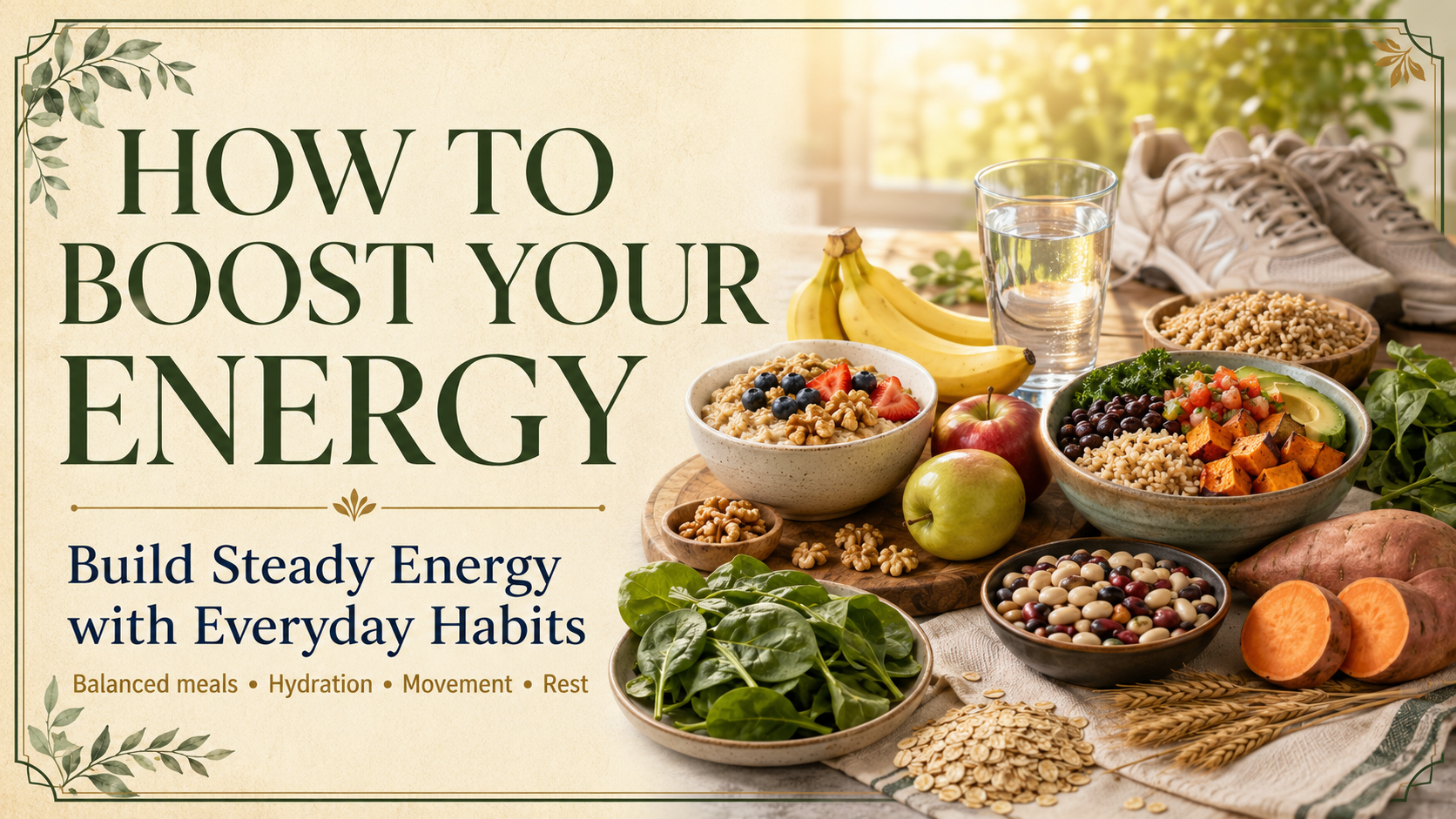
If you’re new to the basics, see my article What Is Good Nutrition? For now, let’s focus on using food to boost daily energy. With that in mind, let’s explore why nutrition and energy are so closely connected.
Why Nutrition Affects Your Energy
Sluggishness at work or in the afternoon often isn’t just from sleep or stress. Imbalanced meals—too many refined carbs, not enough fiber, little hydration, or long gaps between meals—are common factors. (Gu et al., 2024)
Your body runs best when you give it:
- Steady, slow‑burning carbohydrates
- Lean, plant‑based proteins
- Healthy fats
- Plenty of vitamins, minerals, and water
With balanced elements, your energy becomes more stable and predictable. (Healthy diet, 2026)
A Simple Way to Build an Energizing Plate
One of the easiest tools for balanced eating is the USDA’s MyPlate. At each meal, aim for ½ of your plate to be fruits and vegetables.
- ¼ plate: whole grains
- ¼ plate: lean or plant‑based protein
- Plus: a serving of dairy or fortified plant milk
- And: a glass of water
This approach naturally balances carbohydrates, protein, and micronutrients—without counting, measuring, or overthinking. Key takeaway: Prioritize balance and simplicity at every meal to sustain energy.
What Science Says About Energy‑Boosting Eating Patterns
Decades of research show that whole, real foods outperform restrictive diets. (Kelly et al., 2023)
Patterns shown to support better energy and long‑term health include:
- Diets rich in fruits, vegetables, whole grains, nuts, and seeds
- Mediterranean‑style eating with healthy fats and antioxidants
- Plant‑forward or fully plant‑based diets that reduce inflammation
- Carbohydrate‑selective eating that favors whole grains over refined carbs
These approaches help stabilize blood sugar, reduce inflammation, and support heart and brain health—all of which are essential for steady energy. Key takeaway: Choose whole foods to maintain steady energy and overall health.
Practical Ways to Boost Your Energy Through Food
ry adding one or two of these habits this week:
- Start your day with fiber‑rich breakfasts like oatmeal, fruit, or whole‑grain toast.
- Include plant-based proteins such as beans, lentils, tofu, or nuts.
- Choose whole grains instead of white bread, white rice, or pastries.
- Add a serving of leafy greens to at least one meal.
- Drink water consistently throughout the day.
- Limit foods high in glycemic load (sugary snacks, refined carbs) to avoid energy crashes. (Chronic refined carbohydrate consumption measured by glycemic load and variation in cognitive performance in healthy people, 2023)
- Small changes compound quickly. (Paineau et al., 2010, pp. 782-791)
If You Want to Go Deeper
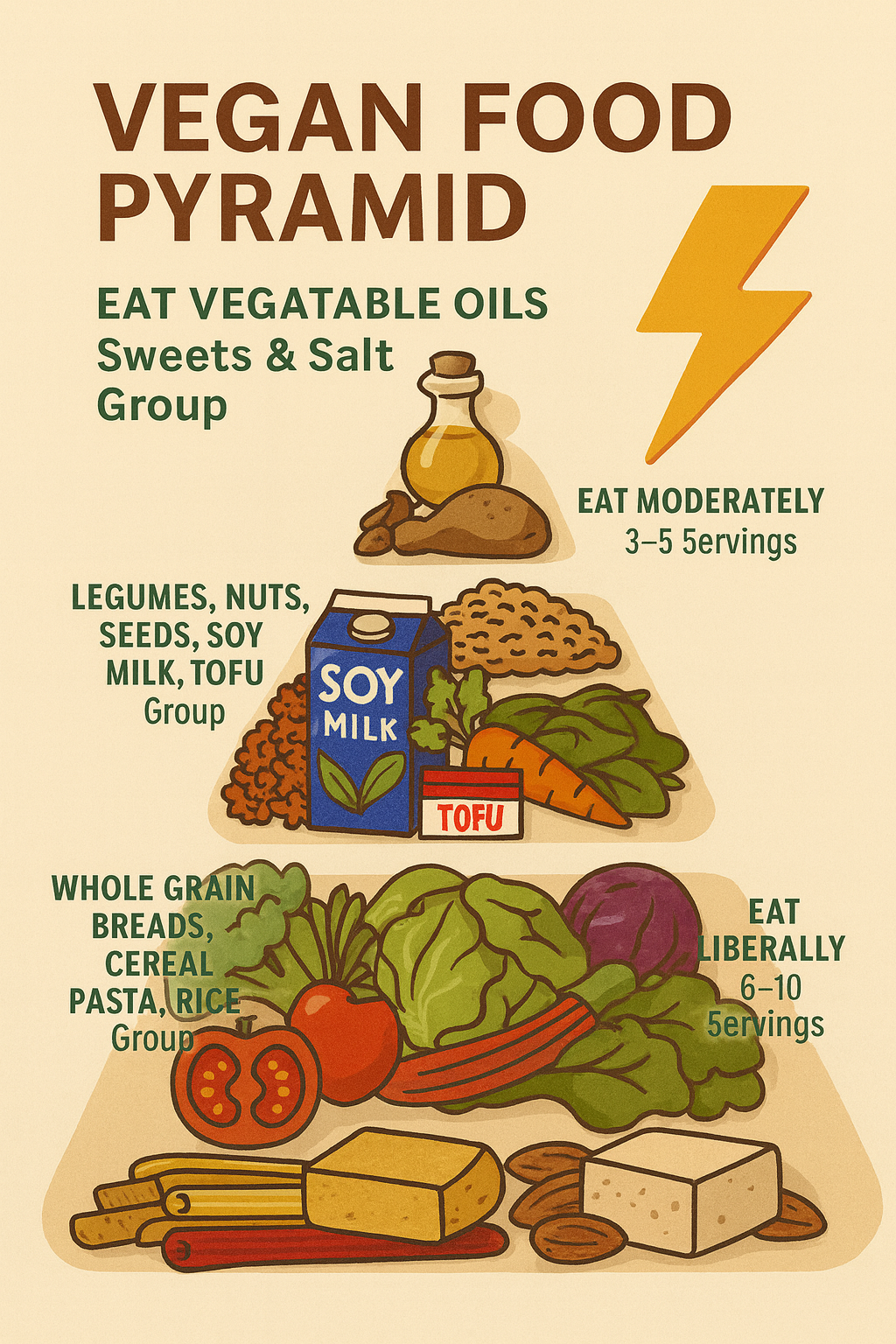
Many physicians now recommend a plant‑based diet for patients with diabetes, heart disease, and cancer. If you’re curious about exploring this lifestyle, these resources offer excellent guidance:
- Plant-Based Nutrition, 2E (Idiot’s Guides)
- Nutrition Facts: The Truth About Food
- The Forks Over Knives Plan
These books offer practical, step-by-step strategies for moving to a whole-food, plant-based diet without calorie counting or obsessing over nutrients.
Conclusion
Boosting your energy doesn’t require perfection or dramatic changes. Key takeaway: Simple, steady daily habits are most effective for long-term energy and well-being.
Supporting your body with these foundations leads to clearer thinking, a better mood, and vitality throughout your day. Start with one or two changes, stay consistent, and let your energy build. Your body works for you—these habits help you work with it.
Author’s Note
Thank you for investing in your well‑being. I hope these practices help you feel supported, energized, and connected to the life you want. You don’t have to change everything at once—one small shift is enough to get started. Your energy is a valuable resource, and you deserve to feel steady and strong.
— Robert
Continue The Conversation
Every wellness journey is unique, and we can learn a great deal from one another's experiences.
What stood out to you in this article?
Have you faced similar challenges, discovered helpful strategies, or gained insights of your own?
I invite you to share your thoughts in the comments below. Your experience may encourage someone else who is taking the next step on their own journey.
Remember, meaningful change often begins with a single step—and none of us has to walk the path alone.
Reference List
Miller, V., Micha, R., Choi, E., Karageorgou, D., Webb, P. & Mozaffarian, D. (2022). Evaluation of the Quality of Evidence of the Association of Foods and Nutrients With Cardiovascular Disease and Diabetes: A Systematic Review. JAMA Network Open 5(2). https://doi.org/10.1001/jamanetworkopen.2021.46705
Gu, W., Yang, Y., Wang, L., Song, Y., Yan, X., Tian, Z. & Sun, C. (2024). Trends and Disparities in Diet Quality and Nutrient Intake among US Adults by Bodyweight Status. Nutrients 16(16). https://doi.org/10.3390/nu16162793
(January 25, 2026). Healthy diet. World Health Organization. https://www.who.int/news-room/fact-sheets/detail/healthy-diet
Cena, H. & Calder, P. C. (2020). Defining a Healthy Diet: Evidence for the Role of Contemporary Dietary Patterns in Health and Disease. Nutrients 12(2). https://doi.org/10.3390/nu12020334
Kelly, R., Hanus, A., Payne-Foster, P., Calhoun, J., Stout, R., & Sherman, B. W. (2023). Health Benefits of a 16-Week Whole Food, High Fiber, Plant Predominant Diet among U.S. Employees. Journal of the Academy of Nutrition and Dietetics 37(2). https://doi.org/10.1177/08901171221116066
Law, L., Heerey, J. J., Devlin, B. L., Brukner, P., Livera, A. M., Kemp, J., Attanayake, A., Skou, S. T., Bricca, A., & Culvenor, A. G. (2024). Effect of anti-inflammatory diets on health-related quality of life in adults with chronic disease: a systematic review and meta-analysis. BMJ Nutrition. https://doi.org/10.1136/bmjnph-2023-000666
(2023). Chronic refined carbohydrate consumption measured by glycemic load and variation in cognitive performance in healthy people. Personality and Individual Differences 202. https://doi.org/10.1016/j.paid.2023.112138
Paineau, D., Beaufils, F., Boulier, A. & Cassuto, D. (2010). The cumulative effect of small dietary changes may significantly improve nutritional intakes in free-living children and adults. European Journal of Clinical Nutrition 64(8), pp. 782-791. https://doi.org/10.1038/ejcn.2010.78comments
Disclaimer
The information provided in this article is for educational and informational purposes only and is not intended as medical, psychological, or professional advice. The content reflects general wellness principles and personal development concepts designed to encourage self-reflection and healthy lifestyle choices.
Individual circumstances vary, and readers should consult qualified healthcare professionals, mental health providers, or other appropriate experts regarding specific concerns or conditions. Never disregard professional advice or delay seeking help because of information contained in this article.
The author and publisher assume no responsibility for actions taken based on the information presented. Your health and well-being are ultimately your responsibility, and any changes to your lifestyle should be made thoughtfully and in consultation with appropriate professionals when necessary.