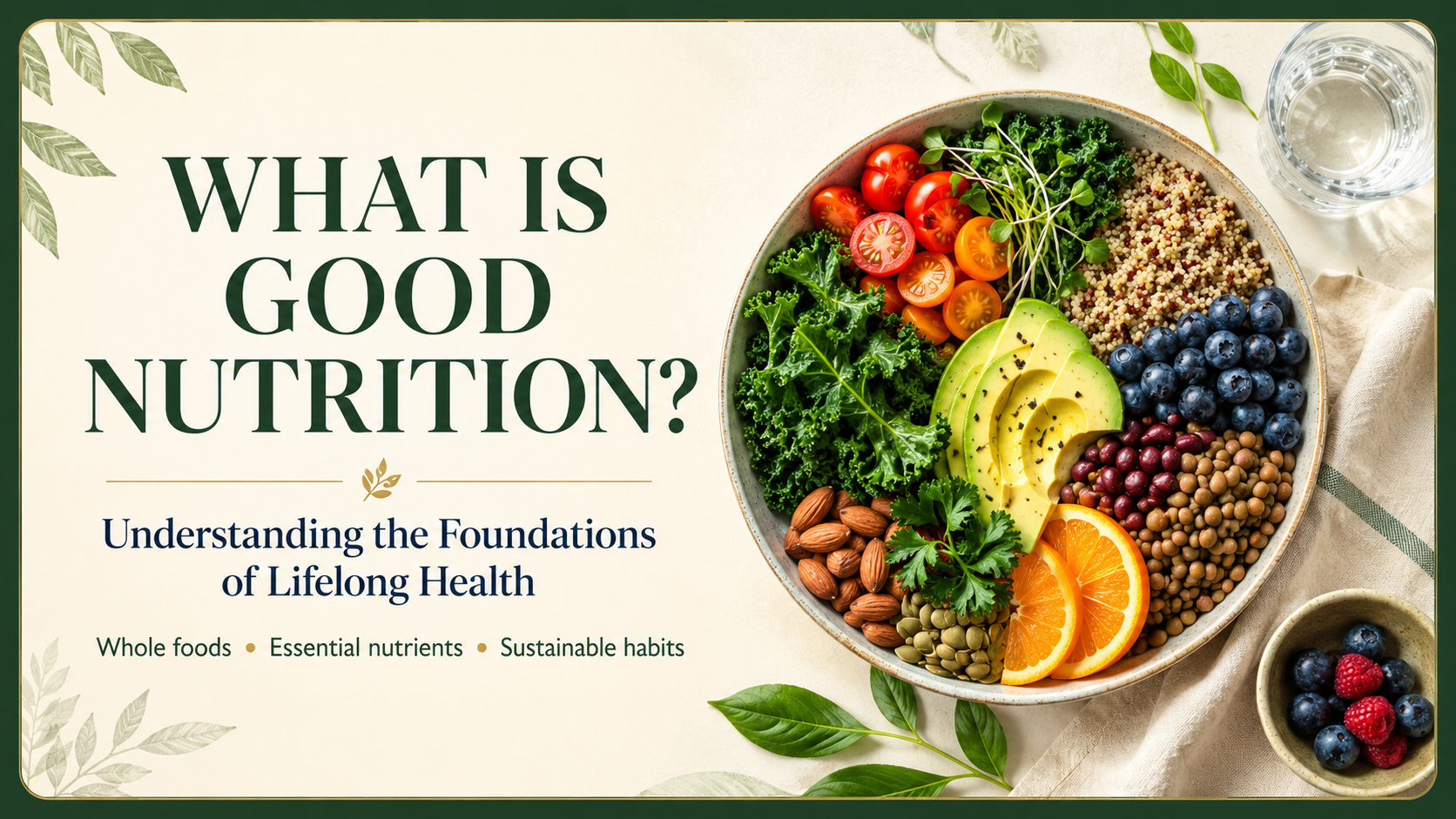
What Good Nutrition Really Means
Good nutrition is the daily practice of giving your body the nourishment it needs to function well—physically, mentally, and emotionally. It isn’t a strict diet or a set of rigid rules. It’s a pattern of eating that supports long‑term health, steady energy, and a sense of well‑being you can feel in your everyday life.
At its core, good nutrition emphasizes foods that are as close to their natural state as possible. These foods deliver the vitamins, minerals, antioxidants, and fiber your body depends on for repair, resilience, and vitality. When you consistently choose nutrient‑dense foods, you create a foundation for health that supports you at every age and stage of life.
The Building Blocks of Good Nutrition
A nourishing eating pattern includes several key elements that work together to support whole‑body health.
- Whole, minimally processed foods — fruits, vegetables, whole grains, legumes, nuts, seeds, and clean proteins form the backbone of a healthy diet.
- Balanced macronutrients — complex carbohydrates, healthy fats, and lean or plant-based proteins help keep blood sugar stable and energy consistent.
- Micronutrient density — vitamins, minerals, and phytonutrients support immunity, metabolism, and cellular repair.
- Fiber-rich choices — essential for digestion, gut health, cholesterol balance, and blood sugar control.
- Hydration — water supports every metabolic process and helps regulate appetite, energy, and digestion.
- Mindful moderation — limiting ultra‑processed foods high in added sugars, refined grains, and artificial additives.
- Consistency over perfection — sustainable habits matter far more than short-term restriction.
These principles are flexible enough to fit many cultural traditions, personal preferences, and lifestyles. Good nutrition is not about eating perfectly—it’s about eating intentionally.
How Good Nutrition Supports Your Health
When you nourish your body well, the benefits ripple outward into every area of life. A nutrient-rich eating pattern supports:
- Steady energy throughout the day
- Clearer thinking and improved focus
- A stronger immune system
- Reduced inflammation
- Healthier weight regulation
- Lower risk of chronic diseases
- Better mood and emotional resilience
- A healthier gut, which influences immunity, hormones, and mental well‑being
Good nutrition is one of the most powerful tools you have to support long-term health. It’s not just about preventing illness—it’s about creating the conditions for a vibrant, capable, resilient life.
Why Good Nutrition Matters
A well‑nourished body is more resilient. Good nutrition supports:
- Stable energy and mood
- Healthy weight regulation
- Stronger immune function
- Reduced inflammation
- Lower risk of chronic diseases (heart disease, diabetes, certain cancers)
- Better cognitive function and aging
- Improved gut health, which influences everything from immunity to mental well‑being
It’s not just about avoiding illness—it’s about creating a foundation for vitality.
Dr. Michael Greger, Nutritional Information
One of the excellent sources for reliable up to day information on nutrition is provided by Dr. Michael Greger on his NutritionalFacts.Org site. The information and videos are free to read and view.
NUTRITIONFACTS.ORG is a strictly non-commercial, science-based public service provided by Dr. Michael Greger, providing free updates on the latest nutrition research via bite-sized videos. There are more than a thousand videos on every aspect of healthy eating, with new videos and articles uploaded every day.
Whenever there is a new drug or surgical procedure, you can be assured that you or your doctor will probably hear about it because there’s a corporate budget driving its promotion. But what about advances in the field of nutrition? The reason we don’t see ads on TV for broccoli is the same reason groundbreaking research on the power of foods and eating patterns to affect our health and longevity gets lost and buried in the medical literature–there’s no profit motive. It may not make anyone money, but what if our lives would profit? - via Dr. Michael Greger, NutritionFacts.org
The Story of Nutritional Facts - Dr. Michael Greger
Nutrient Density: A Key Concept
One of the most powerful ideas in nutrition is nutrient density. It refers to the amount of beneficial nutrients per calorie of food.
- Foods with high nutrient density (like leafy greens, berries, beans, and whole grains) deliver more vitamins, minerals, and fiber per bite.
- Foods with low nutrient density (like sugary snacks or processed meats) offer little nutritional value for the calories they contain.
Choosing foods from the “green zone” — those rich in nutrients and low in empty calories — helps you feel full, energized, and supported. It’s also a smart strategy for weight management and disease prevention.
When we look at the definition of nutrition and how important it is to get our essential nutrients and to get them in the right combination, there is another especially important concept in nutrition that many are not aware of. It is called nutrient density and calorie density. For now, I will just touch on the concept of nutrient density.
Nutrient density is the ratio of nutrients (like vitamins, minerals, fiber, etc.) relative to the calorie (energy) content in a food. A food with high nutrient density is rich in key nutrients per one hundred calories of food. A food with a low nutrient density contains very few nutrients per one hundred calories of food. For example, vegetables have an extremely low nutrient density, and nuts, seeds, and oils have an exceedingly high nutrient density.
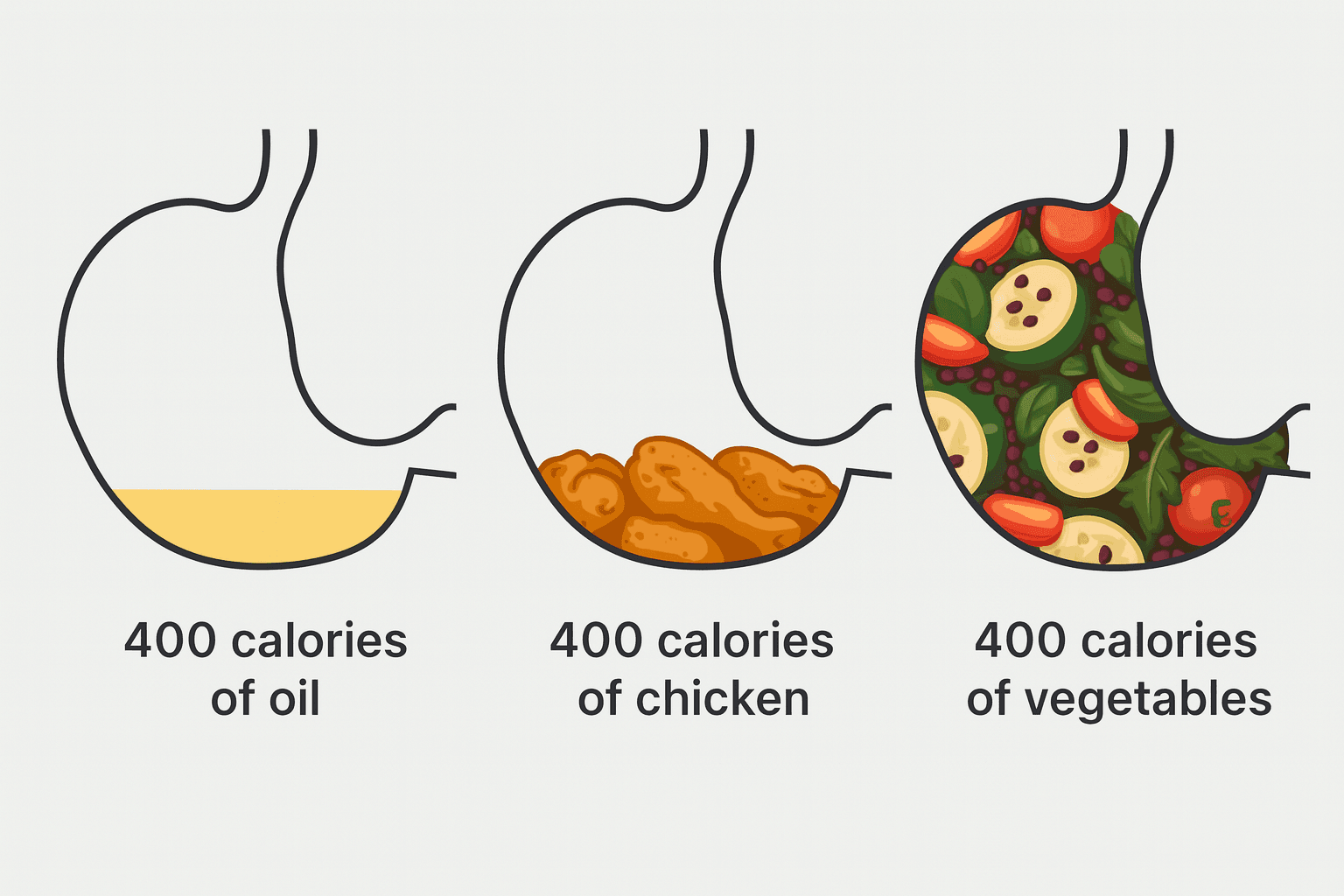
The idea is to eat food that is in the green area most of the time and to eat food in the red area rarely. This is also an excellent guide to follow when you want to lose weight or maintain your weight. Choosing food in the green area will allow you to eat more to fill you up.
Showing stomach levels based on calorie density
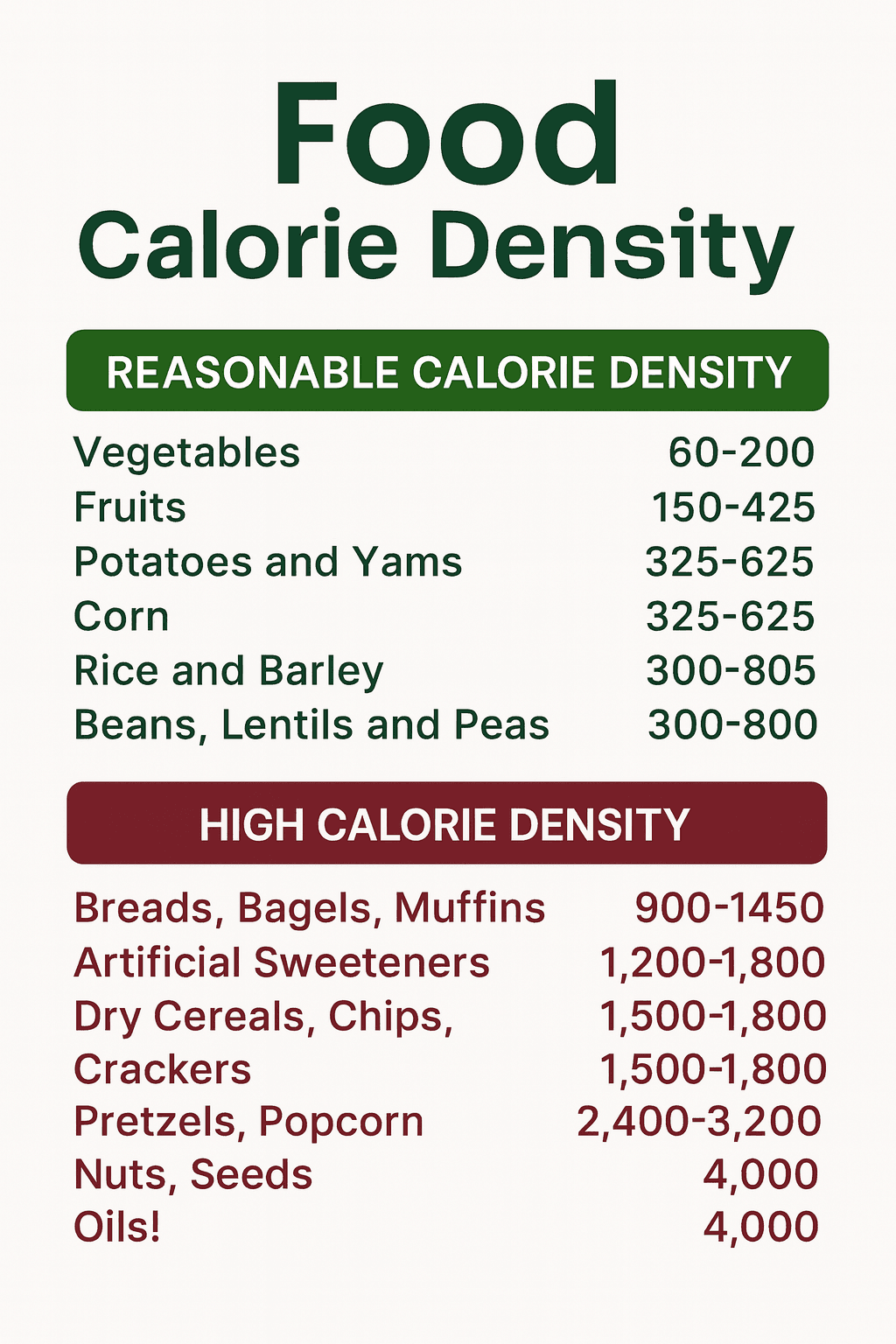
Food Calorie Density
Role that nutrition Plays
Science confirms what many of us have felt intuitively: a diet rich in whole, plant-based foods can transform your health. More physicians are recommending plant-strong eating patterns to help patients reverse chronic conditions and reclaim vitality.
To get a better understanding of what is good nutrition, and the role Nutrition plays in our lives, view the following articles.
Maximizing Your Nutrition
Ideas to Improve Your Nutrition
Use Nutrition to Boost Your Health
How Good Nutrition Could Save Your Life
Time to Act
Science confirms what many of us have felt intuitively: a diet rich in whole, plant-based foods can transform your health. More physicians are recommending plant-strong eating patterns to help patients reverse chronic conditions and reclaim vitality.
If you’re ready to take the next step, explore these trusted resources:
Plant-Based Nutrition, 2E (Idiot’s Guides) and
Nutrition Facts: The Truth About Food
The Forks over Knives plan shows you how to put this lifesaving, delicious diet into practice in your own life. This easy-to-follow, meal-by-meal makeover is the approach Doctors Alona Pulde and Matthew Lederman (featured in the documentary) use every day in their nutritional health practice—a simple plan that focuses on hearty comfort foods and does not involve portion control or worrying about obtaining single nutrients like protein and calcium.
Your Next Move
Start with one intentional choice today. Add a colorful plant to your plate. Read one article. Share this post with someone you care about. Every small step builds momentum — and every bite is a chance to nourish your future.
Conclusion
Good nutrition isn’t about perfection or strict rules—it’s about creating a way of eating that supports your energy, your clarity, and your long‑term well‑being. When you focus on whole, minimally processed foods and consistent habits, you give your body what it needs to thrive. My hope is that this guide helps you feel grounded and confident as you make choices that nourish you day by day. Small steps add up, and every meal is an opportunity to support the life you want to live.
Author’s Note
Good nutrition has shaped my own understanding of what it means to live with energy, clarity, and purpose. I wrote this post to help you cut through the noise and reconnect with the simple truth: your body thrives when you nourish it with real, whole foods and consistent habits that support long‑term health. My hope is that these principles give you confidence—not pressure—as you build a way of eating that feels sustainable, joyful, and aligned with the life you want to live.
— Robert
Continue The Conversation
Every wellness journey is unique, and we can learn a great deal from one another's experiences.
What stood out to you in this article?
Have you faced similar challenges, discovered helpful strategies, or gained insights of your own?
I invite you to share your thoughts in the comments below. Your experience may encourage someone else who is taking the next step on their own journey.
Remember, meaningful change often begins with a single step—and none of us has to walk the path alone.
Reference List
Whole‑Food & Plant‑Based Nutrition
- Harvard T.H. Chan School of Public Health. “Healthy Eating Plate & Guidelines.”
- Mayo Clinic Staff. “Plant‑Based Diet: What Is It and Why Should You Try It?”
- Cleveland Clinic. “Whole‑Food, Plant‑Based Diet: Benefits and Basics.”
Nutrient Density & Calorie Density
- Fuhrman, J. Eat to Live: The Amazing Nutrient‑Rich Program for Fast and Sustained Weight Loss.
- Drewnowski, A. “Concept of a Nutrient Density Score.” American Journal of Clinical Nutrition, 2005.
Inflammation & Chronic Disease
- Harvard Health Publishing. “Foods That Fight Inflammation.”
- Hu, F.B. “Plant‑Based Foods and Chronic Disease Prevention.” Journal of Nutrition, 2003.
Gut Health & Microbiome
- Tomova, A. et al. “The Effects of Vegetarian and Vegan Diets on Gut Microbiota.” Frontiers in Nutrition, 2019.
- Sonnenburg, E. & Sonnenburg, J. The Good Gut: Taking Control of Your Weight, Your Mood, and Your Long‑Term Health.
Nutrition & Mental Well‑Being
- Jacka, F.N. et al. “Association of Diet Quality with Depression and Anxiety.” American Journal of Psychiatry, 2010.
Nutrition & Sleep / Energy Regulation
- St‑Onge, M.‑P. et al. “Sleep and Diet: A Review.” Nutrients, 2016.
Evidence‑Based Nutrition Education
- Greger, M. How Not to Die.
- NutritionFacts.org — Science‑based public service providing free updates on the latest nutrition research.
Disclaimer
The information provided in this article is for educational and informational purposes only and is not intended as medical, psychological, or professional advice. The content reflects general wellness principles and personal development concepts designed to encourage self-reflection and healthy lifestyle choices.
Individual circumstances vary, and readers should consult qualified healthcare professionals, mental health providers, or other appropriate experts regarding specific concerns or conditions. Never disregard professional advice or delay seeking help because of information contained in this article.
The author and publisher assume no responsibility for actions taken based on the information presented. Your health and well-being are ultimately your responsibility, and any changes to your lifestyle should be made thoughtfully and in consultation with appropriate professionals when necessary.