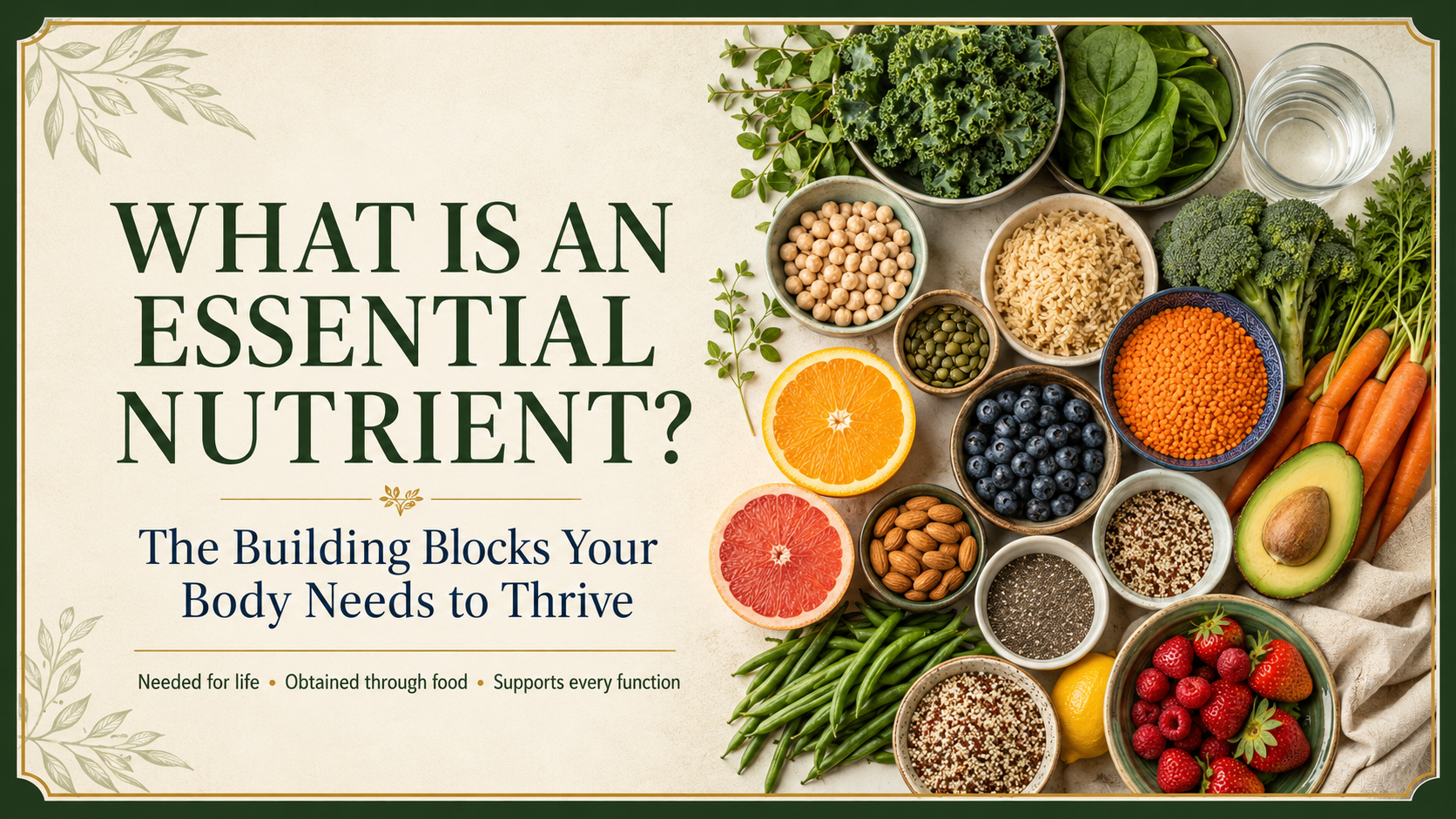
What Is an Essential Nutrient?
A Clear Guide to the Building Blocks of Life
Essential nutrients are the substances your body must have to function, repair, grow, and thrive — yet cannot produce on its own. That simple fact is what makes them essential. Without a steady supply of these nutrients, the body cannot sustain life, maintain health, or protect itself from disease.
In nutrition science, essential nutrients fall into six core categories: carbohydrates, proteins, fats, vitamins, minerals, and water.
Some experts also include dietary fiber because of its profound impact on digestion, metabolic health, and disease prevention.
This pillar post gives you a clear, accessible overview of each category — and links to deeper articles where you can explore each nutrient in more detail.
Why Essential Nutrients Matter
Every cell, tissue, and system in your body depends on these nutrients to do its job. They influence:
- Energy production
- Immune function
- Brain health
- Hormone balance
- Tissue repair
- Digestion and elimination
- Long‑term disease risk
When any essential nutrient is missing or chronically low, the body compensates for a while — until it can’t. Deficiencies can lead to fatigue, inflammation, impaired immunity, metabolic issues, and chronic disease.
Understanding these nutrients gives you the power to make informed, life‑changing choices about your health.
The Six Categories of Essential Nutrients
Below is a clear overview of each nutrient category, along with links to your in‑depth posts.
1. Carbohydrates — Your Body’s Primary Energy Source
Carbohydrates include sugars, starches, and fiber found in fruits, vegetables, grains, and legumes. Despite their bad reputation in trendy diets, they are the body’s preferred fuel and play a central role in brain function and physical energy.
Read more: Carbohydrates — Source of Energy
2. Proteins — The Body’s Builders and Repairers
Proteins supply amino acids that support muscle repair, immune function, enzyme production, hormone synthesis, and tissue renewal. They are essential for growth, healing, and maintaining structural integrity throughout the body.
Read more: What Are Proteins?
3. Fats — Essential for Brain, Hormones, and Absorption
Healthy fats provide concentrated energy, support brain development, regulate inflammation, cushion organs, and help the body absorb fat‑soluble vitamins. They also play a role in hormone production and cellular health.
Read more: Why Is Fat Important?
4. Vitamins — Regulators of Body Processes
Vitamins act as catalysts for countless chemical reactions. They support immunity, blood clotting, energy metabolism, vision, and cellular repair. Because the body cannot make them, they must come from food or supplements.
Read more: Essential Vitamins
5. Minerals — Structural and Functional Powerhouses
Minerals help build bones and teeth, regulate fluid balance, support nerve signaling, and maintain muscle function. They are divided into macro‑minerals (electrolytes) and trace minerals, both vital for health.
Read more: Essential Minerals
6. Water — The Most Overlooked Essential Nutrient
Water regulates temperature, transports nutrients, removes waste, lubricates joints, and keeps every cell functioning. Even mild dehydration affects energy, cognition, and physical performance.
Read more: Water Is Essential to Health
7. Fiber — The Unsung Hero of Long‑Term Health
While not always listed as an “official” essential nutrient, fiber plays a critical role in digestion, blood sugar control, heart health, weight management, and disease prevention.
Read more: What Is Dietary Fiber?
If you are vegan or vegetarian, you may need additional nutrients.
The Bigger Picture: Your Diet Shapes Your Future
A growing body of research shows that diets rich in whole, plant‑based foods provide all essential nutrients (with a few exceptions for vegans) and dramatically reduce the risk of chronic diseases such as heart disease, diabetes, and certain cancers. Many physicians now recommend plant‑based eating patterns for prevention and healing.
This series is designed to help you understand the nutrients your body needs — and how to get them from foods that nourish, energize, and protect you.
Start Your Journey Toward Better Health
Small, consistent changes create powerful results. As you explore each nutrient in this series, consider adding one new whole‑food source to your meals each week. Over time, these choices build a foundation for lifelong vitality.
If you’re ready to take the next step, explore the first deep‑dive article in the series — or begin with a simple plant‑based challenge to jump‑start your progress.
Time to Act
Science confirms that a diet rich in whole, plant-based foods can help you live to the fullest. I hope we have answered the question: What is an Essential Nutrient? In fact, a growing number of physicians advocate a completely plant-based diet for many of their patients who suffer from diabetes, heart disease, and cancer. Four great sources:
Author's Note
Understanding essential nutrients is one of the most powerful steps you can take toward lifelong health. These nutrients aren’t optional—they’re the building blocks your body depends on every single day to function, repair, and thrive. My goal in this guide is to make the science simple and approachable, so you can feel confident about the choices you make at the table and in your daily life. When you know what your body truly needs, you’re better equipped to nourish it with intention and care.
---- Robert
Continue The Conversation
Every wellness journey is unique, and we can learn a great deal from one another's experiences.
What stood out to you in this article?
Have you faced similar challenges, discovered helpful strategies, or gained insights of your own?
I invite you to share your thoughts in the comments below. Your experience may encourage someone else who is taking the next step on their own journey.
Remember, meaningful change often begins with a single step—and none of us has to walk the path alone.
Reference List
- National Institutes of Health, Office of Dietary Supplements. “Dietary Supplements Fact Sheets.”
- World Health Organization. “Nutrition: Micronutrients.”
- U.S. Department of Agriculture. “Dietary Guidelines for Americans, 2020–2025.”
- Harvard T.H. Chan School of Public Health. “The Nutrition Source: Vitamins & Minerals.”
- Academy of Nutrition and Dietetics. “Understanding Nutrients: What Your Body Needs.”
- Centers for Disease Control and Prevention. “Nutrition Basics for a Healthy Life.”
Disclaimer
The information provided in this article is for educational and informational purposes only and is not intended as medical, psychological, or professional advice. The content reflects general wellness principles and personal development concepts designed to encourage self-reflection and healthy lifestyle choices.
Individual circumstances vary, and readers should consult qualified healthcare professionals, mental health providers, or other appropriate experts regarding specific concerns or conditions. Never disregard professional advice or delay seeking help because of information contained in this article.
The author and publisher assume no responsibility for actions taken based on the information presented. Your health and well-being are ultimately your responsibility, and any changes to your lifestyle should be made thoughtfully and in consultation with appropriate professionals when necessary.